When Taking Care of Yourself Starts Feeling Like Another Job

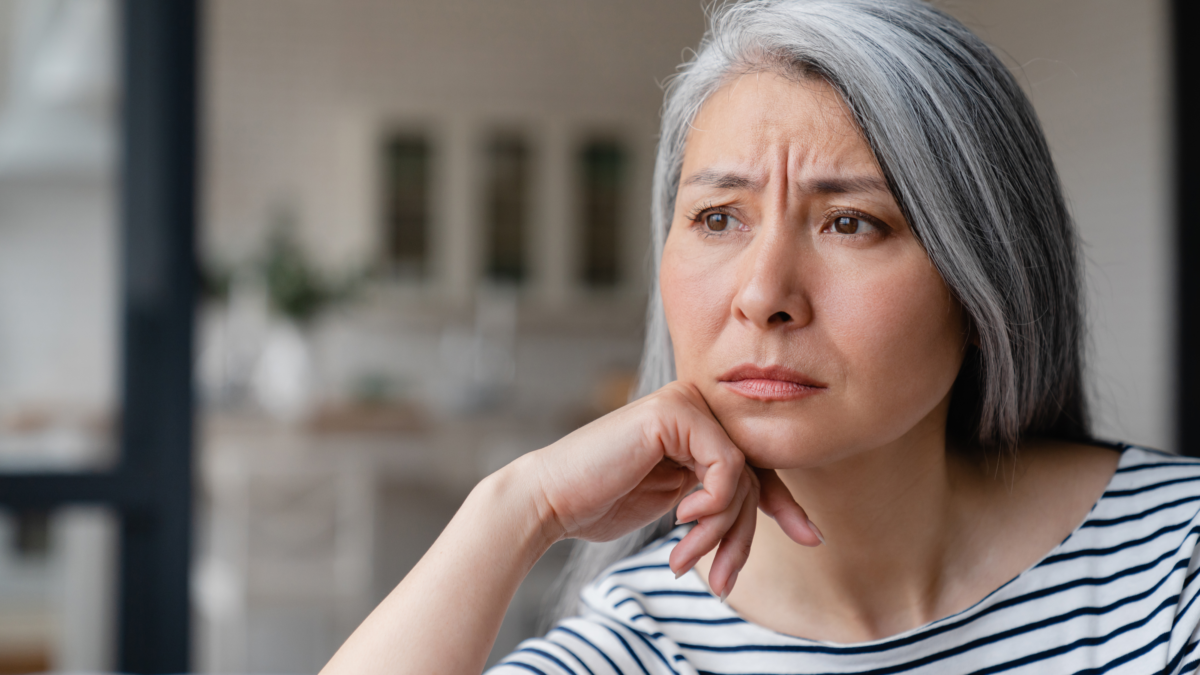
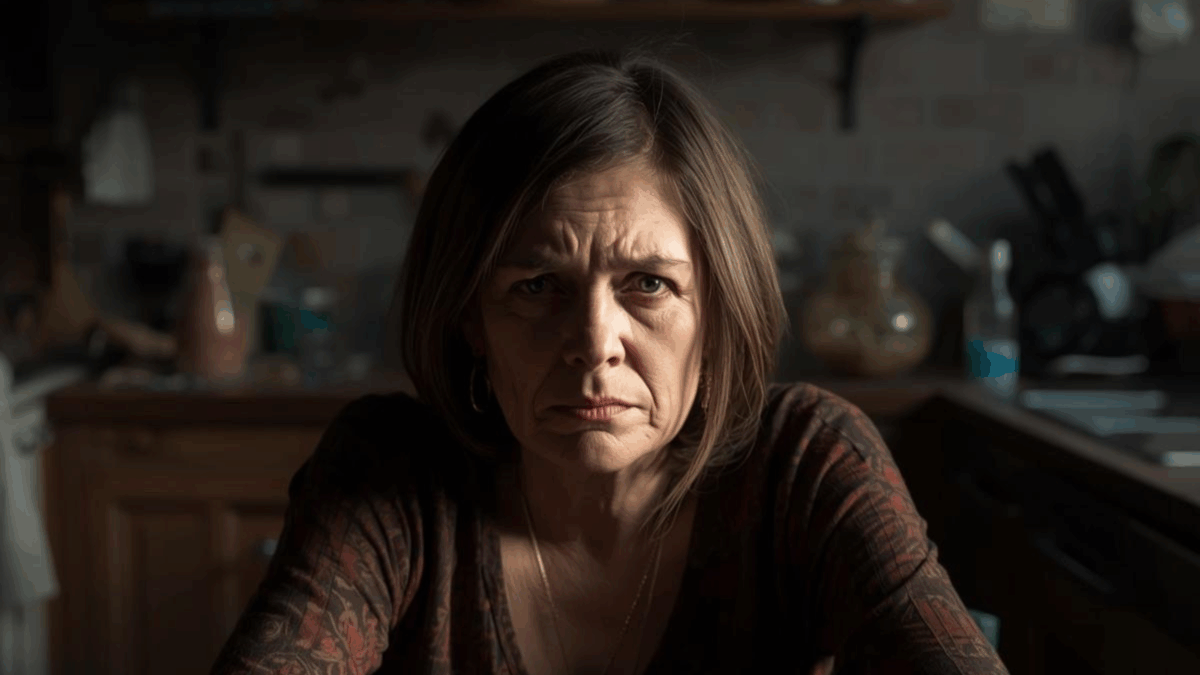
At some point, taking care of yourself started feeling strangely complicated.

Menopause self-care can quickly start feeling overwhelming when every article seems to demand more discipline, more routines, and more energy than you already have.

One article tells you to cut sugar. Another says you should wake up earlier, exercise harder, meditate longer, drink more water, track your hormones, fix your sleep, lower your cortisol, and somehow still stay productive through all of it.

Then social media adds another layer of pressure. Suddenly everyone seems to have a perfect morning routine, a cabinet full of supplements, and a solution for every symptom you’re experiencing.

Meanwhile, many people in midlife are simply trying to get through the day without feeling exhausted, anxious, overstimulated, or unlike themselves.

That’s the part many menopause conversations fail to acknowledge.

Midlife rarely arrives during a calm, quiet season of life. It often unfolds while you’re still balancing work, caregiving, relationships, emotional labor, financial stress, aging parents, growing children, and the invisible pressure of holding everything together for everyone else.

Then, almost without warning, your body begins to feel different.

Sleep becomes lighter and more fragmented. Stress feels heavier. Recovery takes longer. Emotions sit closer to the surface. Things that once felt manageable suddenly feel overwhelming in ways you can’t fully explain.

And when symptoms begin showing up—fatigue, mood changes, hot flashes, anxiety, brain fog, body changes, disrupted sleep—it becomes easy to wonder if something is wrong with you.

But often, what’s happening is something much more complex than that.

Your body is adapting.

And while that adaptation can feel unsettling, frustrating, and emotionally exhausting, it does not mean your body is failing you.

Why Menopause Feels So Much Bigger Than “Just Hormones”

One of the most surprising things about menopause is how deeply it affects everyday life.

Many people expect hot flashes. Fewer expect the emotional exhaustion, the overstimulation, the anxiety, or the strange feeling of no longer recognizing their own energy levels, stress tolerance, or emotional capacity.

That’s because estrogen influences far more than reproductive health. Hormonal changes affect the brain, nervous system, metabolism, sleep regulation, mood, memory, cognition, and stress response. Harvard Health notes that fluctuating estrogen levels during menopause can affect memory, concentration, and cognitive clarity, which helps explain why so many people describe feeling mentally “foggy” or emotionally overwhelmed during this transition.

In other words, menopause is not just a reproductive transition. It’s a full-body transition.

And for many people, it can feel like their entire internal rhythm has shifted without warning.

What makes this even more difficult is that hormonal changes often expose the stress your body has already been carrying for years.

The skipped meals that once seemed manageable suddenly leave you shaky and irritable. The late nights you used to recover from easily now affect you for days. Chronic stress that once felt “normal” suddenly becomes physically overwhelming.

Menopause has a way of revealing just how much your body has been compensating for underneath the surface.

That realization can feel emotional.

But it can also become clarifying.

Because instead of asking, “How do I force myself to keep functioning the way I used to?” many people eventually begin asking a different question:

What actually helps now?

Not perfectly.
Not instantly.
Just realistically.

Why Menopause Self-Care Feels So Exhausting

Modern wellness culture loves intensity.

Optimize everything.
Track everything.
Fix everything.

If you’re tired, there’s a supplement stack for that. If you’re gaining weight, there’s another restrictive eating plan waiting for you. If your sleep is disrupted, someone online is ready to sell you a complicated nighttime routine that requires more energy than you already have.

The problem is that menopause often responds poorly to extremes.

In fact, many people discover the opposite is true: the body during midlife tends to respond better to steadiness than punishment.

That’s difficult to accept in a culture that constantly praises discipline, productivity, and pushing through exhaustion.

Especially for people who have spent decades ignoring their own needs in order to take care of everyone else.

But eventually, many realize something important:

The body becomes less tolerant of depletion during menopause.

Less tolerant of chronic stress.
Less tolerant of inconsistent sleep.
Less tolerant of emotional overload.
Less tolerant of constant self-neglect.

And while that can feel frustrating at first, it may also be your body asking for a different kind of care.

Not louder care.
Not trendier care.
Just more supportive care.

The Small Daily Habits That Often Help the Most

One of the biggest misconceptions about menopause is that support needs to be dramatic to be effective.

But some of the habits that genuinely help people feel steadier during midlife are surprisingly simple.

Things like:

  • eating regular meals instead of skipping them
  • drinking enough water consistently
  • getting outside for movement and sunlight
  • protecting sleep routines
  • reducing overstimulation when possible
  • taking breaks before complete burnout hits
  • moving your body in sustainable ways instead of punishing ones

Simple does not mean insignificant.

In fact, these small daily habits can have a profound effect on the nervous system, stress response, blood sugar regulation, mood stability, and overall wellbeing over time.

And perhaps that’s because menopause is not only hormonal.

It’s neurological and emotional, too.

Research highlighted by The Menopause Society explains that menopause can actually affect the brain itself, influencing cognition, emotional processing, and neurological functioning in ways many people never expect. That growing body of research is helping experts better understand why menopause can feel emotionally and mentally overwhelming—not just physically uncomfortable.

Why Your Nervous System Feels So Overloaded Right Now

Many people notice something surprising during perimenopause and menopause:

Their tolerance for chaos drops dramatically.

Loud environments feel overwhelming. Packed schedules feel exhausting. Constant notifications suddenly feel unbearable. Emotionally draining conversations linger in the body longer than they used to.

This isn’t imagined.

Hormonal fluctuations can affect the nervous system’s stress response, making the body more reactive to stimulation and emotional overload.

That’s why symptoms often feel worse after emotionally exhausting days—not just physically busy ones.

Stress can intensify:

  • hot flashes
  • anxiety
  • irritability
  • sleep disruption
  • fatigue
  • emotional sensitivity

And not all stress is physical.

Mental overload counts too.

The emotional labor of caregiving.
The pressure of always being available.
The constant multitasking.
The invisible exhaustion of carrying too much for too long.

Many people describe themselves as becoming “too sensitive” during menopause. But often, what’s really happening is that the nervous system is simply overloaded.

Understanding that distinction matters.

Because it shifts the conversation away from self-criticism and toward support.

Why Rest Stops Feeling Optional in Midlife

For years, many people were taught to treat exhaustion like an achievement.

Push through.
Stay productive.
Keep going.
Rest later.

But menopause has a way of interrupting those survival patterns.

Suddenly, poor sleep affects everything. Emotional resilience drops faster. Burnout becomes harder to recover from. Stress lingers in the body longer than it used to.

The National Institute on Aging notes that sleep problems become increasingly common during menopause, often affecting mood, energy levels, memory, and overall quality of life. Johns Hopkins Medicine also explains that hormonal changes during menopause can significantly disrupt sleep patterns, which helps explain why many people feel physically and emotionally depleted during this stage of life.

And eventually, many people realize something they were never really taught before:

Rest is not laziness.

Rest is regulation.

This is why supportive routines during midlife often focus less on optimization and more on recovery.

That might mean:

  • going to bed earlier
  • creating quieter evenings
  • reducing unnecessary stressors
  • allowing space between obligations
  • saying no more often
  • protecting moments of calm

Not because you’re weak.

Because your body is adapting to enormous internal changes while still trying to carry the responsibilities of everyday life.

The Midlife Shift Away From Punishment

Many people enter menopause carrying years of pressure to control their bodies.

To shrink them.
Discipline them.
Fix them.
Override them.

But eventually, constantly fighting yourself becomes exhausting.

Especially when your body no longer responds well to force.

This is one reason extreme wellness routines often backfire during menopause. Intense restriction, overexercising, rigid schedules, and all-or-nothing habits can place additional stress on a body that is already working hard to adapt.

Support tends to work better than punishment.

That doesn’t mean health stops mattering. Movement, nutrition, hydration, sleep, and emotional wellbeing remain deeply important during midlife. However, the way these habits are approached often needs to evolve.

For example, many people discover that movement feels different now.

Some notice they recover more slowly from intense workouts. Others realize that exhausting themselves physically only increases stress and fatigue.

That doesn’t mean movement is no longer beneficial. Strength training can support muscle and bone health. Walking can improve cardiovascular health and emotional wellbeing. Gentle mobility work can help with stiffness and stress regulation.

But increasingly, many people find that the most supportive movement is the kind they can sustain consistently without burning themselves out.

Consistency often matters more than intensity now.

And honestly, that realization can feel freeing.

The Emotional Grief Hidden Inside Menopause

There’s another part of menopause that often goes unspoken.

Grief.

Not necessarily dramatic grief. But subtle grief.

Grief for the body that once felt predictable.
Grief for energy levels that changed.
Grief for the version of yourself who could push through everything without consequences.
Grief for feeling unfamiliar inside your own skin.

These emotions are incredibly common, even though many people rarely say them out loud.

Because menopause is not only physical.

It can affect identity, confidence, relationships, sexuality, emotional resilience, and the way people experience themselves in the world.

That’s a lot for one nervous system to carry.

Which is why compassion matters here.

Not performative self-care marketed as another productivity tool. Real compassion.

The kind that allows you to stop treating your body like a problem that constantly needs fixing.

Maybe Menopause Isn’t Asking You to Push Harder

At some point, many people stop asking:

“What’s the perfect routine?”

And start asking:

“What actually helps me feel more like myself again?”

That shift changes everything.

Because menopause often teaches something many people were never encouraged to learn earlier in life:

Health is not punishment.
It’s relationship.

A relationship with your body.
Your energy.
Your emotional capacity.
Your limits.
Your needs.

And relationships built on criticism rarely thrive.

Maybe this stage of life is not asking you to become stricter with yourself.

Maybe it’s asking you to become more supportive of yourself than you’ve ever been before.

Less punishment.
Less pressure.
Less fighting your body for changing.

More listening.
More steadiness.
More nourishment.
More care that actually feels like care.

Because often, what truly helps during menopause is not dramatic at all.

It’s the quiet daily choices that help your body feel safe again.

Eating before you’re starving.
Resting before complete burnout.
Protecting your sleep.
Reducing overstimulation.
Moving your body because it feels supportive—not punishing.
Allowing yourself to need care without guilt.

Small things.

But small things practiced consistently can change how your body feels over time.

And perhaps that’s the real shift midlife asks of people:

Not to become harder on themselves.

But to finally stop abandoning themselves in the process of trying to hold everything else together.

Finding Your Way Back to Yourself

No routine will make every symptom disappear overnight. No supplement, workout, or wellness trend can completely remove the complexity of hormonal transition.

But the right kind of support can help you feel steadier, calmer, more resilient, and more connected to yourself again.

Not the version of yourself from twenty years ago.

The version of yourself who exists now.

The one navigating change while still showing up for life every day.

That version deserves care too.

If you’re looking for more grounded, compassionate conversations about menopause, hormonal health, emotional wellbeing, sleep, stress, and the realities of navigating midlife, explore more from Menopause Network.

Because people deserve menopause conversations that feel informed, inclusive, supportive, and deeply human.


References

National Institute on Aging. “Sleep Problems and Menopause: What Can I Do?”
https://www.nia.nih.gov/health/menopause/sleep-problems-and-menopause-what-can-i-do

Harvard Health Publishing. “Menopause and Brain Fog: What’s the Link?”
https://www.health.harvard.edu/womens-health/menopause-and-brain-fog-whats-the-link

Johns Hopkins Medicine. “How Does Menopause Affect My Sleep?”
https://www.hopkinsmedicine.org/health/wellness-and-prevention/how-does-menopause-affect-my-sleep

The Menopause Society. “How Menopause Restructures a Woman’s Brain.”
https://menopause.org/press-releases/how-menopause-restructures-a-womans-brain
Hot Flashes in Real Life: The Meetings, The Nights, The Moments No One Sees

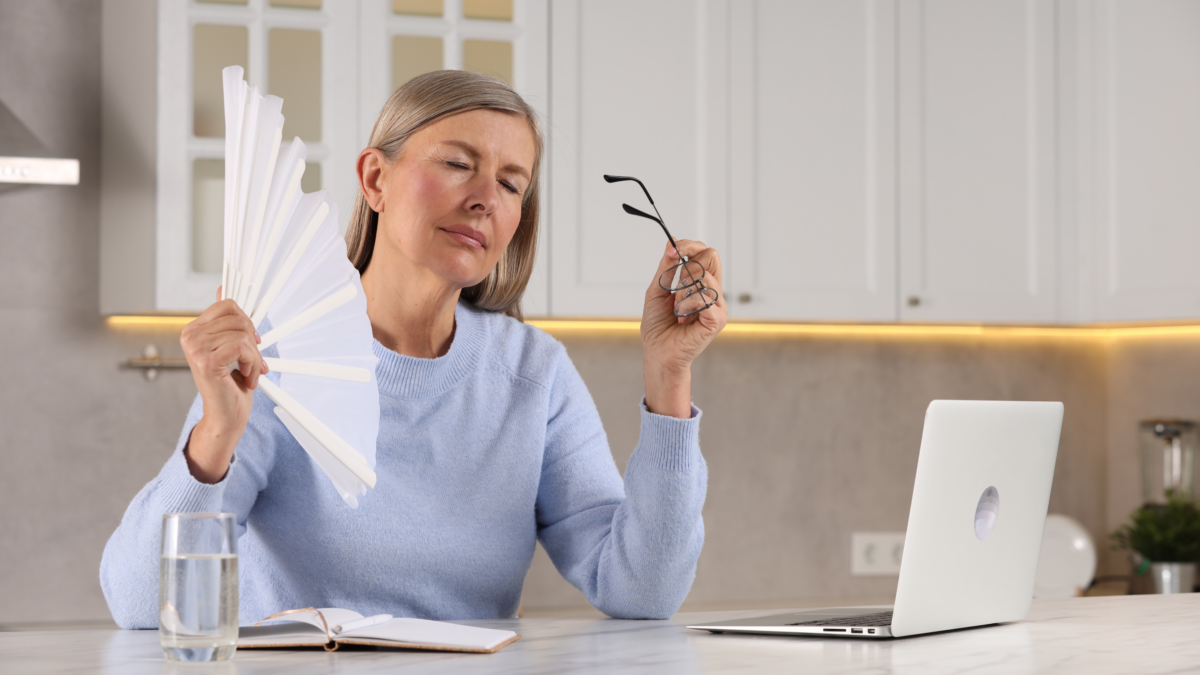
Hot flashes have a way of arriving at the worst possible moment.

Not when you’re relaxing quietly at home with nobody around. Not during peaceful evenings when you can comfortably peel off layers and laugh it off privately. Instead, they tend to appear in the middle of real life—during conversations, meetings, grocery runs, long drives, dinner reservations, or moments when you’re already trying hard to hold everything together.

One minute, everything feels completely normal.

Then suddenly, a wave of heat rises through your chest and neck so quickly it almost feels surreal. Your face warms instantly. Sweat gathers near your hairline. Your heartbeat shifts. And while everyone around you continues talking as if nothing has changed, your entire body suddenly feels impossible to ignore.

So you smile through it.

You keep nodding.

You try to stay focused while internally wondering one thing:

Can other people tell?

That’s the part of menopause hot flashes many people don’t talk about enough. Conversations often focus on the symptom itself, but rarely on the emotional experience of living through it in everyday life. Because hot flashes aren’t just physical. They can affect confidence, concentration, sleep, emotional wellbeing, and the quiet relationship many women have with their own bodies.

And for many people navigating perimenopause and menopause, that emotional disruption is often the part that lingers the longest.

Hot Flashes Are Common—But They’re Often Misunderstood

Hot flashes are one of the most recognized menopause symptoms, yet they remain surprisingly misunderstood by those who haven’t experienced them personally.

From the outside, they can sound simple. A person suddenly feels warm for a few minutes, maybe sweats a little, and then the moment passes.

However, anyone living through frequent hot flashes knows the experience rarely feels that small.

In fact, research on vasomotor symptoms—the medical term used for hot flashes and night sweats—shows that these symptoms affect up to 80% of women during the menopause transition. The same research also highlights how significantly they can affect sleep, concentration, emotional wellbeing, and overall quality of life. That’s a major reason why hot flashes often feel far more disruptive than people expect. According to a clinical review published through the National Library of Medicine, many women continue experiencing vasomotor symptoms for years, sometimes even longer than a decade.

For many women in their 40s and beyond, hot flashes become one of the earliest signs that hormonal changes are beginning. During perimenopause, fluctuating estrogen levels affect the body’s temperature regulation system, causing the brain to react more intensely to even subtle shifts in body temperature.

As a result, the body responds with sudden heat, flushing, sweating, chills afterward, and sometimes even a racing heartbeat. Cleveland Clinic specifically notes that hot flashes may also include clammy skin, anxiety-like sensations, and rapid increases in body heat that can feel physically overwhelming in the moment.

Still, medical explanations only tell part of the story.

What often gets overlooked is that hot flashes don’t happen in calm, controlled environments. They happen in the middle of ordinary life while people are still expected to work, parent, socialize, focus, care for others, and continue functioning as though nothing unusual is happening.

That’s why hot flashes can feel so emotionally disruptive.

You may be trying to finish a presentation. Help your family. Sit through a meeting. Drive through traffic. Get through dinner with friends. Or simply make it through the day without feeling overwhelmed.

Then suddenly, your body feels like it’s operating on an entirely different schedule.

The Moment It Happens (And You’re Not Prepared)

One of the most difficult parts about hot flashes is their unpredictability.

Some begin gradually, starting as a faint warmth before building into full-body heat. Others arrive almost instantly, catching people completely off guard in public spaces where there’s no easy escape or privacy.

Many women describe experiencing hot flashes:

  • during meetings
  • standing in long lines
  • while driving
  • at restaurants
  • during social gatherings
  • halfway through conversations
  • in crowded rooms with little airflow

At the same time, the physical sensation itself can become incredibly distracting.

Many people report temporarily losing focus during a hot flash—not because they suddenly forget what they were doing, but because the body demands immediate attention. It becomes difficult to think clearly when your skin feels overheated, your heartbeat speeds up unexpectedly, and discomfort begins spreading through your chest, face, and neck all at once.

Then comes the internal monitoring.

Am I visibly sweating?

Is my face turning red?

Do I look nervous?

Can anyone notice this happening?

As those thoughts build, the emotional discomfort can intensify the experience even further. Research on vasomotor symptoms has found that menopause-related hot flashes are closely associated with anxiety, mood disruption, fatigue, and reduced quality of life—especially when symptoms interfere with sleep and daily functioning.

In professional environments especially, many women feel pressure to remain composed while silently managing symptoms that other people may not fully understand.

Over time, that pressure can feel exhausting.

What a Hot Flash Actually Feels Like

People often describe hot flashes as simply “feeling warm,” but that explanation barely captures the reality.

For some women, it feels like heat radiating upward from deep inside the chest. Others describe it as a sudden internal furnace turning on without warning. Some notice tingling across the skin before the heat begins, while others become aware of a pounding heartbeat first.

According to Cleveland Clinic, common symptoms of hot flashes may include:

  • sudden intense heat
  • facial flushing
  • sweating
  • damp clothing or hair
  • chills afterward
  • rapid heartbeat
  • lightheadedness
  • physical discomfort that feels difficult to ignore

Then there are menopause night sweats—the nighttime version of hot flashes that can quietly dismantle sleep quality over time.

Some people wake up mildly overheated. Others wake drenched in sweat, needing to change clothes, bedding, or even move to another room temporarily before falling asleep again.

At first, it may seem manageable.

But gradually, interrupted sleep starts affecting everything else.

Energy becomes harder to maintain. Concentration weakens. Emotional resilience drops. Small stressors suddenly feel bigger than they used to.

And because menopause symptoms are still not discussed openly enough, many women blame themselves before recognizing the physical connection.

Maybe I’m just stressed.

Maybe I’m overworked.

Maybe I’m simply getting older.

However, research published through the National Library of Medicine shows that vasomotor symptoms are strongly associated with sleep disruption, daytime fatigue, mood changes, and cognitive difficulties. In other words, the exhaustion many women feel is not “just in their head.” It’s often deeply connected to the body repeatedly losing restorative sleep.

Why Certain Situations Feel More Intense

Not every hot flash feels equally overwhelming.

The environment matters.

A hot flash at home alone may feel manageable. Meanwhile, the exact same symptom during an important meeting, crowded event, or social gathering can feel deeply uncomfortable.

Stress also plays a role.

When the body is already emotionally overwhelmed or physically tense, hot flashes often feel more intense both physically and mentally. Cleveland Clinic notes that stress, overheated environments, caffeine, alcohol, spicy foods, and smoking are among the common triggers that may worsen symptoms for some women.

At the same time, visibility changes the experience entirely.

A large part of the emotional discomfort comes from wondering whether other people can see what’s happening physically. Women often become hyperaware of sweating, flushed skin, fanning themselves, removing layers, or suddenly needing cooler air.

Eventually, that self-consciousness can begin affecting confidence.

Some people start dressing differently. Others avoid overheated environments, outdoor activities, or crowded spaces whenever possible. Many instinctively choose seats near windows, fans, or air vents without consciously thinking about it anymore.

Individually, these adjustments may seem minor.

Together, however, they reveal how much mental energy symptom management can quietly require.

The Night Version: When Sleep Slowly Starts Falling Apart

Night sweats deserve their own conversation because they affect far more than nighttime comfort.

Sleep disruption changes everything.

Initially, it may seem manageable. You wake up overheated once or twice, cool down, and eventually fall back asleep. However, over time, interrupted sleep accumulates quietly in the background of everyday life.

Fatigue slowly becomes part of the daily routine.

You wake feeling unrested even after technically spending enough hours in bed. Your patience shortens. Your concentration weakens. Motivation becomes harder to maintain. Even minor stressors suddenly feel heavier.

Because menopause symptoms are still minimized in many conversations, women often assume they simply need to “push through” the exhaustion.

But the body keeps score.

And when sleep quality declines consistently, the effects eventually show up everywhere—in mood, focus, productivity, relationships, emotional resilience, and overall health.

Research on vasomotor symptoms consistently shows that night sweats and repeated nighttime awakenings can significantly reduce quality of life over time. That’s part of why chronic exhaustion during menopause can feel so emotionally draining. The fatigue builds slowly, quietly, and repeatedly.

Many women spend months trying to function through chronic exhaustion before realizing how deeply night sweats have been affecting their wellbeing.

Why Hot Flashes Feel So Personal

There’s another layer to hot flashes that many people rarely discuss openly: they can change how women feel inside their own bodies.

Suddenly, comfort becomes strategic.

You think about room temperature constantly. You choose fabrics differently. You carry water everywhere. You avoid standing in direct sunlight too long. You scan unfamiliar spaces for windows, fans, or cooler seating areas automatically.

Little by little, the body starts feeling less predictable.

And that loss of predictability can feel emotional in ways many women don’t expect.

Especially for people who previously felt confident navigating their physical wellbeing, hot flashes can create a new sense of vulnerability and body awareness that feels unfamiliar.

Still, adapting to your body’s needs is not weakness.

It’s awareness.

In fact, many women navigating perimenopause and menopause become remarkably skilled at recognizing physical cues, identifying triggers, and adjusting routines to support themselves more compassionately.

That awareness deserves understanding—not embarrassment.

What Actually Helps in Real Life

There’s no universal solution for hot flashes, and women deserve honesty about that.

Some strategies work incredibly well for one person and make little difference for another. Still, many people do find meaningful relief through practical adjustments that support both physical comfort and emotional wellbeing.

Helpful approaches may include:

  • dressing in breathable layers
  • keeping bedrooms cooler at night
  • using lightweight bedding
  • staying hydrated
  • identifying possible triggers gently
  • reducing overheating whenever possible
  • practicing calming breathing techniques during episodes
  • improving sleep habits
  • creating lower-stress recovery routines

Cleveland Clinic also recommends paying attention to personal triggers, since symptoms may worsen in warm environments or during periods of increased stress. For some women, small environmental adjustments can make everyday life feel significantly more manageable.

Most importantly, many women experience emotional relief once they stop treating every hot flash like an emergency.

Understanding what’s happening physiologically can reduce panic during symptoms. Instead of spiraling into embarrassment or fear, many people feel more grounded once they recognize that these episodes—while disruptive—are temporary and manageable.

That emotional shift matters more than people realize.

Because sometimes, the fear surrounding symptoms becomes more exhausting than the symptoms themselves.

When Hot Flashes Deserve More Attention

Hot flashes are common during perimenopause and menopause, but common does not mean insignificant.

If symptoms are severely disrupting sleep, interfering with work, affecting emotional wellbeing, or making daily life difficult to manage, professional support matters.

Women deserve healthcare conversations that take their symptoms seriously.

Research published through the National Library of Medicine notes that although vasomotor symptoms affect a large percentage of menopausal women, many people remain untreated despite the significant impact symptoms can have on daily life and emotional wellbeing.

Support may include lifestyle adjustments, hormonal treatment options, non-hormonal therapies, sleep support, stress management strategies, or further medical evaluation depending on individual health history and symptom severity.

Most importantly, no one should feel pressured to simply “suffer through” menopause symptoms silently.

Menopause is a major biological transition.

Support, education, and compassionate care can make an enormous difference.

You’re Not Alone in This

One of the most isolating parts of hot flashes is how invisible they can feel to everyone else.

A woman may sit through an entire meeting smiling professionally while internally fighting discomfort, anxiety, overheating, and exhaustion all at once. Someone else may wake up repeatedly every night without ever telling anyone how depleted they feel the next morning.

From the outside, life may appear completely normal.

Internally, everything feels different.

But millions of women are navigating these same moments every single day.

The woman carrying a portable fan in her purse.
The friend sleeping with the thermostat unusually low.
The coworker quietly stepping outside for fresh air.
The person choosing layered clothing even in mild weather.

So many people are adapting silently while trying to maintain the rhythm of everyday life.

That’s exactly why conversations like this matter.

Because understanding reduces fear.
Recognition reduces isolation.
And support changes the experience entirely.

Keep Reading, Keep Understanding Your Body

Menopause has a way of making women feel like they’re navigating unfamiliar territory alone. However, the more openly we talk about symptoms like hot flashes, the less isolating they become.

If this article felt familiar, you’ll find more real conversations, practical support, and evidence-based guidance throughout Menopause Network. Because understanding what’s happening in your body should never feel confusing—or lonely.

Explore more menopause stories, symptom guides, and supportive resources here on Menopause Network.


References

Cleveland Clinic. (2024). Hot flashes: Symptoms, causes & treatment. Cleveland Clinic. https://my.clevelandclinic.org/health/symptoms/15223-hot-flashes

Shifren, J. L., Gass, M. L. S., & The NAMS Recommendations for Clinical Care of Midlife Women Working Group. (2023). Vasomotor symptoms during menopause: A practical guide on current treatments and future perspectives. National Library of Medicine. https://pmc.ncbi.nlm.nih.gov/articles/PMC9938702/

Perimenopause Advice for My Younger Self

Oh, sweetheart.

You’re stronger than you think.

I know you’re juggling so much. You’re raising kids, climbing ladders, smoothing over tension at dinner, laughing at things that aren’t funny, and carrying everyone’s needs like it’s your job to hold the world together.

Here’s the thing: you feel like your body is starting to betray you—weight that won’t budge, moods that feel like storms, sleep that comes and goes like a bad date. You haven’t called it perimenopause yet, but those are the early whispers. It’s coming. This is the perimenopause advice for my younger self I wish I could have heard then.

So, before it does, here’s what I want you to know:


Perimenopause Will Change Your Body—And That’s Okay

Perimenopause advice for my younger self begins here: Your breasts will change. Your sleep will get weird. Your skin will surprise you. And yes, your jeans may not fit.

Still, none of this means you’re broken.

You’re evolving. Even in her confusion and chaos, your body is trying to protect you. Once you stop fighting her, peace gets closer.


Your Worth Has Nothing to Do With What You Produce

You don’t have to earn your rest or prove your usefulness to deserve care. And you certainly don’t have to be exhausted to feel valuable.

Eventually, you’ll learn to rest without guilt. But don’t wait until your body forces you to.


Speak the Truth Sooner—It Matters in Perimenopause

Say no. Ask for help. Let the people you love know what you need before resentment builds.

You think being low-maintenance makes you easier to love. Maybe you learned that from a parent, a partner, or a culture that praised your silence. However, it doesn’t. It makes you disappear.


You Will Outgrow People—That’s Part of Perimenopause, Too

Friendships will fade. Some bonds will break when you stop contorting yourself to fit. Let them go. What comes next is better.

The right people won’t need a watered-down version of you.


Aging Won’t Make You Invisible—It Makes You Undeniable

It won’t make you invisible—it will make you undeniable.

Eventually, you’ll stop obsessing over your thighs and start noticing your power. The light in your eyes. The steadiness in your voice. Soon, you’ll care less about being understood and more about understanding yourself.

There is a power coming that you can’t even imagine.


Trust the Woman You’re Becoming Through Perimenopause

She’s fierce. She’s soft. She’s done performing. Most of all, she knows things now—things only time, loss, joy, and the radical act of choosing herself could teach.

Believe me—she is worth becoming.

So please, don’t rush to fix what doesn’t need fixing.

Instead, keep going. Step by step. One truth at a time.

Because you’re already becoming her.

Why Menopause Makes Family Drama Feel So Much Bigger

One minute I was discussing sweet potatoes. The next, I was in the bathroom sobbing.

I didn’t used to be this reactive. That’s what I told myself after snapping at my sister over a holiday menu. Or crying in the bathroom after a passive-aggressive comment from my mother. Or storming out of a room I used to feel safe in. It wasn’t just them. It wasn’t just me. Something deeper was happening—something hormonal, emotional, and primal all tangled together.

If this sounds familiar, you’re not alone. And no, you’re not overreacting. You may be navigating a collision between menopause and long-standing family dynamics—two powerful forces that shape our identities and push all our buttons, often at the same time.

This is for every woman who feels like she’s unraveling in front of the people who are supposed to love her. If you’ve ever thought, “Why can’t I handle this like I used to?” — here’s the truth: your body is changing, your emotional wiring is recalibrating, and your tolerance for dysfunction is disappearing. That’s not a breakdown. It’s a reckoning.

Let’s unpack why.

The Hormonal Storm Beneath the Surface

Perimenopause and menopause aren’t just about hot flashes or irregular periods. They’re complex neurological, psychological, and emotional transitions that change how you interpret tone, regulate emotions, and respond to stress.

Estrogen and Emotional Regulation

Estrogen affects the brain’s limbic system—especially the amygdala (your fear and emotion center) and the prefrontal cortex (your reasoning and impulse control hub). When estrogen levels fluctuate, so can:

  • Your emotional regulation
  • Your sensitivity to stress
  • Your capacity for patience

Research shows that estrogen receptors in these areas influence how we experience and manage emotions (Barth, Villringer, & Sacher, 2023).

Progesterone and Your Calming Center

Progesterone, often considered the body’s natural sedative, supports GABA—a neurotransmitter that calms the nervous system. When progesterone drops, you may feel:

  • More anxious
  • Overwhelmed
  • Sleep-deprived (and we all know how sleep deprivation amplifies emotions)

Cortisol and Chronic Stress

When you combine low progesterone, fluctuating estrogen, and high cortisol (the stress hormone), it’s like walking through an emotional minefield. Small comments hit hard. Old wounds feel raw. You may think, “Why am I so sensitive right now?”

Importantly, the menopause transition is recognized as a vulnerable time for mood changes—not just physical ones. Emotional reactivity becomes more common (Harvard Health Publishing, 2023).

When Hormones Meet Family History

Let’s move beyond hormones to the people around you.

When your aunt comments on your weight, or your brother minimizes your exhaustion, it’s rarely about that single moment. It’s about years—sometimes decades—of emotional labor, unspoken pain, and invisible expectations.

Menopause often strips away the emotional filters we once relied on to keep the peace. Things we tolerated for years suddenly feel unbearable. That’s not regression. That’s clarity.

The Invisible Labor of Midlife Women

Midlife women carry the emotional load for everyone:

  • Caring for aging parents
  • Supporting kids or adult children
  • Managing relationships or divorces
  • Holding space for others—while quietly burning out

Now your body is asking for something else: rest, recalibration, and radical honesty. That shift alone can rattle family dynamics.

Nina, 52, told me she left Thanksgiving early after her sister made a ‘joke’ about her mood swings. “Ten years ago, I’d have laughed it off. This year? I packed my pie and left.”

When Emotional Flooding Takes Over

Emotional flooding occurs when your nervous system gets overwhelmed. You might:

  • Feel hot, dizzy, or flushed
  • Want to leave the room
  • Struggle to speak
  • Cry unexpectedly
  • Go completely numb

This isn’t drama. It’s your body saying: “This is too much.”

Research links negative or tense relationships with close family members—especially parents, siblings, or partners—with depressive symptoms and lower psychological well-being in midlife adults (Gilligan, Suitor, Rurka, & Pillemer, 2017).

Why Boundaries Matter More Than Ever

Most of us weren’t raised to set boundaries. We were taught to be nice. To please. To shrink so others could stay comfortable.

But midlife—especially with hormonal upheaval—requires a different approach.

What Boundaries Really Are

Boundaries aren’t walls. They’re filters. They protect your energy, peace, and nervous system.

A boundary might sound like:

  • “That comment isn’t helpful.”
  • “I’m not available for this conversation right now.”
  • “I need some time to myself.”

They are clear, kind, and non-negotiable.

How to Protect Your Emotional Safety Around Family

Here are some powerful ways to support yourself during triggering moments:

1. Anticipate Your Triggers

  • Know your “hot buttons”
  • Decide ahead how you’ll respond
  • Let someone safe help support you

2. Use Grounding Tools in Real Time

  • Press your feet into the floor
  • Put a cold object on your neck or wrist
  • Breathe in for 4, hold for 4, exhale for 6

3. Give Yourself Permission to Leave

  • Step away. Take a walk. Decline the invite. Presence isn’t a performance.

4. Don’t Explain Boundaries to People Who Benefit From You Not Having Them

  • If someone keeps crossing the line, you don’t owe them endless explanations. State it once. Hold it firmly.

When the Drama Comes from Inside the House

Sometimes, it’s not your aunt or cousin. It’s your partner. Your grown child. Your parent living in the guest room.

Even the most loving relationships can feel strained when menopause enters the mix. Hormonal shifts, identity changes, and physical symptoms ripple into intimacy, communication, and patience.

Emotion regulation isn’t one-size-fits-all. We manage emotions differently depending on the relationship—whether with a parent, partner, or sibling. That’s why close family interactions can hit harder (Günther & Baucom, 2021).

You’re not wrong for needing more softness, space, or solitude.

Support Is Out There

  • Consider couples or family therapy
  • Try guided apps like Paired or Lasting
  • Use “I feel __ when __ because __” to clarify emotions without blaming

What Healing Actually Looks Like

Healing in menopause isn’t about everyone suddenly treating you better. It’s about:

  • Trusting your instincts
  • Honoring your emotional signals
  • Grieving what’s no longer working—without guilt
  • Making peace with being misunderstood by people unwilling to grow

You’re not hard. You’re clear.

This Chapter Is Yours to Rewrite

Menopause is more than biology—it’s a reset. A chance to:

  • Decide how you’re treated
  • Stop over-explaining your needs to people who won’t listen
  • Choose relationships that honor your growth—not guilt you into old roles

So let your triggers teach you—not trap you.
Let your anger guide you—not consume you.
And let your changing body lead you—toward peace, not performance.

Your Next Step

If family dynamics feel unbearable lately, start here:

  • Name your top three triggers
  • Set one boundary
  • Practice nervous system safety
  • Seek therapy or community support

You’re not broken. You’re transforming. And this version of you? She’s not angry—she’s awake.


Disclaimer: This blog is for informational purposes only and is not intended to replace medical advice, diagnosis, or treatment. Please consult your healthcare provider before making decisions about hormone therapy, mental health treatments, or lifestyle changes. Everyone’s experience with menopause is unique, and personalized care is essential.

References
Barth, C., Villringer, A., & Sacher, J. (2023). Sex hormones affect neurotransmitters and shape the adult female brain during hormonal transition periods. Brain Sciences, 15(9), 1003. https://doi.org/10.3390/brainsci15091003

Gilligan, M., Suitor, J. J., Rurka, M., & Pillemer, K. (2017). Family networks and psychological well-being in midlife. Research in Human Development, 14(1), 18–33. https://doi.org/10.1080/15427609.2017.1285865

Günther, A., & Baucom, B. R. (2021). Emotion regulation in close relationships: The role of individual and relational factors. Frontiers in Psychology, 12, 697901. https://doi.org/10.3389/fpsyg.2021.697901

Harvard Health Publishing. (2023). Menopause and mental health. Harvard Health.https://magazine.hms.harvard.edu/articles/mental-health-aspects-menopause

Why Do We Whisper “Menopause” Like It’s a Curse Word?

I once overheard a man at a dinner party say, “My wife’s going through… you know, that phase.”

He said it like she had a contagious disease.

No one asked what he meant. The women at the table exchanged glances. The men looked uncomfortable. And the conversation moved quickly onto the wine list.

That moment stuck with me—not because it was shocking, but because it was so… normal. It was a reflection of how deeply menopause stigma is embedded in everyday life.

Menopause. The word we don’t say. The reality we don’t talk about. The life chapter millions of women go through, often surrounded by people who love them—and yet still feel completely alone.

So, let’s talk about it. Loudly. Because the stigma around menopause doesn’t just hurt the women going through it. It shapes the way families, partners, and entire communities respond (or don’t).

What Is Menopause—And Why the Silence?

  • Menopause marks the end of a woman’s menstrual cycle.
  • It’s officially diagnosed after 12 consecutive months without a period.
  • The average age of menopause in the United States is around 51, though it varies among individuals (Cleveland Clinic, 2024).
  • According to the Cleveland Clinic, symptoms often start years earlier, during a phase called perimenopause, which can last anywhere from 4 to 10 years (Cleveland Clinic, 2025).

Hot flashes. Mood swings. Sleep disruptions. Brain fog. Vaginal dryness. Loss of libido.

These symptoms aren’t just “women’s issues”—they impact households, relationships, work lives, and mental health.

Still, we whisper. We joke. We dismiss.

Why?

Because we’ve been taught to fear aging, to devalue women’s bodies as they change, and to pretend that anything connected to female hormones is irrational, embarrassing, or shameful.

The History of Hushed Tones

Let’s be honest: the stigma didn’t start with our generation.

Historically, menopause has been portrayed as a form of female decline. In Victorian times, women experiencing symptoms were often diagnosed with “hysteria.” And up until the late 20th century, many medical texts described menopausal women as emotionally unstable, even unfit for work or relationships (Lock, 1993).

Is it any wonder we learned to keep quiet?

Today, despite progress in gender equality, menopause remains a stubborn blind spot.

According to a 2025 Astellas global study, 59% of people still view menopause as a taboo subject, and 57% of women said they felt unsupported at work during this transition (Astellas, 2025).

The Real-World Consequences of Menopause Stigma

Stigma isn’t just an awkward dinner party moment—it’s a public health issue.

When women feel they can’t talk openly about what they’re going through, they’re less likely to:

  • Seek medical help
  • Access accurate information
  • Get support at work or home
  • Advocate for themselves in relationships

This silence leads to increased isolation and emotional strain. It reinforces misinformation and discourages conversations that could offer support (HealthyWomen, 2025).

Worse yet, silence creates a ripple effect. Partners don’t understand what’s happening. Children notice tension but don’t know why. Coworkers misread behavior. And the woman at the center of it all begins to question her own worth.

“She Changed Overnight”: When Loved Ones Don’t Understand

Sarah, 49, told me:
“My husband thought I was angry all the time. I wasn’t. I was exhausted. I was drenched in sweat every night, my brain felt scrambled, and I hadn’t slept well in weeks. I didn’t know how to explain it—and he didn’t ask.”

Stories like Sarah’s are not rare. And while specific data on partner responses is limited, experts agree that when menopause isn’t openly discussed, loved ones may misinterpret symptoms as personality changes or emotional distance (Northwell Health, 2025).

When confusion meets silence, frustration follows.

How Menopause Stigma Affects Support at Home and Work

Imagine this:

  • Every high school student learns about menopause like they do puberty.
  • Sitcoms portray it with empathy—not punchlines.
  • Partners ask, “How can I support you?” instead of backing away in confusion.

That’s not fantasy. That’s the future we can build—if we stop whispering.

The Role of Partners and Families in Breaking the Silence

You don’t need a medical degree to support someone through menopause. What you do need:

  • Curiosity — Ask questions. Learn about the symptoms.
  • Patience — Mood swings and sleep disruptions aren’t personal attacks.
  • Empathy — This is a profound physical and emotional shift. Validate that.
  • Advocacy — Speak up when menopause is mocked or dismissed in your circles. Support awareness campaigns at work or in your community.

When partners show up—not just physically, but emotionally—it changes everything.

What Workplaces, Communities, and Cultures Must Do Next

According to a 2024 Catalyst report, more than half of menopausal women say their symptoms negatively affect their work—and yet only 11% feel comfortable discussing it with their employer (Catalyst, 2024).

We’ve built family leave policies, mental health days, and DEI initiatives. Now, it’s time to add menopause support:

  • Flexible work hours during intense symptom phases
  • Menopause education as part of HR training
  • Open forums and employee resource groups
  • Visible support from leadership

Likewise, community centers, churches, and schools—every space where people gather—can help normalize the conversation (UOC, 2025).

Let’s Talk About Menopause at the Dinner Table

Menopause isn’t a dirty word. It’s not a punchline. It’s not a reason to pity someone or tiptoe around them.

Instead, it’s a transition. A normal, biological part of life that deserves the same compassion, curiosity, and conversation we give to other health topics.

And here’s the thing: when families talk, when partners lean in instead of backing off, when workplaces adapt, when communities listen—women thrive (Menopause Global Alliance, n.d.).

Your Next Step: Be the Loud One in the Room

Here’s your challenge:

  • Say the word. Out loud. Around the dinner table. With your kids. At work.
  • Ask your partner, mother, or friend how they’re feeling—and really listen.
  • Speak up when someone makes a joke or dismisses menopause symptoms.
  • Start a conversation at your workplace or community group about how to support women during this transition.

Because change doesn’t begin with policy. It begins with voice.

Yours.

Let’s stop whispering. Let’s start owning the conversation.


Disclaimer: This content is for informational purposes only and is not a substitute for professional medical advice, diagnosis, or treatment. Always consult your healthcare provider before making any decisions about your health, especially related to medication, hormones, or sexual wellbeing. Every woman’s body is different, and what works for one may not work for another.


References

Astellas. (2025). New research reveals impact of menopause stigma. Astellas Pharma Global Newsroom. https://newsroom.astellas.com/2025-03-07-New-Research-Reveals-Impact-of-Menopause-Stigma

Catalyst. (2024). Menopause in the workplace: Addressing stigma and supporthttps://www.catalyst.org/insights/2024/address-menopause-stigma

Cleveland Clinic. (2024). Menopausehttps://my.clevelandclinic.org/health/diseases/21841-menopause

Cleveland Clinic. (2025). Perimenopause: Age, stages, signs, symptoms & treatmenthttps://my.clevelandclinic.org/health/diseases/21608-perimenopause

HealthyWomen. (2025). How the stigma of menopause and aging affect women’s experienceshttps://www.healthywomen.org/your-health/stigma-of-menopause-and-aging-affect-womens-experiences

Lock, M. (1993). Encounters with aging: Mythologies of menopause in Japan and North America. University of California Press.

Menopause Global Alliance. (n.d.). Breaking the silence: Menopause stigma around the worldhttps://menopauseglobalalliance.org/breaking-the-silence-menopause-stigma-around-the-world/

National Institute on Aging. (2024). What is menopause? U.S. Department of Health and Human Services. https://www.nia.nih.gov/health/menopause/what-menopause

Northwell Health. (2025). Why menopause stigma persists—and how to end ithttps://www.northwell.edu/katz-institute-for-womens-health/articles/women-stigmatized-over-menopause

UOC – Universitat Oberta de Catalunya. (2025). Ten actions to reduce discrimination faced by women during menopausehttps://www.uoc.edu/en/news/2025/actions-to-reduce-discrimination-faced-by-women-during-the-menopause