The Weight That Won’t Budge: Why Your Body Changes During Menopause

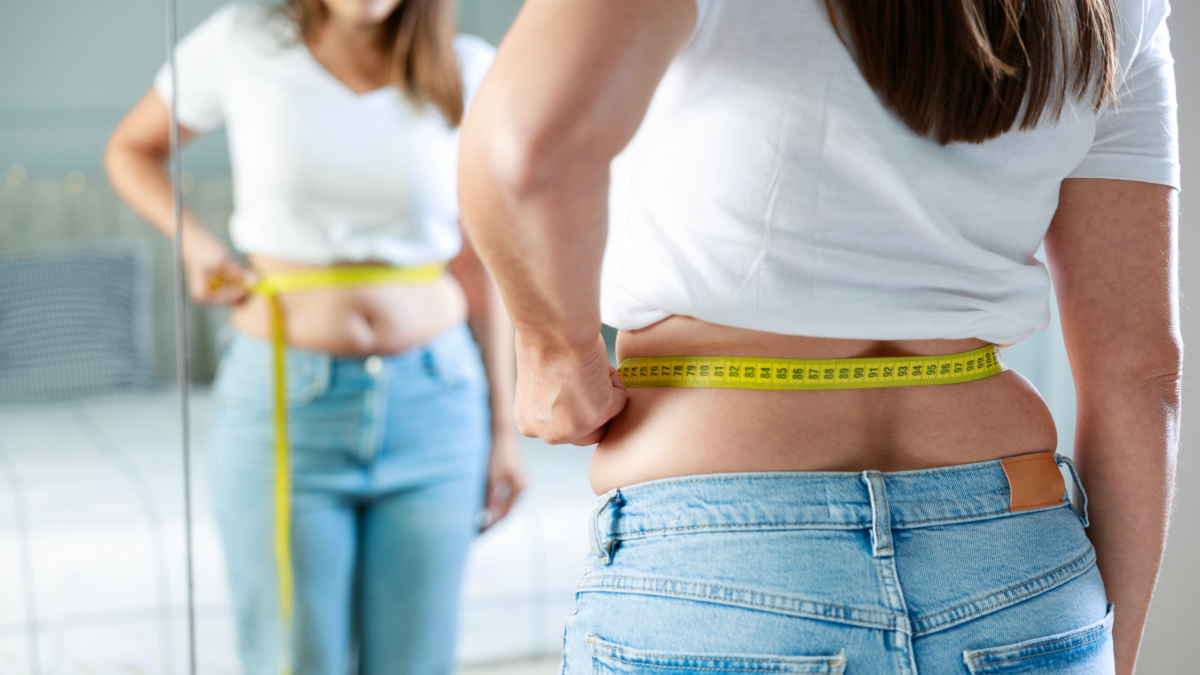
You haven’t changed much—but your body has. Here’s why weight suddenly feels harder to manage during menopause, and what actually helps without punishing yourself in the process.
There’s a moment many women remember with startling clarity.
You’re standing in front of the mirror one morning, tugging at jeans that fit perfectly six months ago. Or maybe it happens in a dressing room under cruel fluorescent lighting. Maybe after a workout you used to swear by. Maybe after stepping on the scale and seeing a number that makes absolutely no sense.
Because nothing changed.
You still eat mostly the same.
You still try to move your body.
You’re still being “good.”
And yet your body suddenly feels unfamiliar.
Softer around the middle.
More tired.
More resistant.
Almost like it stopped listening to you.
For many women in perimenopause and menopause, this isn’t just about weight gain. It’s about betrayal. Confusion. Grief. The unsettling realization that the rules your body followed for decades no longer seem to apply.
And here’s the part no one says loudly enough:
This is not a failure of discipline.
Your body is going through one of the most significant hormonal recalibrations of your entire life. That shift affects far more than periods and hot flashes. It changes metabolism, fat distribution, insulin sensitivity, muscle mass, stress response, sleep quality, and even the way your brain regulates hunger and fullness.
In other words? The game changed.
But most women are still trying to play by the old rules.
Let’s talk about what’s actually happening inside your body during menopause weight gain—and why supporting yourself through this phase requires far more compassion than punishment.
When Your Body Stops Responding the Way It Used To
For years, your body probably felt relatively predictable.
Maybe you could tighten up your eating for a couple weeks and lose a few pounds. Maybe adding extra cardio worked after the holidays. Maybe your metabolism felt forgiving enough that you didn’t have to think too hard about it.
Then sometime in your 40s or early 50s… everything shifted.
Suddenly:
- Weight appears faster
- It settles around the abdomen
- Muscle tone changes
- Energy drops
- Recovery slows
- Sleep gets worse
- Stress hits harder
And the strategies that once worked? They barely move the needle.
This is often the moment women blame themselves.
They assume they’ve become lazy.
Undisciplined.
Weak.
But menopause researchers say something very different.
Researchers from Mayo Clinic explain that midlife weight gain is usually driven by a combination of aging, hormonal changes, lower muscle mass, sleep disruption, and lifestyle stressors—not simply a lack of discipline.
That distinction matters.
Because women have spent decades believing body size is purely a moral issue.
It isn’t.
Your biology matters, too.
Why Menopause Weight Gain Often Shows Up Around the Belly
One of the most frustrating parts of menopause weight gain is that it often feels different from previous weight fluctuations.
It’s not just the number on the scale.
It’s the location.
Women who once carried weight in their hips or thighs may suddenly notice:
- increased abdominal fat
- thickening around the waist
- bloating that feels persistent
- a loss of body definition
And emotionally? This shift can feel deeply personal.
Because the stomach area is culturally loaded. Women are taught—constantly—that a flat midsection equals health, attractiveness, self-control, desirability.
So when the body begins storing more fat around the abdomen, it can trigger panic far beyond aesthetics.
But here’s what’s fascinating:
The Menopause Society notes that while aging plays a major role in midlife weight gain, menopause itself contributes to a shift in where fat is stored—often moving it toward the abdominal area.
This is sometimes called the transition from a “pear-shaped” body pattern to a more “apple-shaped” distribution.
And it’s incredibly common.
That means some women aren’t necessarily gaining massive amounts of weight.
Their body composition is changing.
And that distinction explains why clothes may fit differently even if the scale barely moves.
It also explains why many women feel like they “woke up in someone else’s body.”
Because in some ways… they did.
Why Your Metabolism Feels Slower—Even If Nothing Has Changed
Here’s where things get especially maddening.
Many women in midlife genuinely aren’t eating more than they used to. Some are eating less.
Yet weight still creeps upward.
Part of this comes down to muscle mass.
Starting around our 30s—and accelerating during menopause—the body naturally begins losing lean muscle tissue. Muscle is metabolically active, meaning it burns more energy even at rest. So when muscle mass decreases, the body requires fewer calories overall.
In practical terms?
Your body becomes more energy-efficient.
But modern life hasn’t adjusted for that reality.
This is why the same eating habits that maintained your weight at 35 may lead to gradual gain at 50.
And there’s another layer many women overlook: sleep.
Menopause and perimenopause commonly disrupt sleep through:
- night sweats
- insomnia
- anxiety
- frequent waking
Poor sleep affects hormones involved in hunger and fullness regulation. It also increases cravings for high-sugar, high-fat foods because the brain becomes desperate for quick energy.
In their review on menopause and weight, Davis and colleagues found that the menopause transition is linked not just with weight changes, but also with shifts in body composition—especially increases in abdominal fat.
So if you’ve found yourself craving carbs late at night or emotionally eating after exhausting days, your body isn’t “broken.”
It’s trying to compensate for depletion.
And stress? That matters too.
Chronically elevated stress can influence appetite, energy regulation, and fat storage—especially around the abdomen. Midlife women are often simultaneously managing careers, aging parents, teenagers, relationships, financial pressure, and invisible emotional labor while hormones fluctuate underneath the surface.
No wonder the body feels overwhelmed.
Sometimes menopause weight gain isn’t about eating too much.
Sometimes it’s about surviving too much.
Why “Trying Harder” Doesn’t Always Work Anymore
This is usually the point where women double down.
More restriction.
More cardio.
Fewer carbs.
Skipping meals.
Punishing workouts.
But menopause changes the equation.
Extreme dieting during midlife can actually backfire by:
- increasing stress hormones
- worsening muscle loss
- intensifying fatigue
- triggering cycles of restriction and overeating
And emotionally? Constant restriction can create a painful relationship with food and body image.
The truth is, many women entering menopause are carrying decades of diet culture trauma already. They’ve spent years shrinking themselves. Controlling themselves. Apologizing for taking up space.
Then menopause arrives and demands something radical:
Adaptation instead of punishment.
That can feel terrifying.
Because control is seductive.
Especially when your body suddenly feels unpredictable.
But Mayo Clinic researchers emphasize that realistic, sustainable strategies—including balanced nutrition, movement, and preserving lean muscle mass—are far more supportive long-term than extreme restriction.
That’s a completely different mindset.
Instead of asking:
“How do I force my body to be smaller?”
The better question becomes:
“How do I support my body through massive hormonal change?”
That shift changes everything.
The Emotional Layer of Weight Changes No One Talks About
Weight changes during menopause are rarely just physical.
They touch identity.
Confidence.
Sexuality.
Visibility.
Aging.
Self-worth.
And many women grieve those changes quietly.
There’s grief in realizing your old body no longer responds the same way.
Grief in feeling invisible in a culture obsessed with youth.
Grief in outgrowing clothes that once made you feel powerful.
Grief in not recognizing yourself in photos.
Sometimes women feel ashamed for caring so much.
But of course they care.
Women are taught from girlhood that their bodies are social currency. That thinness equals discipline. That aging should be hidden. That softness is failure.
Then menopause arrives—a phase that naturally changes body composition—and women are expected to navigate it silently while pretending none of it hurts.
But it does hurt.
And pretending otherwise only deepens the isolation.
One of the most healing things women can hear is this:
You are allowed to mourn changes in your body while still respecting it.
Those two things can exist together.
You can miss your younger body and still appreciate the body carrying you through midlife.
You can feel frustrated and compassionate.
You can want health improvements without hating yourself.
This emotional complexity deserves far more conversation than it gets.
Because the mental burden of menopause weight gain is often heavier than the physical changes themselves.
What Actually Supports Your Body Now (Without Extremes)
Here’s the encouraging news:
While menopause changes the body, it does not mean you are powerless.
But support during midlife often looks different than it did before.
And honestly? Different can be better.
Prioritize Protein Like Your Future Depends On It
Because in many ways, it does.
Protein becomes critically important during menopause because it helps preserve muscle mass, stabilize blood sugar, support satiety, and maintain strength as estrogen declines.
Many women unintentionally under-eat protein—especially at breakfast.
Instead of chasing restrictive diets, focus on building meals around:
- eggs
- Greek yogurt
- fish
- chicken
- tofu
- lentils
- cottage cheese
- protein-rich snacks
Not for punishment.
For nourishment.
Strength Training Is More Important Than Endless Cardio
For years, women were told cardio was the answer to weight management. But during menopause, preserving muscle becomes one of the most protective things you can do for metabolism, bone density, balance, and long-term health.
The Menopause Society recommends regular movement and muscle-supporting activity as part of healthy weight management during midlife.
That doesn’t mean becoming obsessed with the gym.
It can mean:
- resistance bands
- bodyweight exercises
- Pilates
- weight lifting
- strength-focused yoga
The goal isn’t shrinking yourself.
It’s building resilience.
Stabilize Blood Sugar Instead of Constantly Restricting Food
Many women notice they become more sensitive to energy crashes during perimenopause.
Skipping meals may suddenly lead to:
- shakiness
- irritability
- intense cravings
- anxiety
- exhaustion
Balanced meals with protein, fiber, healthy fats, and complex carbohydrates can help stabilize energy and reduce the cycle of deprivation and overeating.
This is where many women experience a huge “aha” moment.
Their body wasn’t demanding punishment.
It was demanding consistency.
Sleep Is Metabolic Healthcare
Poor sleep affects:
- appetite regulation
- stress response
- inflammation
- cravings
- emotional eating
- energy levels
Yet women are often told to “just try harder” while functioning on fragmented sleep night after night.
Protecting sleep during menopause may involve:
- cooling the bedroom
- reducing alcohol
- managing stress
- limiting late caffeine
- discussing symptoms with a healthcare provider
- creating calming nighttime routines
Because exhaustion changes everything.
Including how the body manages weight.
Stress Reduction Isn’t Optional Anymore
Midlife stress hits differently.
Your nervous system becomes less tolerant of chronic overload. Recovery takes longer. Burnout becomes more physical.
And many women have spent decades ignoring stress signals because caretaking demanded it.
But menopause often forces a reckoning.
The body begins saying:
“I can’t keep operating like this.”
Sometimes support looks like therapy.
Sometimes boundaries.
Sometimes saying no more often.
Sometimes walking outside without your phone.
Sometimes finally admitting you’re tired.
Not lazy.
Tired.
There’s a difference.
When Weight Changes Are Worth a Closer Look
While some weight changes are common during menopause, it’s important not to dismiss every symptom as “just hormones.”
Rapid or significant weight changes deserve medical attention—especially if accompanied by:
- severe fatigue
- hair loss
- digestive changes
- depression
- heart palpitations
- swelling
- unexplained pain
Conditions like:
- thyroid disorders
- insulin resistance
- sleep apnea
- depression
- medication side effects
can overlap with menopause symptoms.
This is why self-advocacy matters so deeply during midlife.
Too many women are dismissed.
Told it’s normal.
Told to eat less and move more.
Told their symptoms are simply aging.
You deserve comprehensive care—not assumptions.
And if a provider minimizes your concerns? It’s okay to seek another opinion.
Your body is speaking.
You deserve someone willing to listen.
Maybe Your Body Isn’t Failing You After All
What if menopause weight gain isn’t proof that your body betrayed you?
What if it’s evidence that your body is adapting to an entirely new hormonal reality?
That perspective changes the emotional landscape completely.
Because suddenly the goal isn’t punishment.
It’s partnership.
Not shrinking at war with yourself.
But learning your body’s new language.
And yes, that takes time.
There may still be hard days.
Dressing-room meltdowns.
Moments of comparison.
Fear about aging.
Frustration when nothing fits right.
But there can also be something else:
Relief.
Relief in understanding this transition isn’t about laziness.
Relief in releasing impossible standards.
Relief in realizing your worth was never tied to your waistline in the first place.
Your body is changing.
But that doesn’t mean it’s broken.
It means it’s asking for a different kind of care now.
And maybe—just maybe—that care can come from respect instead of punishment for the very first time.
You’re Not Alone in This
If your body feels unfamiliar lately… you are far from alone.
Millions of women are navigating the exact same confusing, emotional, frustrating shift—and many are quietly wondering if they’re somehow failing.
They aren’t.
And neither are you.
Sometimes the most powerful thing we can do during midlife is stop fighting our bodies long enough to actually listen to them.
What changes have you noticed most during perimenopause or menopause? What’s helped—and what hasn’t? Share your experience with other women navigating this season of life. Someone else may need to hear they’re not the only one feeling this way.
Disclaimer: This content is for informational purposes only and is not a substitute for professional medical advice, diagnosis, or treatment. Always consult your healthcare provider before making any decisions about your health, especially related to medication, hormones, or sexual wellbeing. Every woman’s body is different, and what works for one may not work for another.
References
Kapoor, E., Collazo-Clavell, M. L., & Faubion, S. S. (2017). Weight gain in women at midlife: A concise review of the pathophysiology and strategies for management. Mayo Clinic Proceedings, 92(10), 1552–1558. https://doi.org/10.1016/j.mayocp.2017.08.004
Davis, S. R., Castelo-Branco, C., Chedraui, P., Lumsden, M. A., Nappi, R. E., Shah, D., & Villaseca, P. (2012). Understanding weight gain at menopause. Climacteric, 15(5), 419–429. https://doi.org/10.3109/13697137.2012.707385
The Menopause Society. (2024). Midlife weight gain. https://menopause.org/wp-content/uploads/for-women/MenoNote-Weight-Gain.pdf