Why Am I Choking on My Own Saliva During Perimenopause?

What We Know—and When to Get Checked
A sudden coughing fit, difficulty swallowing, or waking up choking can feel terrifying. Many women say these symptoms began during perimenopause, but hormones are only one possible part of the story.
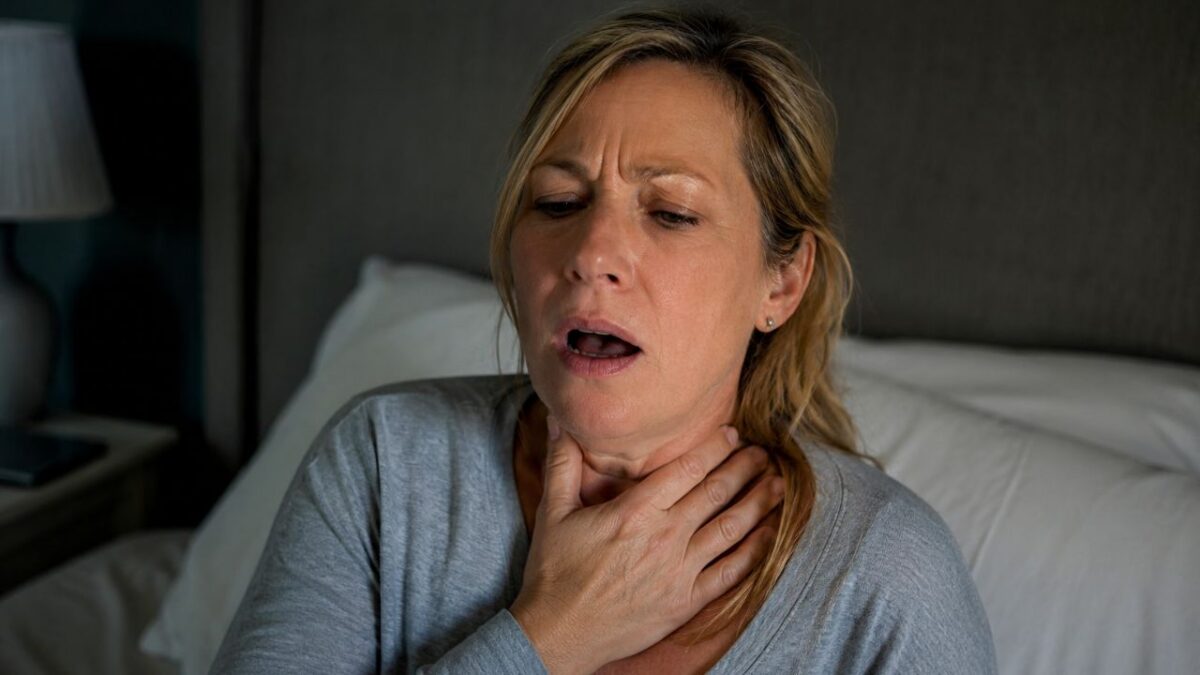
Have you ever been sitting quietly, talking to someone, or even sleeping when you suddenly started choking on your own saliva?
It happens so quickly. One second, you are fine. The next, you are coughing uncontrollably, your eyes are watering, and for a few frightening moments, it feels as though you cannot breathe.
For some women, this begins seemingly out of nowhere during perimenopause. They may start coughing on saliva, feel as though food is getting stuck, or temporarily struggle to begin a swallow. Because it never happened before, the experience can make them wonder whether something is wrong with their throat, lungs, or nervous system.
I wanted to know whether other women were experiencing it too, so I asked our community.
“I Thought It Was Just Me”
When I asked women in our Menopause Network community whether they had ever experienced unexplained choking or swallowing problems during perimenopause, I expected a handful of responses.
Instead, dozens of women shared remarkably similar experiences.
Some said they had suddenly choked on their own saliva while sitting still. Others described waking from sleep coughing, gasping, or temporarily unable to swallow. Several said they had started keeping a bottle of water beside the bed or carrying one wherever they went because they were afraid it would happen again.
“It’s scary. I’ve done it so badly I couldn’t breathe and thought I was going to die.”
“I’ve woken up choking on my saliva quite a few times lately. It’s so scary.”
“Sometimes it feels like my brain suddenly forgets how to swallow.”
“I make sure I have a bottle of water beside my bed now.”
One response appeared again and again: “I thought it was just me.”
These personal accounts do not prove that perimenopause causes choking or swallowing difficulties. They do show that many women are experiencing symptoms that feel frightening, confusing, and isolating—and that they are searching for reliable answers.
Community quotations have been lightly edited for spelling and clarity. Names have been omitted to protect privacy. These personal experiences are not medical evidence and should not be used to diagnose a health condition.
First, Do Not Assume It Is “Just Menopause”
Choking, difficulty swallowing, or feeling unable to breathe should never automatically be blamed on hormonal changes.
Swallowing problems can sometimes be connected to reflux, dry mouth, allergies, thyroid conditions, medication side effects, sleep apnea, structural problems of the throat or esophagus, or neurological conditions. Some causes are minor and treatable, while others need prompt medical attention.
If the problem keeps happening, becomes worse, causes food to become stuck, or affects your ability to eat and drink, make an appointment with a qualified healthcare professional.
Can Perimenopause Affect Swallowing?
At this point, choking on saliva is not considered a clearly established or defining symptom of perimenopause. There is not enough evidence to say that changing hormones directly cause the brain to “forget” how to swallow.
However, perimenopause can bring changes that may indirectly affect how the mouth and throat feel and function. Hormonal fluctuations may contribute to dryness, changes in reflux symptoms, anxiety, sleep disruption, muscle tension, and increased awareness of physical sensations.
Any one of these may make swallowing feel different. More than one can also happen at the same time.
Swallowing Is More Complicated Than It Seems
Most of us swallow hundreds of times a day without thinking about it. The process feels automatic, but it requires careful coordination between the brain, nerves, muscles, tongue, throat, airway, and esophagus.
Saliva moistens the mouth and helps move food safely toward the esophagus. At the same time, the airway briefly closes to keep food, liquid, and saliva from entering the lungs.
A small disruption in timing can send saliva “down the wrong pipe,” triggering a forceful coughing reflex. This occasionally happens to almost everyone. When it starts happening repeatedly or feels new, however, it deserves attention.
1 Dry Mouth and Throat
Hormonal changes during the menopause transition may be accompanied by dryness in several parts of the body. Women commonly talk about dry eyes, dry skin, and vaginal dryness, but changes in oral moisture may also occur.
When the mouth is dry, saliva can feel thicker or stickier. Food may be harder to move comfortably, and the throat may feel scratchy, tight, or irritated.
Dry mouth can also result from dehydration, mouth breathing, medications, anxiety, diabetes, autoimmune conditions, smoking, alcohol use, and some cancer treatments. It is therefore important not to assume that hormones are the only explanation.
2 Acid Reflux or Silent Reflux
Reflux occurs when stomach contents travel back toward the esophagus. Some people experience classic heartburn, while others have laryngopharyngeal reflux, often called silent reflux.
Silent reflux may irritate the throat and voice box without causing obvious burning in the chest. Possible symptoms include:
- A feeling of a lump in the throat
- Frequent throat clearing
- Hoarseness
- A chronic cough
- Excess mucus
- Coughing or choking at night
- Difficulty or discomfort when swallowing
One woman in our community shared that her swallowing problems were eventually connected to esophageal erosion caused by severe heartburn. Her symptoms improved after she received treatment.
This is an important reminder that a symptom beginning during perimenopause may still have another medical cause.
3 Anxiety and Throat Muscle Tension
Anxiety can appear or intensify during perimenopause, sometimes in women who have never previously considered themselves anxious.
Stress can tighten the muscles in the neck, jaw, chest, and throat. This may create a sensation of pressure, a lump in the throat, or difficulty beginning a swallow.
Anxiety can also change breathing. Rapid or shallow breathing may dry the mouth, increase throat tension, and make you pay close attention to sensations that would normally pass unnoticed.
This does not mean the symptom is imagined. The physical sensation is real. Anxiety may simply be one factor affecting how strongly it is felt.
4 Postnasal Drip and Allergies
Mucus draining down the back of the throat may trigger coughing, throat clearing, or a choking sensation—especially when lying down.
Seasonal allergies, sinus irritation, respiratory infections, dry air, and environmental triggers can all contribute. One community member said her nighttime choking stopped after she began treating her nasal symptoms under medical guidance.
What helps one person will not necessarily help another, so recurring symptoms should be assessed before beginning a new treatment.
5 Sleep Apnea or Other Sleep-Related Breathing Problems
Waking suddenly while choking or gasping can sometimes be related to obstructive sleep apnea. This occurs when the airway repeatedly narrows or closes during sleep.
Other signs may include:
- Loud snoring
- Witnessed pauses in breathing
- Morning headaches
- Dry mouth upon waking
- Severe daytime sleepiness
- Difficulty concentrating
Reflux, postnasal drip, and mouth breathing may also cause nighttime coughing or choking. Because several conditions can feel similar, a healthcare professional may need to evaluate the pattern.
6 Thyroid Problems
Thyroid conditions can develop around the same stage of life when many women are entering perimenopause. Because the symptoms may overlap, it is easy to attribute every new change to hormones.
An enlarged thyroid or thyroid nodule may create pressure in the neck or affect swallowing. Overactive and underactive thyroid conditions can also cause symptoms such as palpitations, anxiety, fatigue, temperature sensitivity, and weight changes.
One woman in our community said her symptoms were ultimately connected to an overactive thyroid. Her experience reinforces why medical evaluation matters.
7 Medication Side Effects
Many prescription and over-the-counter medications can cause dry mouth or interfere with comfortable swallowing.
These may include certain:
- Antihistamines
- Antidepressants
- Decongestants
- Blood pressure medications
- Muscle relaxants
- Bladder medications
- Sleep aids
Do not stop a prescribed medicine without speaking to your healthcare provider. A doctor or pharmacist can review your medications and determine whether dryness or swallowing difficulty may be a side effect.
Why Does It Sometimes Happen During Sleep?
Nighttime choking was one of the most common patterns shared in our community. Women described waking suddenly while coughing, struggling to swallow, or feeling unable to take a full breath.
Possible contributors include:
- Reflux that worsens while lying down
- Postnasal drip
- Dry mouth caused by mouth breathing
- Sleep apnea
- CPAP-related dryness
- Saliva entering the airway during sleep
- Throat irritation caused by allergies or infection
Repeatedly waking up choking or gasping is not something you should simply accept as part of menopause. Tell your healthcare provider, particularly if you also snore, feel excessively tired during the day, experience reflux, or have witnessed pauses in breathing.
What Does “Forgetting How to Swallow” Mean?
Several women used almost the same words to describe their experience: “My brain forgot how to swallow.”
For some, the feeling lasted only a few seconds. They knew they needed to swallow but felt temporarily unable to initiate the movement. The sensation understandably caused panic.
Stress, dry mouth, muscle tension, altered throat sensation, and heightened awareness may make an automatic process suddenly feel difficult. Once a person starts consciously monitoring each swallow, the action may feel less natural.
However, swallowing is controlled by the brain and nervous system. Persistent difficulty initiating a swallow, choking during meals, slurred speech, weakness, or other neurological changes should be evaluated promptly.
What a Healthcare Provider May Check
The right evaluation depends on your symptoms and medical history. Your provider may begin by asking:
- When the choking or swallowing problem began
- Whether it happens with food, liquids, saliva, or all three
- Whether food feels stuck in the throat or lower in the chest
- Whether symptoms are worse at night
- Whether you have reflux, coughing, hoarseness, or weight loss
- Whether you take medications that cause dry mouth
- Whether you have weakness, numbness, or speech changes
Depending on the findings, testing may include:
- A physical examination of the mouth, neck, and throat
- Thyroid blood tests or imaging
- An ear, nose, and throat evaluation
- A swallow assessment by a speech-language pathologist
- A modified barium swallow study
- An upper endoscopy
- Reflux testing
- A sleep study
- A neurological evaluation when indicated
When Should You Make a Medical Appointment?
Contact your healthcare provider if choking or swallowing problems are recurring, new, or getting worse.
Arrange an evaluation if you notice:
- Food or pills repeatedly becoming stuck
- Pain when swallowing
- Coughing during or immediately after meals
- A wet or gurgling voice after drinking
- Frequent nighttime choking
- Unexplained weight loss
- Repeated chest infections or pneumonia
- Ongoing hoarseness or throat clearing
- A lump or swelling in the neck
- Symptoms that interfere with eating or drinking
When Is It an Emergency?
Call emergency services immediately if you or someone else:
- Cannot breathe, speak, or cough effectively
- Appears to have a completely blocked airway
- Develops blue or gray lips or skin
- Loses consciousness
- Has sudden facial drooping, arm weakness, or speech difficulty
- Develops throat swelling, hives, wheezing, or other signs of a severe allergic reaction
Do not wait to see whether symptoms improve or assume hormones are responsible.
What May Help While You Wait for an Appointment?
These general measures may reduce irritation or make swallowing more comfortable, but they are not a substitute for medical evaluation.
- Stay hydrated throughout the day unless your doctor has told you to restrict fluids.
- Take small bites and chew food thoroughly.
- Slow down and avoid talking while chewing.
- Sit upright during meals.
- Avoid lying down immediately after eating.
- Notice whether certain foods, alcohol, caffeine, or late meals worsen reflux symptoms.
- Discuss dry-mouth products with a physician, dentist, or pharmacist.
- Review your medicines with a healthcare professional rather than stopping them on your own.
- Keep a symptom log noting when episodes happen, what you were eating or drinking, and whether you were awake or asleep.
Some women feel safer keeping water nearby, but water is not always the right response during an active choking episode. If the airway is blocked, attempting to drink may make the situation worse.
You Are Not Imagining It—but You Deserve a Proper Explanation
Perhaps the most meaningful part of our community conversation was not the number of women who had experienced choking or unusual swallowing. It was how many had been silently wondering whether they were the only one.
They were not imagining the coughing fits, the dry throat, the panic, or the strange moment when swallowing no longer felt automatic. Those experiences were real.
What the conversation could not establish was the cause.
For one woman, reflux may be responsible. For another, it may be dry mouth, a thyroid condition, sleep apnea, allergies, medication, anxiety, or something unrelated to perimenopause.
Hormonal changes may be part of the picture, but they should not become a reason to dismiss a symptom that deserves attention.
You do not need to panic every time saliva goes down the wrong way. You also do not need to ignore repeated episodes because they began in midlife.
Listen to your body, document what is happening, and ask for an evaluation when something feels new, persistent, or concerning.
Key Takeaways
- Many women report choking on saliva or feeling that swallowing has changed during perimenopause.
- Community experiences show that the symptom is frightening and isolating, but they do not prove that menopause is the cause.
- Dry mouth, reflux, anxiety, throat tension, allergies, sleep apnea, thyroid problems, and medication side effects may contribute.
- Persistent, painful, or worsening swallowing problems should be evaluated by a healthcare professional.
- Complete airway obstruction, inability to breathe, stroke symptoms, or signs of a severe allergic reaction require emergency care.