Hot Flashes During Menopause: Causes, Triggers, Treatments & 25 Ways to Find Relief

Why they happen, what can make them worse, and 25 practical ways to feel cooler, calmer, and more in control.
Hot flashes have terrible timing.
They do not wait until you are comfortably at home with a fan nearby. They arrive while you are standing in line at the grocery store, speaking in a meeting, sitting in church, making dinner, or finally drifting off to sleep.
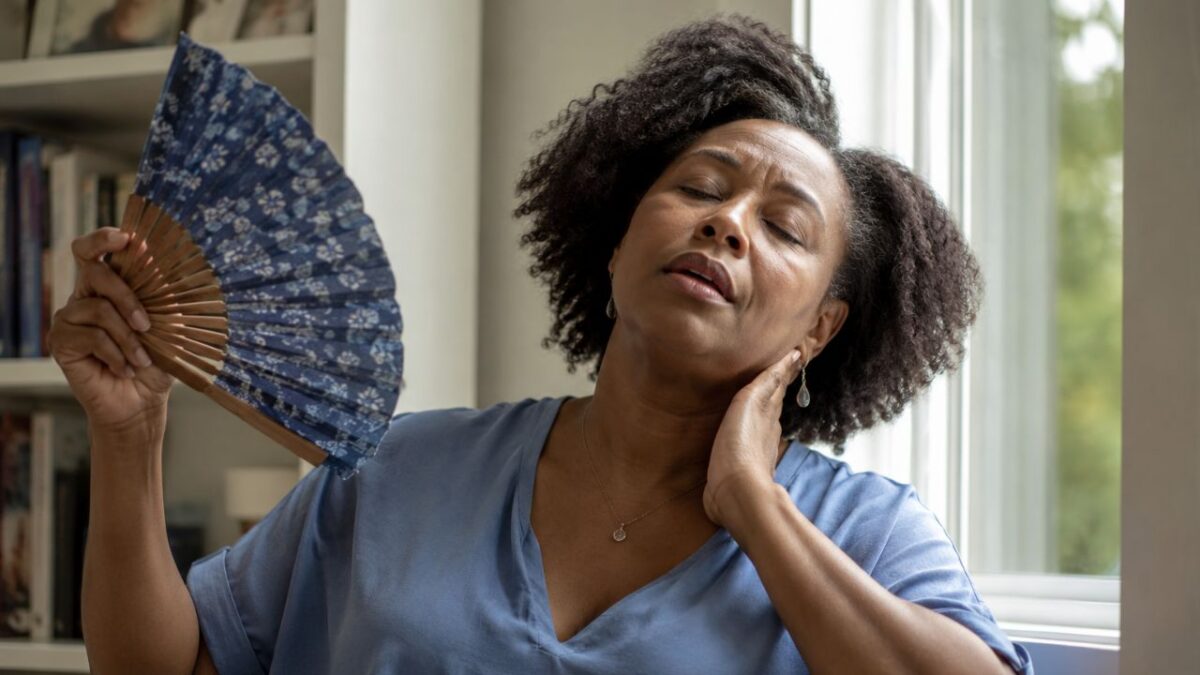
One minute, you feel perfectly fine. The next, heat begins rising through your chest and neck. Your face feels as though it is glowing. Sweat gathers along your hairline. Your heart may start beating faster. Suddenly, every piece of clothing feels like one layer too many.
Meanwhile, everyone around you looks completely comfortable.
That part can be almost as unsettling as the heat itself.
You may wonder whether anyone can see the redness spreading across your face. You may worry that your blouse is becoming damp. You may stop listening to the conversation because all your attention has shifted to one urgent question:
How do I cool down without making this obvious?
For some women, a hot flash feels like a brief glow. For others, it arrives with drenching sweat, dizziness, nausea, anxiety, or a pounding heartbeat. At night, the same process can wake you with damp pajamas, wet bedding, and the frustrating realization that you are now wide awake at 3 a.m.
Hot flashes and night sweats are known medically as vasomotor symptoms. They are among the most common symptoms of perimenopause and menopause, but common does not mean trivial.
A symptom that lasts only a few minutes can still affect your sleep, confidence, concentration, work, relationships, and willingness to make plans.
The reassuring part is that hot flashes are not random, even when they feel that way. There is a biological reason they happen. There may also be patterns in when they appear, and there are practical steps that can make them easier to manage.
Maybe this sounds familiar
You have become the person who always sits nearest the fan.
You sleep with one foot outside the blanket.
You keep a spare shirt at work, carry a hair tie everywhere, and know exactly which restaurant tables are closest to the air conditioner.
These small adjustments are easy for other people to miss, but they are part of the everyday reality of living with hot flashes.
What Does a Hot Flash Actually Feel Like?
A hot flash is a sudden sensation of heat that is usually strongest across the chest, neck, face, and upper body. Your skin may become red or blotchy. Sweat may appear along your forehead, upper lip, neck, chest, or back.
Some women notice their heartbeat first.
Others feel a strange warning sensation—a flicker of anxiety, pressure, or internal heat—before the full wave arrives.
Then there are the flashes that seem to appear from nowhere.
You are cool one second and burning the next.
When the heat passes, you may feel chilled because perspiration has cooled your skin. This is why some women move rapidly from throwing off the blankets to pulling them back up again.
At night, hot flashes are called night sweats. You may wake during the heat itself or later because your pajamas, pillowcase, or bedding feel damp.
Not every night sweat is caused by menopause. Illness, medication, thyroid problems, sleep disorders, and other medical conditions can also cause sweating. New, severe, or unexplained symptoms should be discussed with a healthcare professional.
Quick fact
A hot flash is more than “feeling warm.” It is a rapid cooling response triggered by changes in the body’s temperature-regulation system.
Why Hot Flashes Happen During Menopause
The exact process is complex, but the basic explanation is easier to understand than it may sound.
Your brain helps keep your body temperature within a comfortable range. During the menopause transition, changing estrogen levels appear to make that temperature-control system more sensitive.
Estrogen starts fluctuating
During perimenopause, estrogen does not decline in a smooth, predictable line. Levels may rise and fall for years before settling at a lower level.
Those shifts affect more than the reproductive system. Estrogen interacts with the brain, blood vessels, nervous system, bones, muscles, vaginal tissues, sleep, and mood.
This is one reason symptoms can feel inconsistent. You may have a week with several hot flashes, followed by days or even months when they seem to disappear.
Your internal thermostat becomes more sensitive
The hypothalamus is a small area of the brain that helps regulate body temperature. Think of it as part of your internal thermostat.
Before perimenopause, your body may have tolerated small temperature changes without reacting. During the menopause transition, that comfortable range can narrow.
A slight increase in warmth—caused by stress, a hot room, alcohol, exercise, heavy bedding, or no obvious trigger at all—may suddenly be interpreted as overheating.
Your body tries to cool you down quickly
Once the brain decides you are too warm, it launches a cooling response.
Blood vessels near the skin widen so heat can escape. This is called vasodilation, and it contributes to the visible redness or flushing across the face, neck, and chest.
Sweat glands activate at the same time. As sweat evaporates, it helps release heat.
The response works so quickly that you may feel cold once the flash ends—even though you felt unbearably hot only moments earlier.
Why Hot Flashes Can Start Before Menopause
One of the most common misunderstandings about hot flashes is that they begin only after periods stop.
In reality, they often begin during perimenopause , while periods are still happening.
You may notice that your cycle has become shorter, longer, heavier, lighter, or less predictable. Or your periods may still appear fairly regular while other changes quietly begin.
Sleep may feel different.
Your mood may shift more quickly.
You may forget familiar words, feel unusually tired, or suddenly find yourself overheated in a room that everyone else considers comfortable.
Menopause itself is confirmed after 12 consecutive months without a menstrual period, assuming there is no other medical explanation. Everything leading up to that point is part of the transition.
Hot flashes may also appear after surgical menopause, during some cancer treatments, or as a side effect of certain medications. Because several conditions can cause similar symptoms, it is wise not to assume that every episode is automatically menopause.
How Long Do Hot Flashes Last?
An individual hot flash often lasts a few minutes.
But when you are standing in front of a room, trying to finish a sentence while heat rushes across your face, a few minutes can feel much longer.
Frequency varies widely. Some women experience one or two episodes a week. Others have several each day and wake repeatedly at night.
The overall hot-flash phase can continue for years. Symptoms often begin during perimenopause and may continue after the final menstrual period.
They also do not always fade in a neat, predictable way.
You might have several comfortable months and then notice symptoms returning during hot weather, emotional stress, travel, illness, poor sleep, or a medication change.
You do not have to wait until they become unbearable
If hot flashes are disrupting your sleep, concentration, mood, confidence, work, exercise, intimacy, or daily comfort, that is enough reason to ask about treatment.
What Can Trigger a Hot Flash?
Hormonal changes create the underlying tendency toward hot flashes. Triggers are the everyday factors that may push your body outside its newly narrowed comfort zone.
This is where women can become unnecessarily frustrated.
You may read that coffee causes hot flashes, stop drinking it, and notice no difference at all. Meanwhile, someone else cuts back by one cup and sleeps better within days.
Your triggers are personal.
Food and drink triggers
- Alcohol
- Spicy foods
- Very hot drinks
- Caffeine for some women
- Large, heavy meals
- Not drinking enough fluid
Environmental triggers
- Hot weather
- Warm or poorly ventilated rooms
- Heavy blankets
- Tight or heat-trapping clothing
- Hot baths or showers
- Heated exercise spaces
Emotional and lifestyle triggers
- Stress
- Feeling rushed
- Anxiety about having a hot flash
- Smoking
- Sleep deprivation
- Some medications
Stress does not mean the symptom is “all in your head.”
Stress activates the nervous system. That can make your heartbeat faster, increase sweating, and intensify the sensation of heat.
There can also be a feedback loop.
You notice the first flicker of warmth. You worry that your face is turning red. You imagine everyone watching. Your anxiety increases, and suddenly the episode feels even bigger.
Learning how to interrupt that cycle can help, even if it does not stop the physical hot flash completely.
25 Practical Ways to Feel Cooler and More Comfortable
Some of these strategies may help you avoid a personal trigger. Others simply make the moment easier when a hot flash arrives.
Start small.
Try one or two changes at a time. That way, you can tell what is actually helping instead of changing your entire life and still not knowing what made the difference.
Keep cold water nearby
Carry a refillable bottle and place water beside your bed. Cold water can feel soothing when a flash begins, while regular hydration helps replace fluid lost through sweating.
Comfort strategyNotice whether spicy food affects you
Spicy foods naturally create warmth and sweating. You do not have to remove every spice. Simply pay attention to whether certain dishes are followed by symptoms.
Trigger experimentTest your caffeine tolerance
If flashes often follow coffee, tea, cola, or energy drinks, try a gradual reduction for two weeks. Switching one serving to decaf may be enough to reveal a pattern.
Individual responseReduce alcohol if it is a trigger
Alcohol can widen blood vessels and disrupt sleep. Try drinking less or avoiding it near bedtime and see whether your nights improve.
Trigger experimentEat well without expecting one food to fix everything
Soy foods, lentils, chickpeas, and flaxseed contain phytoestrogens. They can be part of a balanced diet, but no single food reliably stops hot flashes for everyone.
Balanced nutritionAdd water-rich foods
Fruits, vegetables, yogurt, and lighter meals can support hydration, especially after heavy sweating or restless nights.
Hydration supportDress in removable layers
A light cardigan over a breathable top gives you options. Thin layers are easier to manage than one heavy sweater when heat arrives without warning.
Immediate controlChoose fabrics that let heat escape
Cotton, linen, bamboo blends, and moisture-wicking materials may feel more comfortable than fabrics that hold heat close to the skin.
Everyday comfortMake a small cooling kit
Keep a folding fan, mini rechargeable fan, tissues, hair tie, and spare top in your bag. Preparation often reduces the anxiety around unexpected flashes.
PreparednessCool your bedroom
Use a fan, air conditioner, open window, or lighter bedding. There is no perfect thermostat number—the goal is a temperature that helps you stay asleep.
Sleep supportLayer your bedding
Several light layers are easier to remove than one heavy comforter. Keep a dry pillowcase or sleep shirt nearby for middle-of-the-night changes.
Night-sweat supportUse a cool compress
A cool cloth on the back of your neck or upper chest can feel comforting. Wrap ice packs in fabric and avoid placing frozen packs directly against the skin.
Comfort strategyMove regularly
Exercise supports the heart, bones, muscles, mood, and sleep. It is worth doing for those benefits even though it is not a guaranteed hot-flash cure.
Whole-body benefitExercise in cooler conditions
Walk early, exercise near a fan, swim, or choose an air-conditioned space if heat triggers symptoms. Give yourself time to cool down afterward.
Trigger reductionFocus on health rather than punishment
Higher body weight is associated with more bothersome hot flashes in some women. Any weight-related plan should be realistic, nourishing, and free from shame or extreme restriction.
Individual goalsSeek support to stop smoking
Smoking is associated with earlier menopause and more hot flashes, as well as major risks to the heart, lungs, blood vessels, and bones.
Major health benefitTrack your symptoms for two to four weeks
Write down the time, setting, food, drinks, stress level, clothing, sleep, and severity. Look for repeated patterns rather than blaming one isolated event.
Personal insightUse slow breathing when a flash begins
Slow breathing may help you stay grounded, especially if the heat triggers panic. Think of it as a calming tool rather than a cure.
Coping strategyPractice mindfulness without pressuring yourself
Mindfulness can help you notice the sensation without immediately spiraling into fear or embarrassment. It may change your response even if it does not stop the heat.
Emotional supportConsider menopause-focused CBT
Cognitive behavioral therapy may reduce how disruptive hot flashes and night sweats feel. It can also help with sleep and the worry that often surrounds symptoms.
Evidence-supportedAsk about clinical hypnosis
Clinical hypnosis has evidence supporting its use for bothersome vasomotor symptoms. Look for a qualified practitioner with healthcare training.
Evidence-supportedUse yoga for the benefits it genuinely offers
Yoga can support flexibility, balance, relaxation, and stress management. It may help you feel better overall, even though it should not be presented as a guaranteed hot-flash treatment.
General well-beingCreate a workday plan
Keep water and a fan at your desk, wear adaptable layers, and sit near ventilation when possible. A simple explanation can also remove some of the pressure to hide symptoms.
Workplace supportProtect your sleep after a night sweat
Keep lights low, avoid checking messages, change only what is necessary, and use a short calming routine before lying down again.
Sleep recoveryBring a clear symptom record to your appointment
Record frequency, night waking, severity, triggers, menstrual changes, and medications. Specific details make treatment conversations much more useful.
Medical preparationWhat About Herbs and Menopause Supplements?
The word natural sounds reassuring.
But natural does not automatically mean effective, risk-free, or appropriate for everyone.
Menopause supplements are often marketed with confident promises, while the research behind them is far less certain. Products may also vary in dose, purity, and ingredients.
Supplements can interact with prescription medication and may be unsuitable for people with liver disease, bleeding disorders, hormone-sensitive conditions, or other health concerns.
| Supplement | What the evidence suggests | Important caution |
|---|---|---|
| Black cohosh | Research findings are inconsistent. It is not considered a reliably proven treatment for hot flashes. | Rare liver-related concerns have been reported. Discuss it with a clinician, especially if you have liver disease. |
| Red clover | Studies have not consistently shown meaningful relief from vasomotor symptoms. | It contains compounds with estrogen-like activity and may not be suitable for everyone. |
| Evening primrose oil | Evidence supporting its use for hot flashes and night sweats is limited. | It may interact with medication and can cause digestive side effects. |
| Vitamin E | Any benefit appears modest and uncertain. | High supplemental doses may increase bleeding risk or interact with medication. |
Before starting any supplement
Tell your healthcare professional and pharmacist exactly what you plan to take, including the brand and dose. This is especially important if you use blood thinners, antidepressants, seizure medication, hormone therapy, or cancer treatment.
When Lifestyle Changes Are Not Enough
Cooling tools can make everyday life easier.
They are not always enough.
If you are changing pajamas every night, avoiding social plans, struggling to concentrate at work, or feeling anxious about when the next hot flash will arrive, it may be time to discuss medical treatment.
Menopausal hormone therapy
Systemic estrogen therapy is the most effective treatment for menopause-related hot flashes and night sweats.
If you still have a uterus, estrogen is generally combined with a progestogen to help protect the uterine lining. People who have had a hysterectomy may be able to use estrogen without a progestogen, depending on their individual circumstances.
Hormone therapy is not a one-size-fits-all treatment.
Your age, time since menopause, symptom severity, medical history, medications, personal preferences, and whether you still have a uterus all matter.
A healthcare professional should review any history of blood clots, stroke, cardiovascular disease, liver disease, unexplained bleeding, migraine, or hormone-sensitive cancer before recommending treatment.
Nonhormonal prescription options
Hormone therapy is not the only effective approach. Depending on your medical history, a clinician may discuss:
- Certain SSRIs or SNRIs: Some antidepressant medicines can reduce hot-flash frequency or severity.
- Gabapentin: This may be particularly useful when nighttime symptoms and sleep disruption are prominent.
- Oxybutynin: Primarily used for overactive bladder, it may reduce vasomotor symptoms for some women.
- Fezolinetant, sold as Veozah: This nonhormonal medication targets a brain pathway involved in temperature regulation.
Important information about fezolinetant
Fezolinetant requires liver testing before and during treatment because rare but serious liver injury has occurred. Contact a healthcare professional promptly if symptoms such as yellowing of the skin or eyes, dark urine, pale stool, unusual fatigue, nausea, vomiting, itching, or upper-right abdominal pain appear.
What about “bioidentical” hormones?
The word bioidentical is often used in marketing, but it can be confusing.
Several approved hormone products already contain hormones that are chemically identical to hormones produced by the human body.
Custom-compounded hormone products are different from approved products. They may be appropriate in limited circumstances, but they do not automatically provide better safety, purity, or effectiveness.
Be cautious of claims that saliva testing can create a perfectly personalized hormone dose. Hormone levels fluctuate, and treatment decisions should be based on symptoms, medical history, risk factors, and a proper clinical assessment—not one isolated hormone reading.
When Should You Talk With a Healthcare Professional?
Mention hot flashes at a routine appointment if they are new, persistent, or bothersome.
Arrange an earlier evaluation if:
- Symptoms repeatedly disrupt your sleep
- You are unsure whether the episodes are hot flashes
- They began after starting or changing medication
- You have unexplained weight loss or persistent fever
- You experience fainting or significant dizziness
- You have bleeding after 12 months without a period
- Your symptoms are affecting your mood or daily life
- You want help comparing treatment options
Chest pain, severe shortness of breath, fainting, sudden weakness, confusion, or symptoms of a serious allergic reaction should not be assumed to be menopause. Seek urgent medical care.
Hot Flash or Fever?
| Feature | Hot flash | Fever |
|---|---|---|
| Pattern | Usually sudden and brief, often occurring in waves | Temperature remains elevated for a longer period |
| Temperature reading | Core temperature is not necessarily in the fever range | A thermometer usually confirms an elevated temperature |
| Typical sensation | Heat rising through the chest, neck, and face | General heat, chills, body aches, or illness symptoms |
| Other signs | Flushing, sweating, rapid heartbeat, then possible chills | Cough, sore throat, aches, chills, or other signs of illness |
A hot flash can make you feel intensely hot, but it does not usually produce the sustained elevated temperature seen with fever. Use a thermometer if you are unsure.
Frequently Asked Questions
Are hot flashes dangerous?
Typical menopause-related hot flashes are not usually dangerous. However, symptoms such as chest pain, fainting, severe shortness of breath, persistent fever, or unexplained weight loss require medical evaluation.
Can anxiety cause hot flashes?
Anxiety can cause warmth, sweating, flushing, and a racing heartbeat. It can also make a menopause-related hot flash feel more intense. Both can occur at the same time.
Why are hot flashes worse at night?
Warm bedding, room temperature, alcohol, stress, sleep-stage changes, and normal overnight temperature regulation can all contribute. Night sweats also feel more disruptive because they interrupt sleep.
Does caffeine make hot flashes worse?
It can for some women, but not everyone notices a connection. Tracking symptoms and testing a gradual reduction can help you identify your individual response.
Can hot flashes continue after menopause?
Yes. Hot flashes often begin during perimenopause and may continue for years after the final menstrual period.
What is the most effective treatment?
Systemic estrogen therapy is the most effective treatment for menopause-related hot flashes. It is not suitable for everyone, and effective nonhormonal options are also available.
Do hot flashes mean I am officially in menopause?
No. Hot flashes frequently begin during perimenopause while periods are still occurring. Menopause is confirmed after 12 consecutive months without a period, assuming there is no other explanation.
Do I need hormone testing?
Not always. Hormone levels can fluctuate widely during perimenopause. Clinicians often use age, symptoms, menstrual history, and medical history. Testing may be appropriate when the diagnosis is unclear or another condition is suspected.
What to Remember
- Hot flashes are real physical responses to changes in the body’s temperature-regulation system.
- They often begin during perimenopause, before periods stop.
- Triggers vary. Coffee, alcohol, stress, heat, and spicy food do not affect everyone in the same way.
- Cooling strategies can improve comfort, but they may not control moderate or severe symptoms.
- Supplements have mixed evidence and may interact with medication.
- Hormone therapy is the most effective treatment, and nonhormonal prescription options are available.
- Symptoms that affect your quality of life deserve medical attention.
You Do Not Have to Simply Put Up With Them
Hot flashes may be common, but the way they affect your life is personal.
A three-minute episode can interrupt a presentation, wake you from badly needed sleep, make you hesitant to travel, or leave you feeling embarrassed in a room full of people.
Start with curiosity.
Track what is happening. Notice patterns. Make your clothing, bedroom, work bag, and daily routine support the body you have now—not the body that used to sleep comfortably under three blankets.
And if those adjustments are not enough, ask about treatment.
You are not weak for wanting relief.
You are not being dramatic.
And you do not have to earn medical support by waiting until your symptoms become unbearable.
Start by identifying your pattern
Keep a simple record of when your hot flashes happen, what you were doing, what you ate or drank, how you slept, and how disruptive the episode felt. Bring those notes to your next healthcare appointment.
Explore Free Menopause ResourcesSources and Further Reading
- Mayo Clinic. Hot flashes: Symptoms and causes .
- Mayo Clinic. Hot flashes: Diagnosis and treatment .
- National Institute on Aging. Hot flashes: What can I do? .
- The Menopause Society. Hot flashes .
- Cleveland Clinic. Hot flashes: Triggers, duration and treatment .
- U.S. Food and Drug Administration. Safety warning for fezolinetant .