Mediterranean Salmon Bowl with Lemon Herb Yogurt Sauce

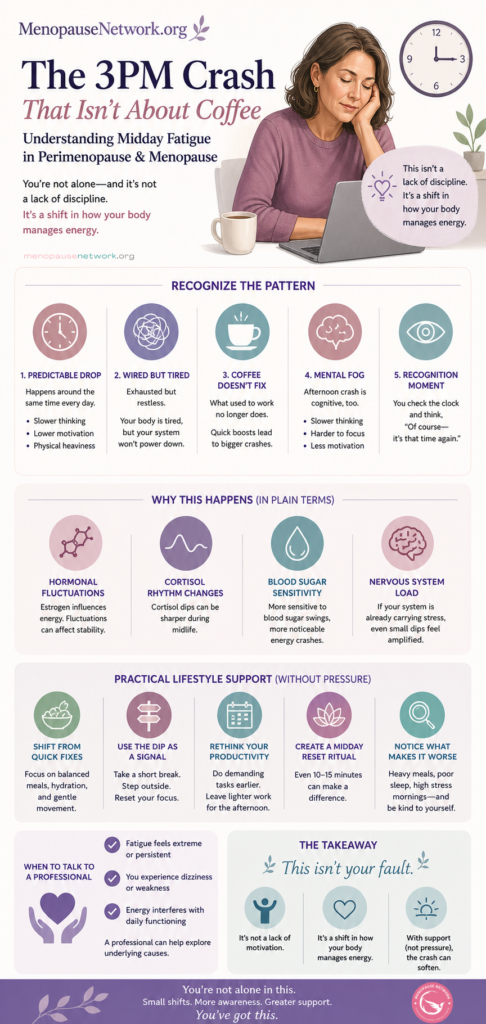
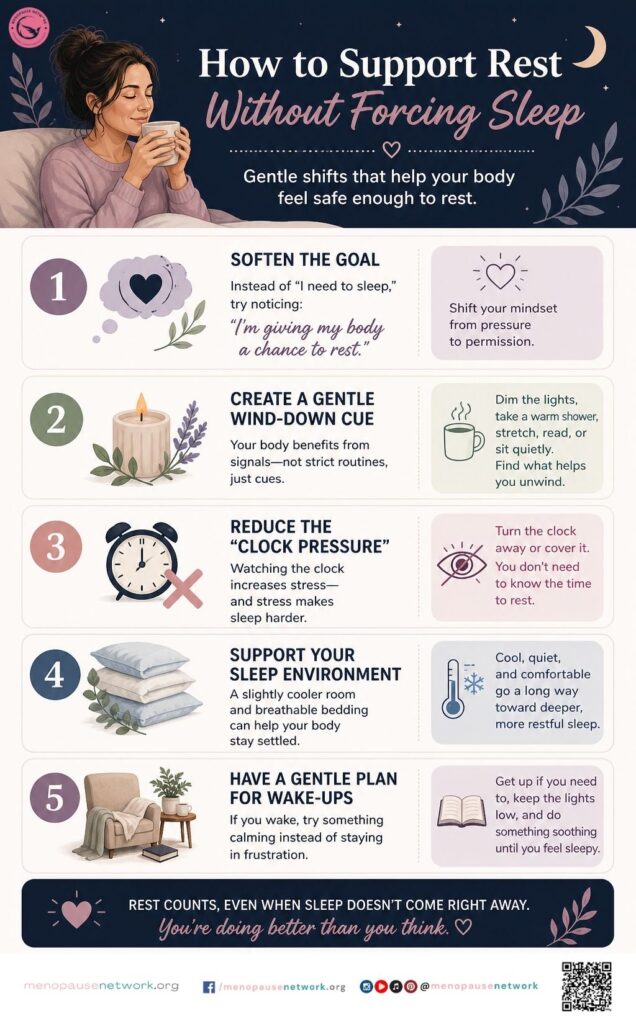
Mediterranean salmon quinoa bowl with roasted salmon, avocado, cherry tomatoes, cucumber, spinach, feta cheese, and creamy herb yogurt sauce in a rustic ceramic bowl

Mediterranean Salmon Bowl

Mediterranean Salmon Bowl is a vibrant, nourishing, and flavor-packed meal designed to support women through perimenopause and menopause. Tender oven-roasted salmon is seasoned with garlic, lemon, smoked paprika, and herbs, then served over fluffy quinoa with crisp cucumbers, juicy cherry tomatoes, creamy avocado, and a refreshing yogurt-herb drizzle. Rich in omega-3s, fiber, antioxidants, and protein, this bowl supports heart health, hormone balance, brain function, energy levels, and healthy aging — while tasting absolutely delicious.
Prep Time 20 minutes
Cook Time 20 minutes
Course Main Course
Cuisine Mediterranean
Servings 4
Calories 480 kcal

Equipment

  • 1 Baking sheet or oven-safe dish
  • 1 Medium saucepan
  • 1 Mixing bowl
  • 1 Small bowl for sauce
  • 1 Knife
  • 1 Cutting board
  • Measuring spoons and cups

Ingredients
  

For the Salmon

  • 4 salmon fillets about 5–6 oz each
  • 2 tbsp olive oil
  • Juice of 1 lemon
  • 3 garlic cloves minced
  • 1 tsp smoked paprika
  • 1 tsp dried oregano
  • ½ tsp ground cumin
  • ½ tsp sea salt
  • ¼ tsp black pepper
  • Lemon slices for roasting

For the Bowl:

  • 1 cup uncooked quinoa
  • 2 cups low-sodium vegetable broth or water
  • 1 cup cherry tomatoes halved
  • 1 cucumber diced
  • 1 avocado sliced
  • 2 cups baby spinach or arugula
  • ¼ small red onion thinly sliced
  • ¼ cup crumbled feta cheese optional
  • 2 tbsp chopped fresh parsley

For the Yogurt Herb Sauce:

  • ½ cup plain Greek yogurt
  • 1 tbsp olive oil
  • 1 tbsp lemon juice
  • 1 tbsp fresh dill or parsley chopped
  • 1 small garlic clove grated
  • Pinch of salt and pepper

Instructions
 

Marinate the Salmon:

  • In a mixing bowl, whisk together olive oil, lemon juice, garlic, smoked paprika, oregano, cumin, salt, and pepper.
  • Coat salmon fillets thoroughly in the marinade. Let marinate for at least 15–20 minutes for deeper flavor.

Cook the Quinoa:

  • Rinse quinoa under cold water.
  • In a saucepan, combine quinoa and broth or water.
  • Bring to a boil, reduce heat, cover, and simmer for 15 minutes until fluffy.
  • Remove from heat and fluff with a fork.

Roast the Salmon:

  • Preheat oven to 400°F (200°C).
  • Place marinated salmon on a lined baking sheet. Top with lemon slices.
  • Roast for 12–15 minutes until salmon flakes easily with a fork.
  • For extra flavor, broil for the last 1–2 minutes to lightly caramelize the top.

Prepare the Yogurt Herb Sauce:

  • In a small bowl, combine Greek yogurt, olive oil, lemon juice, herbs, garlic, salt, and pepper.
  • Mix until smooth and creamy. Adjust lemon or seasoning to taste.

Assemble the Bowls:

  • Divide quinoa among serving bowls.
  • Add spinach, tomatoes, cucumber, avocado, and red onion around the bowl.
  • Place roasted salmon on top.
  • Drizzle generously with yogurt herb sauce.
  • Sprinkle with feta cheese and parsley before serving.

Notes

Mediterranean salmon bowl with roasted salmon, quinoa, avocado, cherry tomatoes, cucumber, feta cheese, leafy greens, and creamy lemon herb yogurt sauce in a rustic ceramic bowl.

Nutritional Facts (Per Serving):

  • Calories: 480
  • Protein: 35g
  • Carbohydrates: 28g
  • Fat: 25g
  • Fiber: 7g
  • Sodium: 420mg
  • Sugars: 4g

Nutritional Benefits:

Salmon:

Rich in omega-3 fatty acids that support heart health, brain function, skin health, and may help reduce inflammation associated with menopause.

Quinoa:

A high-fiber whole grain with plant protein that helps stabilize blood sugar and supports energy levels.

Greek Yogurt:

Provides protein, calcium, and probiotics that support bone health and gut health during menopause.

Leafy Greens:

Packed with magnesium, calcium, folate, and antioxidants that support bone density and overall wellness.

Olive Oil:

Contains heart-healthy monounsaturated fats and anti-inflammatory compounds.

Avocado:

Rich in healthy fats and potassium that may support mood, satiety, and cardiovascular health.

Shopping List:

  • Salmon fillets
  • Lemons
  • Garlic
  • Olive oil
  • Smoked paprika
  • Dried oregano
  • Ground cumin
  • Sea salt
  • Black pepper
  • Quinoa
  • Vegetable broth
  • Cherry tomatoes
  • Cucumber
  • Avocado
  • Baby spinach or arugula
  • Red onion
  • Feta cheese
  • Fresh parsley or dill
  • Plain Greek yogurt

Tips:

Don’t Overcook the Salmon:

Salmon becomes dry quickly. Remove it from the oven once it flakes easily.

Rinse Quinoa:

Rinsing removes bitterness and improves flavor.

Meal Prep Friendly:

Store ingredients separately and assemble fresh for easy lunches throughout the week.

Add Crunch:

Top with roasted chickpeas or toasted pumpkin seeds for extra texture and menopause-friendly minerals like magnesium and zinc.

Storage:

Salmon:

Store cooked salmon in an airtight container in the refrigerator for up to 3 days.

Quinoa and Vegetables:

Store separately for freshness up to 4 days.

Yogurt Sauce:

Keep refrigerated for up to 3 days.

Customization:

Dairy-Free Option:

Replace Greek yogurt with coconut yogurt and omit feta cheese.

Vegetarian Option:

Swap salmon with roasted chickpeas or grilled tofu.

Low-Carb Version:

Use cauliflower rice instead of quinoa.

Extra Protein:

Add hummus or roasted edamame.

Health Disclaimer:

  1. Sodium Content:
    This recipe contains moderate sodium primarily from feta cheese and seasoning. Reduce salt or omit feta if following a low-sodium diet.
  2. Healthy Fats:
    The fats in this recipe mainly come from salmon, avocado, and olive oil, which are considered heart-healthy fats beneficial during menopause.
  3. Calories:
    This bowl is balanced and nutrient-dense, but portion size should be adjusted according to individual dietary needs and activity levels.
  4. Dairy Considerations:
    Greek yogurt and feta contain dairy. Use dairy-free alternatives if sensitive to lactose.
  5. Fish Allergies:
    Individuals with seafood allergies should avoid salmon and substitute plant-based proteins.
  6. Blood Thinners:
    Leafy greens contain vitamin K, which may interact with blood-thinning medications. Consult a healthcare provider if necessary.
  7. General Wellness:
    This recipe supports overall wellness but is not intended to diagnose, treat, or cure medical conditions.
Keyword recipe, salmon,

Why Exercise Feels Different During Menopause

There’s a moment many people experience during midlife that almost nobody prepares them for.

You lace up your shoes.
You do the workout.
You finish the routine that used to make you feel powerful.

And instead of feeling energized…

You feel flattened.

Heavy.
Irritable.
Completely drained.

Your knees ache for two days afterward.
Meanwhile, your sleep somehow gets worse.
Your body feels inflamed instead of invigorated.

And somewhere in the middle of all of it, a thought quietly slips in:

Why doesn’t exercise work for me anymore?

It’s an unsettling feeling because movement used to feel simpler. More predictable. You exercised, you sweated, you felt accomplished.

However, menopause changes the conversation between your body, your hormones, your energy, and your nervous system.

And here’s the part many people don’t hear enough:

Your body is not betraying you. It’s communicating with you differently now.

That distinction matters.

Because so many people spend years fighting their changing bodies instead of learning how to support them.

Unfortunately, the old fitness messaging doesn’t help.

Push harder.
No excuses.
Burn more.
Stay disciplined.
Fight aging.
Bounce back.

But midlife often asks for something entirely different.

Not less movement.
Instead, it asks for smarter movement.
Kinder movement.
Movement that works with your hormones instead of against them.

And surprisingly? That shift can become one of the healthiest relationships you’ve ever had with your body.


When Your Old Fitness Routine Stops Feeling Right

For many people, the realization arrives gradually.

You start needing longer recovery periods after workouts.
The intense cardio class that once felt exhilarating now leaves you exhausted for the rest of the day.
You notice more joint pain.
More stiffness.
More fatigue.

Or maybe you’re still exercising consistently, but the results feel different.

The scale won’t budge.
Your muscle tone changes.
Your belly feels softer.
Meanwhile, your motivation disappears.

And then comes the emotional spiral.

You wonder if you’re becoming lazy.
Undisciplined.
Out of shape.

But here’s what’s actually happening behind the scenes.

Hormonal fluctuations during perimenopause and menopause affect nearly every system involved in movement and recovery:

  • Estrogen influences muscle repair and joint health
  • Progesterone affects sleep and recovery quality
  • Cortisol sensitivity shifts under chronic stress
  • Testosterone changes can impact muscle maintenance
  • Bone density naturally begins to decline
  • Metabolism becomes more adaptive and protective

In other words, your body isn’t responding differently because you’ve failed.

Rather, it’s responding differently because your physiology has changed.

And honestly? That realization can feel strangely relieving.

Because it means you’re not imagining it.


Why Midlife Fitness Advice Suddenly Feels So Wrong

One of the biggest frustrations during menopause is realizing most mainstream fitness advice still sounds like it was written for a 28-year-old.

Everything becomes about intensity.

High-intensity interval training.
Extreme calorie burn.
Two-a-day workouts.
“Summer body” transformations.

However, menopausal bodies often respond differently to chronic physical stress.

And this is where the conversation around movement starts to change.

Researchers are increasingly recognizing that excessive high-intensity exercise—especially when combined with poor sleep, emotional stress, under-eating, and hormonal shifts—can sometimes worsen fatigue and inflammation during midlife.

That doesn’t mean intense exercise is bad.

In fact, some people genuinely thrive on it.

But many discover that constantly pushing harder starts triggering:

  • elevated stress hormones
  • longer recovery times
  • sleep disruption
  • mood instability
  • cravings
  • burnout
  • exercise dread

You know that feeling when your body starts resisting the very thing you’re trying so hard to force?

That.

And yet many people are still told the solution is simply more discipline.

But what if discipline isn’t the problem?

What if the real issue is that your body needs a different form of support now?

Because menopause isn’t just a hormonal transition.

It’s a nervous system transition too.

As a result, your body becomes less tolerant of depletion.
Less forgiving of extremes.
Less willing to ignore stress.

And sometimes the healthiest thing you can do is stop treating movement like punishment.


The Emotional Weight So Many People Carry Around Exercise

This conversation isn’t only physical.

It’s deeply emotional.

Many people entering menopause grew up during the peak of toxic diet culture.

As a result, exercise wasn’t presented as joy. Or strength. Or emotional wellbeing.

Instead, it was often framed as a way to:

  • stay thin
  • earn food
  • burn calories
  • remain attractive
  • take up less space
  • avoid aging

So when menopause changes the body—and the old strategies stop producing the same results—it can trigger something much deeper than frustration.

Grief.

Grief for the body you used to recognize.
Grief for the effortless energy you once had.
Grief for the control you thought exercise guaranteed.

And underneath that grief is often fear.

If my body keeps changing, who am I becoming?

That question sits quietly beneath so many midlife health conversations.

But here’s the truth people rarely hear:

Your body changing does not mean your body is failing.

In many ways, menopause invites people into a more mature, sustainable relationship with movement.

One based less on shrinking yourself…
and more on supporting yourself.

At first, that shift can feel uncomfortable.

Especially if your identity has always been tied to productivity, performance, or appearance.

But eventually, many people discover something unexpected.

Relief.

Because constantly fighting your body is exhausting.


Why Strength Training Matters More Now Than Ever

If there’s one form of exercise experts consistently recommend during menopause, it’s strength training.

Not because everyone needs to become a bodybuilder.

Rather, resistance training supports several major physiological systems affected by hormonal change.

Scientists reviewing menopause-focused strength training studies have found that resistance exercise may help support muscle preservation, bone health, stability, and overall menopause symptom management (Aibar-Almazán et al., 2023).

That’s a big deal during midlife, when many people begin noticing changes in strength, recovery, and physical confidence.

Strength training may help support:

  • muscle preservation
  • bone density
  • insulin sensitivity
  • balance and stability
  • functional independence
  • metabolic health
  • confidence and resilience

And honestly, this is one of the most empowering mindset shifts many people experience.

The goal starts changing.

Instead of asking:

How small can I make myself?

People begin asking:

How strong can I feel in my own life?

That difference changes everything.

Importantly, strength training during menopause doesn’t need to look extreme.

It can mean:

  • bodyweight exercises
  • resistance bands
  • light dumbbells
  • Pilates resistance work
  • functional movement training
  • supervised weightlifting

Even two or three sessions per week can make a meaningful difference over time.

And perhaps most importantly?

Strength training often improves confidence in ways that have nothing to do with appearance.

You feel steadier carrying groceries.
Your posture changes.
Your balance improves.
As a result, you stop feeling fragile.

That matters.

Especially during a life stage where many people suddenly feel disconnected from their physical identity.


Walking Might Be More Powerful Than You Think

For years, walking was dismissed as “not enough.”

Not intense enough.
Not transformative enough.
Not serious enough.

But menopause has a funny way of exposing how much wellness culture confused exhaustion with health.

Because walking—simple, steady, consistent walking—can be profoundly supportive during midlife.

Emerging menopause research continues to show that regular walking and consistent low-impact movement may help support:

  • cardiovascular health
  • blood sugar regulation
  • stress reduction
  • mood stability
  • sleep quality
  • joint mobility
  • cognitive function

And unlike punishing workouts that spike stress hormones, walking often calms the nervous system instead.

That distinction matters more than most people realize.

Especially when life already feels overstimulating.

Many people navigating menopause are also juggling:

  • aging parents
  • demanding careers
  • teenagers or adult children
  • relationship shifts
  • financial stress
  • chronic sleep disruption

As a result, their nervous systems are already overloaded.

So adding more physical stress isn’t always the answer.

Sometimes your body needs grounding, not punishment.

A morning walk.
An evening stroll.
A quiet podcast while moving gently through space.

Simple doesn’t mean ineffective.

In fact, midlife has a way of teaching us that sustainable habits often outperform extreme ones.


Why Recovery Suddenly Matters So Much

One of the least discussed aspects of menopause fitness is recovery.

People are taught how to exercise.
However, very few are taught how to recover.

But recovery becomes critically important during midlife because hormonal shifts affect the body’s repair systems.

You may notice:

  • sore muscles lasting longer
  • disrupted sleep after intense workouts
  • increased inflammation
  • fatigue lingering for days
  • heightened sensitivity to overtraining

And here’s where many people accidentally sabotage themselves.

They interpret exhaustion as proof they need to push harder.

So they double down.

More cardio.
More classes.
Less rest.

But chronic stress—whether emotional or physical—raises cortisol. Consequently, elevated cortisol over time can influence sleep, inflammation, appetite regulation, and abdominal fat storage.

This is why many menopause specialists now emphasize balancing movement intensity with recovery quality.

In fact, a large review published in Frontiers in Medicine found that exercise interventions may significantly improve sleep quality in menopausal women—especially when movement feels sustainable rather than exhausting (Qian et al., 2023).

This isn’t only about exercise selection.

It’s also about nervous system regulation.

Rest days matter.
Stretching matters.
Hydration matters.
Protein matters.
Sleep matters.

Recovery is not laziness.

It’s biology.

And honestly, learning to rest without guilt may be one of the hardest emotional adjustments for high-achieving people entering menopause.

Because so many built their identities around endurance.

Keep going.
Push through.
Ignore discomfort.
Stay productive.

Eventually, menopause interrupts that cycle.

Not to punish you.

To protect you.


Yoga, Stretching, and Mobility Are Not “Less Than” Workouts

There’s a strange hierarchy in fitness culture.

The sweatier the workout, the more “worthy” it’s considered.

But menopause has a way of humbling that mindset.

Because suddenly flexibility matters.
Joint health matters.
Balance matters.
Mobility matters.

And many people realize they spent decades focusing only on calorie burn while ignoring how their bodies actually felt.

Yoga, stretching, tai chi, and mobility-focused movement can support:

  • flexibility
  • stress reduction
  • posture
  • balance
  • fall prevention
  • joint comfort
  • nervous system regulation

Researchers studying movement during menopause have also found that gentler forms of exercise—including yoga, stretching, and restorative movement—may help ease stress, improve sleep quality, and support emotional wellbeing during hormonal transitions (Barker et al., 2024).

And perhaps most importantly?

These forms of movement often reconnect people with their bodies emotionally.

Not as projects to fix.

But as homes to live inside.

That emotional shift matters more than people realize.

Because many reach midlife deeply disconnected from physical self-compassion.

Movement becomes transformative when it stops being solely transactional.

Not:

How many calories did I burn?

But:

Do I feel more alive afterward?


Why “All or Nothing” Thinking Becomes So Damaging in Midlife

There’s a specific kind of perfectionism many people carry into menopause.

If they can’t do the full workout, they skip movement entirely.
If they miss one week, they assume they’ve failed.
If their body changes, they blame themselves.

But midlife rarely responds well to rigid extremes.

Life becomes more layered.
Energy fluctuates.
Stress accumulates.
Hormones shift.

And suddenly the old rules stop working.

This is where flexibility becomes essential.

A shorter walk still counts.
Ten minutes of stretching still matters.
One strength session is still beneficial.
Meanwhile, resting when your body genuinely needs rest is not failure.

Consistency during menopause often looks softer than people expect.

But softer does not mean ineffective.

In fact, sustainable movement habits are often built through adaptability, not perfection.

People who maintain lifelong health habits are rarely the ones constantly punishing themselves.

Instead, they’re usually the ones who learned how to keep returning to movement with compassion instead of shame.

That distinction changes everything.


What Your Body May Actually Need Right Now

Sometimes the healthiest thing a person can do during menopause is stop asking:

How do I force my body back into its old shape?

And start asking:

What support does my body genuinely need now?

Because the answer may surprise you.

Maybe your body needs:

  • more protein to support muscle repair
  • more sleep instead of more cardio
  • less inflammation
  • lower stress levels
  • more walking
  • more strength work
  • gentler movement
  • hydration
  • physical therapy
  • mobility support
  • nervous system regulation

Or maybe your body simply needs you to stop treating it like an enemy.

That realization can feel emotional.

Especially for people who spent decades criticizing themselves into compliance.

But menopause often becomes a turning point.

A moment where health gets redefined entirely.

Not around punishment.
Not around appearance.
Not around shrinking.

But around:

  • energy
  • strength
  • longevity
  • peace
  • functionality
  • joy

And honestly?

That version of wellness is far more sustainable.


The Hidden Mental Health Benefits of Supportive Movement

One of the most overlooked aspects of movement during menopause is its impact on emotional wellbeing.

Because menopause isn’t only physical.

It can also bring:

  • anxiety
  • irritability
  • emotional overwhelm
  • mood shifts
  • brain fog
  • loss of confidence
  • identity changes

Exercise can absolutely support mental health—but only when it isn’t becoming another source of stress.

The healthiest movement routine during menopause is often the one that helps you feel:

  • calmer
  • steadier
  • clearer
  • stronger
  • emotionally regulated

That’s why many people eventually gravitate toward movement that feels emotionally nourishing instead of punishing.

A walk with a friend.
Swimming.
Dancing in the kitchen.
Pilates.
Gardening.
Stretching before bed.

It all counts.

And perhaps this is the most radical mindset shift of all:

Movement does not need to hurt to matter.


How to Rebuild Trust With Your Body Again

For many people, menopause is the first time they truly realize how disconnected they’ve become from their bodies.

Years of dieting.
Years of ignoring exhaustion.
Years of overriding stress.
Years of pushing through pain.

Eventually the body pushes back.

Not because it’s broken.

Rather, because it can’t keep whispering forever.

And this is where movement can become healing instead of punishing.

Not overnight.
Not perfectly.
But gradually.

You begin noticing:

  • which workouts energize you
  • which ones dysregulate you
  • how sleep affects recovery
  • how stress changes your stamina
  • how strength training boosts confidence
  • how walking calms your nervous system

Eventually, you stop chasing who you used to be.

And slowly, you start building a healthier relationship with who you are now.

That process takes time.

Especially in a culture obsessed with anti-aging and unrealistic fitness expectations.

But there’s something incredibly powerful about learning to move from self-respect instead of self-punishment.

Midlife bodies deserve that kind of peace.


Signs Your Exercise Routine May Need to Change

Your body may be asking for a different approach to movement if:

  • workouts consistently leave you exhausted
  • your sleep worsens after exercise
  • you experience ongoing joint pain
  • recovery takes several days
  • movement increases anxiety instead of relieving it
  • you dread workouts constantly
  • you feel physically depleted rather than energized
  • your body feels inflamed all the time

This doesn’t necessarily mean stopping exercise.

Instead, it may simply mean adjusting:

  • intensity
  • duration
  • frequency
  • recovery strategies
  • nutrition support
  • workout timing

And if symptoms feel severe or disruptive, it’s important to speak with a healthcare provider.

For example, underlying conditions like thyroid disorders, iron deficiency, sleep apnea, autoimmune issues, and chronic stress can also affect energy and exercise tolerance during midlife.

You do not have to figure this out alone.


The Best Exercise During Menopause Might Surprise You

Many people ask:

What’s the single best exercise during menopause?

But the real answer is more nuanced.

The most supportive movement during menopause is usually the kind that:

  • supports your nervous system
  • preserves strength and mobility
  • feels sustainable
  • improves energy over time
  • supports long-term health
  • helps you stay consistent
  • leaves you feeling better overall

For many people, that becomes a combination of:

  • strength training
  • walking
  • mobility work
  • stretching
  • low-impact cardio
  • restorative movement

Not because these are trendy.

Rather, because they support the realities of a changing body.

And perhaps the most beautiful part of this entire transition is realizing that health doesn’t need to look punishing to be meaningful.

You do not have to earn rest.
You do not have to destroy your body to prove commitment.
You do not have to spend midlife at war with yourself.

There is another way.

And many people discover it’s healthier than anything they tried before.


Conclusion: This Isn’t About Exercising Less — It’s About Exercising Smarter

Menopause changes movement.

That part is real.

But different does not mean worse.

Your body may no longer thrive under the same routines it once did. However, while that adjustment can feel frustrating at first, it can also become an invitation.

To move with more awareness.
More compassion.
More sustainability.

To stop treating exercise as punishment.
And instead, start treating movement as support.

Because this chapter isn’t about shrinking yourself to fit outdated expectations.

It’s about becoming steadier.
Stronger.
More connected to yourself.

And perhaps for the first time in a very long time…

Movement can become something that helps you feel at home in your body again.


Your Body Isn’t Asking You to Punish It

Maybe your body doesn’t need harsher routines right now.
Maybe it needs more support, more strength, and a different kind of care.

At Menopause Network, we believe movement during midlife should help you feel more connected to yourself—not more exhausted by impossible expectations.

Explore more honest, research-backed conversations on menopause, hormones, sleep, energy, emotional wellbeing, and the everyday realities of living in a changing body.

Because you deserve health advice that actually feels human.


References

Aibar-Almazán, A., Voltes-Martínez, A., Castellote-Caballero, Y., Afanador-Restrepo, D. F., Carcelén-Fraile, M. D. C., & López-Ruiz, M. D. C. (2023). The efficacy of strength exercises for reducing the symptoms of menopause: A systematic review. Journal of Clinical Medicine, 12(2), 548. https://doi.org/10.3390/jcm12020548

Barker, L. C., Greig, C. A., & Chastin, S. F. M. (2024). The impact of physical activity and exercise interventions during menopause transition and post-menopause: A review of current evidence. BMC Women’s Health, 24(1). https://doi.org/10.1186/s12905-024-03243-4

Qian, J., Sun, S., Wang, M., Sun, Y., Sun, X., Jevitt, C., & Yu, X. (2023). The effect of exercise intervention on improving sleep in menopausal women: A systematic review and meta-analysis. Frontiers in Medicine, 10, 1092294. https://doi.org/10.3389/fmed.2023.1092294

Eating Differently During Menopause Without Falling Into Diet Culture

There’s a moment many women and people navigating menopause experience during midlife that’s difficult to explain unless you’ve lived it yourself.

You wake up one morning and realize your body no longer responds the way it used to.

The coffee that once gave you energy now leaves you anxious. The quick lunch you’ve eaten for years suddenly makes you sleepy. Skipping meals feels unbearable. Sugar hits harder. Sleep feels lighter. Hunger feels unpredictable.

And somewhere in the middle of all of it, eating starts to feel… complicated.

Not because you suddenly forgot how to care for yourself. Not because you “lost discipline.” And certainly not because your body failed you.

Your body is changing.

That distinction matters more than most women realize.

For decades, women have been taught to respond to physical changes with restriction. Eat less. Cut carbs. Skip meals. Push harder. Shrink yourself more.

But menopause has a way of exposing how exhausting that mindset really is.

Because during perimenopause and menopause, the body often responds better to nourishment than punishment. Stability instead of extremes. Support instead of control.

And perhaps one of the biggest mindset shifts of midlife is learning that eating well during menopause doesn’t necessarily mean dieting harder.

In fact, for many women and people navigating menopause, it means doing the opposite.

Why Eating During Menopause Suddenly Feels Different

One of the most frustrating parts of hormonal changes is how quietly they can disrupt your relationship with food.

At first, the changes may seem subtle.

Maybe you notice you’re suddenly starving late at night. Maybe your energy crashes after meals. Maybe foods you once tolerated now leave you bloated or sluggish. Maybe you feel shaky, anxious, or irritable when you go too long without eating.

And because these changes happen gradually, many women and people navigating menopause assume they’re simply “getting older” or doing something wrong.

But there’s actually a physiological reason eating can feel different during menopause.

Hormonal fluctuations—especially changes involving estrogen and progesterone—can affect several systems tied to appetite, metabolism, energy regulation, digestion, insulin sensitivity, and stress response. Researchers studying menopause nutrition have found that these hormonal shifts can significantly influence the way the body processes energy, regulates appetite, and responds to food throughout the day.

In other words, your body is operating differently now.

That means the support it needs may also change.

And this is where many women and people navigating menopause become trapped in a cycle that feels deeply familiar:

They notice weight changes, bloating, fatigue, or cravings…

So they try to gain more control.

They cut calories. Skip meals. Eliminate entire food groups. Start over-monitoring every bite.

However, what many women and people navigating menopause discover is that restriction often makes midlife symptoms feel worse—not better.

The Midlife Body Is Often Asking for Stability

This is the part nobody really prepares women for.

During menopause, the body becomes more sensitive to instability.

That includes:

  • blood sugar fluctuations
  • chronic stress
  • poor sleep
  • inconsistent eating patterns
  • dehydration
  • undernourishment

As hormone levels fluctuate, stress hormones like cortisol can also become more disruptive. At the same time, sleep disturbances become more common, which further affects appetite regulation, cravings, and energy.

It becomes one giant domino effect.

You sleep poorly. You crave quick energy. You skip meals because you’re busy. Your blood sugar crashes. You feel irritable, exhausted, or anxious. Then you blame yourself for not having enough “willpower.”

But this isn’t simply about willpower.

It’s biology.

And once women understand that, something powerful starts to happen.

They stop asking:

“How do I control my body better?”

And begin asking:

“What is my body trying to tell me?”

That question changes everything.

Why Diet Culture Hits Differently in Midlife

Many people entering menopause have already spent decades dieting.

Decades.

Think about that for a second.

Years of tracking calories. Years of earning food. Years of shrinking portions. Years of associating hunger with success. Years of feeling guilty for eating normally.

And then menopause arrives and suddenly the old strategies stop working the way they once did.

That can feel terrifying.

Because diet culture taught women that if something isn’t working, the answer is always more restriction.

More discipline. More control. More punishment.

But menopause often exposes the limitations of that thinking.

Many women discover that extreme dieting during midlife can intensify:

  • fatigue
  • irritability
  • cravings
  • hormonal stress
  • brain fog
  • mood swings
  • sleep disruption
  • emotional burnout

Meanwhile, nourishment and consistency frequently improve energy, emotional steadiness, and symptom management more effectively than aggressive dieting.

And honestly, this realization can feel surprisingly emotional.

Because for some women, midlife becomes the first time they begin questioning the food rules they’ve lived under for years.

The Connection Between Menopause and Blood Sugar Stability

One of the most overlooked aspects of menopause nutrition is blood sugar regulation.

Many women don’t realize that hormonal fluctuations can make the body more sensitive to blood sugar highs and lows. Health experts at Ohio State University Wexner Medical Center explain that menopause-related hormonal changes may affect insulin sensitivity and blood sugar regulation, which can contribute to energy crashes, cravings, and metabolic changes.

As estrogen changes, insulin sensitivity may also shift.

As a result, some women notice:

  • stronger cravings
  • shakiness between meals
  • irritability
  • sudden fatigue
  • headaches
  • increased anxiety-like feelings
  • difficulty concentrating
  • energy crashes after sugary meals

What makes this especially confusing is that these symptoms don’t always feel connected to food.

A woman may assume she’s emotionally overwhelmed when she’s actually undernourished. Or she may think she has “afternoon anxiety” when her body is experiencing a blood sugar crash.

This doesn’t mean every menopause symptom is caused by blood sugar fluctuations. However, stable eating patterns can significantly affect how the body feels throughout the day.

And this is where balanced eating becomes less about controlling weight and more about supporting function.

In fact, experts at the Academy of Nutrition and Dietetics note that balanced meals containing protein, fiber, and healthy fats may help support steadier energy and appetite regulation during menopause.

For many women and people navigating menopause, meals that include:

  • protein
  • fiber
  • healthy fats
  • slower-digesting carbohydrates

help create more sustained energy and steadier moods.

Not perfection. Just support.

Why Restriction Often Backfires During Menopause

When women feel uncomfortable in their changing bodies, the instinct to restrict food can feel almost automatic.

Especially in a culture obsessed with thinness.

But menopause is not simply a cosmetic transition. It’s a neurological, metabolic, hormonal, emotional, and physical shift happening all at once.

That means the body is already working harder to maintain balance.

And when extreme restriction enters the picture, the body often interprets it as additional stress.

This can contribute to:

  • increased cortisol production
  • stronger cravings
  • lower energy
  • reduced muscle mass
  • emotional irritability
  • difficulty sleeping
  • cycles of overeating and restriction

At the same time, under-eating protein and nutrients during midlife can affect muscle preservation, bone health, and overall resilience.

This is one reason many experts now encourage women in midlife to focus less on eating less and more on eating adequately.

That’s a radical message for women who were taught their entire lives that smaller automatically meant healthier.

Because health during menopause is about more than body size.

It’s about energy. Strength. Cognitive health. Bone support. Hormonal stability. Emotional wellbeing. Quality of life.

And those things require nourishment.

What Healthy Eating During Menopause Actually Looks Like

One of the biggest misconceptions about menopause nutrition is that it needs to be rigid or extreme.

Social media certainly doesn’t help.

Every day, women are flooded with conflicting advice:

Cut carbs. Fast longer. Eat only “clean” foods. Avoid sugar completely. Never eat after 7 p.m. Take expensive supplements. Detox your hormones.

It becomes overwhelming very quickly.

However, healthy eating during menopause is often much simpler—and much more realistic—than internet wellness culture suggests.

In real life, supportive eating habits may look like:

  • eating breakfast consistently
  • adding protein to meals and snacks
  • drinking more water throughout the day
  • reducing ultra-processed foods when possible
  • eating enough fiber
  • paying attention to foods that worsen symptoms
  • avoiding long periods without eating
  • supporting muscle health through adequate nutrition

And importantly, none of those habits require perfection.

Because perfection is not sustainable.

Consistency is.

The Emotional Side of Food Changes During Menopause

This part deserves more attention than it usually gets.

When women talk about menopause nutrition, the conversation often becomes overly focused on weight.

But beneath that conversation is usually something much deeper.

Grief. Fear. Loss of familiarity. Loss of predictability. Loss of trust in the body.

Many women feel emotionally blindsided by how different their bodies suddenly feel.

Clothes fit differently. Recovery feels slower. Energy becomes unpredictable. The strategies that once worked stop working.

And underneath all of that can be a painful thought:

“I don’t recognize myself anymore.”

That experience is more common than most women realize.

Yet society rarely gives women permission to talk openly about the emotional side of body changes.

Instead, women are encouraged to “fix” themselves as quickly as possible.

Lose the weight. Reverse the symptoms. Get your old body back.

But what if the goal isn’t going backward?

What if the goal is learning how to care for the body you have now?

That shift in perspective can feel incredibly healing.

The Importance of Protein During Menopause

One of the most important nutrition conversations happening around menopause right now involves protein. According to Harvard Health, maintaining adequate protein intake becomes increasingly important during midlife because muscle mass naturally declines with age and hormonal changes.

As women age, muscle mass naturally declines—a process that can accelerate during menopause due to hormonal changes.

At the same time, maintaining muscle becomes increasingly important for:

  • metabolism support
  • bone health
  • balance and mobility
  • blood sugar regulation
  • energy
  • healthy aging

Yet many women and people navigating menopause are unintentionally under-eating protein.

Especially women who spent years following low-fat or low-calorie diets.

Adding more protein throughout the day may help support satiety, steadier energy, and muscle preservation.

This doesn’t mean every meal needs to become hyper-focused or restrictive.

Rather, it may simply involve becoming more intentional.

For example:

  • adding eggs or Greek yogurt at breakfast
  • including beans, fish, chicken, tofu, or lentils in meals
  • pairing snacks with protein sources
  • balancing carbohydrates with protein and healthy fats

Small adjustments can create meaningful changes over time.

And unlike crash dieting, these habits tend to feel sustainable.

Fiber, Digestion, and Gut Health in Midlife

Another issue many women and people navigating menopause notice during menopause is that digestion suddenly changes.

Bloating becomes more common. Constipation appears out of nowhere. Certain foods feel harder to tolerate.

Hormonal fluctuations can influence digestion and gut health in several ways. At the same time, aging itself may affect how efficiently the digestive system functions.

This is where fiber becomes especially important.

Fiber supports:

  • digestive regularity
  • gut health
  • cholesterol management
  • blood sugar stability
  • fullness and satiety

Foods rich in fiber include:

  • vegetables
  • fruits
  • beans
  • lentils
  • oats
  • seeds
  • whole grains

And interestingly, gut health may also influence mood and inflammation—two issues many women and people navigating menopause struggle with during menopause.

Everything in the body is connected. A large review published in the journal Nutrients also emphasized that menopause nutrition support works best when hydration, fiber intake, metabolic health, and sustainable eating habits are addressed together rather than through restrictive dieting alone.

That’s why menopause support works best when it’s holistic rather than obsessive.

Hydration Matters More Than Many Women Realize

Here’s something surprisingly common during menopause:

Women mistake dehydration for hunger, fatigue, or irritability.

Hormonal changes can increase vulnerability to dehydration, especially when combined with hot flashes, night sweats, caffeine intake, or disrupted sleep.

Even mild dehydration may worsen:

  • headaches
  • fatigue
  • dizziness
  • concentration problems
  • dry skin
  • constipation

And because many many people in midlife are juggling careers, caregiving, stress, and poor sleep simultaneously, hydration often becomes an afterthought.

Sometimes basic support matters more than women expect.

More water. More rest. More nourishment. More consistency.

Not more punishment.

Why Menopause Nutrition Should Include Flexibility

One of the healthiest things women can do during menopause is create flexibility around food.

Because rigid eating patterns often create stress. And stress itself can worsen menopause symptoms.

This doesn’t mean nutrition suddenly stops mattering. Of course it matters.

But there’s a difference between supportive structure and obsessive control.

Flexible nutrition might look like:

  • enjoying favorite foods without guilt
  • eating balanced meals most of the time
  • listening to hunger and fullness cues
  • adapting habits based on energy needs
  • focusing on long-term wellbeing instead of quick fixes

For women recovering from years of diet culture, this approach can feel deeply uncomfortable at first.

But over time, many women and people navigating menopause discover something surprising:

When food stops feeling like a constant battle, mental energy finally becomes available for other parts of life.

That freedom matters.

Sleep, Stress, and Cravings Are All Connected

One reason menopause nutrition feels complicated is because food does not exist in isolation.

Sleep affects cravings. Stress affects appetite. Hormones affect mood. Mood affects eating patterns.

Everything overlaps.

For example, poor sleep may increase cravings for quick energy foods the next day. Meanwhile, chronic stress can increase cortisol, which may affect appetite, fat storage, and energy regulation.

This is why women often feel frustrated when wellness advice becomes overly simplistic.

Because menopause is rarely just about food.

It’s about the entire ecosystem of the body.

Which means support also needs to become more compassionate and realistic.

Sometimes the healthiest choice is not creating another impossible rule.

Sometimes it’s eating enough. Going to bed earlier. Reducing stress where possible. Drinking water. Asking for help.

That counts too.

Letting Go of the Need to “Earn” Food

Many women carry invisible food rules they barely notice anymore.

You have to exercise first. You can only eat dessert if you were “good.” You should feel guilty after eating certain foods. You need to compensate tomorrow.

These beliefs are incredibly common.

And menopause often forces women to confront how exhausting those mental patterns really are.

Because constantly policing food creates emotional stress.

And emotional stress affects health too.

For some women, healing their relationship with food becomes just as important as improving nutrition itself.

That process may involve:

  • recognizing harmful food beliefs
  • challenging all-or-nothing thinking
  • releasing shame around body changes
  • practicing more self-compassion
  • focusing on support instead of punishment

This is not about “giving up.”

It’s about building a healthier, more sustainable relationship with your body.

When Professional Support Can Make a Difference

Although many menopause nutrition changes can be managed through lifestyle support, there are times when professional guidance becomes important.

Women experiencing persistent symptoms may benefit from speaking with:

  • a healthcare provider
  • a registered dietitian
  • a menopause specialist
  • an endocrinologist

Especially if they’re dealing with:

  • severe fatigue
  • rapid weight changes
  • digestive problems
  • worsening cholesterol levels
  • blood sugar concerns
  • disordered eating patterns
  • nutrient deficiencies

Personalized care matters because every person’s menopause experience is different.

There is no universal perfect diet for menopause.

And honestly, that’s good news.

Because it means support can become individualized instead of restrictive.

The Bigger Truth About Eating Well During Menopause

At some point during midlife, many women and people navigating menopause begin realizing something profound.

Their body is not betraying them.

It’s communicating.

The exhaustion. The cravings. The energy crashes. The sensitivity to stress. The changing appetite. The need for more rest.

These are not moral failures.

They are signals.

And when women stop responding to those signals with shame and punishment, they often begin building a healthier relationship with food, health, and themselves.

Eating well during menopause isn’t about becoming smaller at all costs.

It’s about becoming more supported.

More nourished. More stable. More informed. More compassionate toward the body carrying you through this transition.

And perhaps that’s the real shift happening here.

Not learning how to control your body more aggressively.

But finally learning how to care for it differently.

Final Thoughts

Menopause changes the conversation around food for many women and people navigating menopause.

But that conversation does not need to become rooted in fear.

You do not need to earn nourishment. You do not need to punish yourself into health. You do not need another impossible standard.

What many midlife bodies truly need is consistency, nourishment, hydration, rest, flexibility, and support.

Small sustainable habits often matter far more than extreme plans that only create stress.

And while menopause may change the way your body responds to food, it can also become an opportunity to build a healthier, kinder, and more realistic relationship with yourself.

Because this stage of life is not about disappearing.

It’s about learning how to support your body with the respect and understanding it deserved all along.

Where to Go From Here

Looking for more realistic, science-backed support for menopause and midlife health?

Explore more articles, wellness guides, symptom support resources, and empowering conversations at MenopauseNetwork.org

Everyone deserves information that helps them feel informed—not ashamed.


References

Academy of Nutrition and Dietetics. (2024). Nutrition and menopause. EatRight.org. https://www.eatright.org/health/wellness/healthful-habits/nutrition-and-menopause

Berry, S. E., et al. (2022). Menopause is associated with postprandial metabolism, metabolic health and lifestyle factors. EBioMedicine, 79. https://www.thelancet.com/journals/ebiom/article/PIIS2352-3964(22)00485-6/fulltext

Harvard Health Publishing. (2024). Building blocks. Harvard Medical School. https://www.health.harvard.edu/womens-health/building-blocks

Képes, Z., & Nagy, B. (2024). The importance of nutrition in menopause and perimenopause—A review. Nutrients, 16(1), 27. https://www.mdpi.com/2072-6643/16/1/27

Ohio State Health & Discovery. (2024). The link between menopause and diabetes. The Ohio State University Wexner Medical Center. https://health.osu.edu/wellness/exercise-and-nutrition/link-between-menopause-and-diabetes

Why Women in Midlife Suddenly Can’t Sleep — Even When They’re Exhausted

There’s a very specific kind of betrayal that happens in midlife.

You spend the whole day exhausted. You’re counting the minutes until bedtime. You climb into bed thinking, Finally. Sleep.

And then your brain says, “Actually, let’s review every decision you’ve made since 2006.”

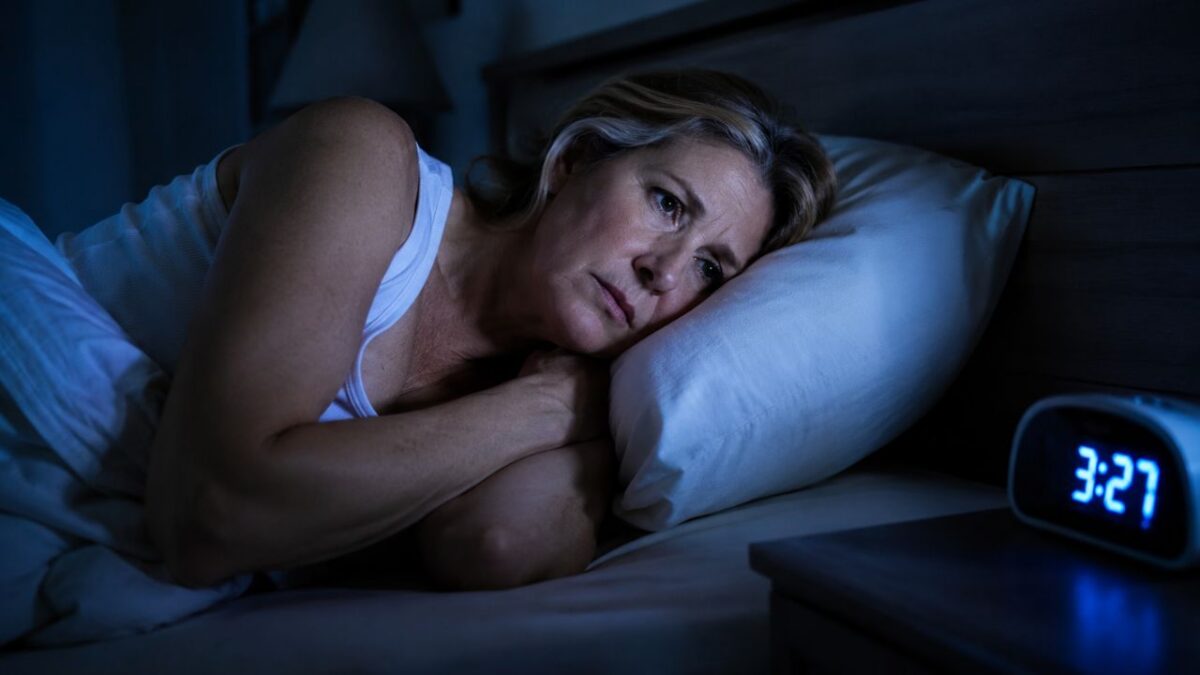
Or maybe you fall asleep just fine, but then — ping — you’re awake at 3:17 a.m. Hot. Annoyed. Slightly anxious. Staring at the ceiling while your partner sleeps like a golden retriever with no responsibilities.

If this is happening to you, you are not weird. You are not failing at sleep. And you are definitely not the only woman wondering, What on earth is going on with my body?

Sleep problems are common during perimenopause, menopause, and postmenopause. They can be linked to night sweats, mood changes, stress, aging, sleep disorders, and the very real hormonal shifts happening during this stage of life. The National Institute on Aging notes that hot flashes, night sweats, and mood changes can all contribute to poor sleep during menopause.

First, Let’s Clear Something Up: It’s Not “Just Stress”

Is stress involved? Often, yes.

But saying midlife sleep problems are “just stress” is like saying a kitchen fire is “just a little warm.”

During perimenopause, hormones can fluctuate in a way that affects body temperature, mood, and sleep quality. Mayo Clinic lists sleep problems, night sweats, hot flashes, mood changes, and brain fog among common menopause-transition symptoms, while also noting that symptoms vary from person to person.

So no, you’re not imagining it.

Your body may simply be operating under a new rulebook — one nobody handed you.

The 3 A.M. Wake-Up Club Is Very Real

There should be a group chat for women who wake up between 2 and 4 a.m.

Because somehow, at that hour, your brain becomes both a therapist and a disaster planner.

At 3 a.m., everything feels urgent:
Did I send that email?
Why did I say that thing in 2018?
Are the kids okay?
Should I change my entire career?
Why is my neck sweating?

Middle-of-the-night waking is commonly reported during the menopause transition. Research commentary in The Journal of Clinical Endocrinology & Metabolism notes that sleep disturbances are reported by more than half of midlife women, with middle-of-the-night awakenings especially common as women move through the menopause transition.

That does not mean every 3 a.m. wake-up is caused by hormones. Sleep is more complicated than that. But hormones, stress, temperature changes, and nervous system arousal can all be part of the picture.

Night Sweats Don’t Always Look Like Drenched Sheets

When people talk about night sweats, they often describe the dramatic version: soaked pajamas, soaked sheets, full bedding crisis.

But for many women, it’s subtler.

You might just feel:
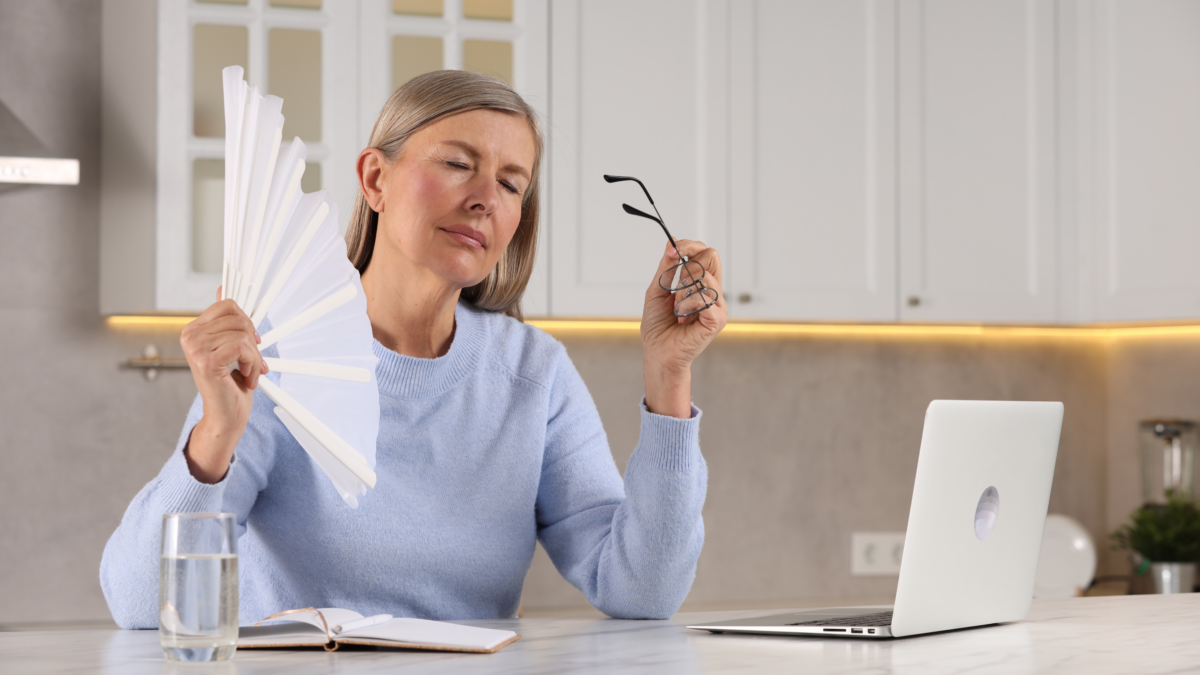
too warm, restless, uncomfortable, suddenly awake, or like you need to throw the covers off and then pull them back on five minutes later.

Hot flashes and night sweats can interrupt sleep, and the National Institute on Aging specifically names night sweats as one menopause-related symptom that can make sleep harder.

And once you’re awake, your brain may decide to join the party.

Very unhelpful.

Why Your Usual Habits Suddenly Stop Working

This is the part that feels rude.

The coffee you drank at 4 p.m. for years? Suddenly suspicious.

The glass of wine that used to make you sleepy? Now it helps you fall asleep, then wakes you up at 2:43 a.m. like a tiny chaos goblin.

The late dinner, the scrolling, the stressful email before bed — all the things your younger body used to tolerate may start hitting differently.

That doesn’t mean you have to live like a monk. It just means your body may be more sensitive now.

And honestly, that information can be useful.

Not in a “fix your whole life immediately” way. More like: Hmm, maybe my body is giving me clues.

Let’s Talk About Cortisol Without Turning It Into a Wellness Buzzword

Cortisol gets blamed for everything online, so let’s be careful.

Cortisol is a normal hormone that helps regulate alertness, stress response, and your daily rhythm. It naturally rises in the morning to help you wake up.

The relationship between menopause, sleep, and cortisol is still being studied. One experimental study found that menopause-related sleep disruption, rather than estradiol decline alone, disrupted cortisol dynamics.

So the responsible takeaway is this: stress biology and sleep are connected, but it’s too simplistic to say, “You wake up at 3 a.m. because cortisol is high.” Sometimes that may be part of the story. Sometimes it’s not.

Either way, helping your nervous system wind down in the evening is still a reasonable, low-pressure place to start.

Also, Midlife Women Are Carrying a Lot

Let’s not pretend this is only about hormones.

Many women in midlife are juggling:
work, kids, aging parents, relationships, money stress, body changes, household logistics, health worries, and the invisible job of remembering everything for everyone.

That is not “just life.”

That is a lot.

And when your nervous system spends the whole day in problem-solving mode, it may not magically relax the second your head hits the pillow.

Sometimes the body is basically saying: I have not had one quiet minute all day. We are processing now.

Annoying? Yes.

Understandable? Also yes.

The Sleep Apnea Piece Women Should Know About

Here’s something that deserves more attention: sleep apnea can become more common after menopause, and it may not always look the way people expect.

Many of us think sleep apnea means loud snoring, usually in men. But postmenopausal women can be affected too. A 2025 review in The Lancet Regional Health describes obstructive sleep apnea as common and potentially under-recognized in postmenopausal women, with prevalence rising sharply after menopause.

That doesn’t mean every tired woman has sleep apnea. But if you snore loudly, wake up gasping, have morning headaches, feel extremely sleepy during the day, or your sleep feels unrefreshing no matter what you do, it’s worth bringing up with a healthcare professional.

Practical Things That May Help Without Turning Bedtime Into a Full-Time Job

Nobody needs a 17-step nighttime routine.

You have a life.

Start with small, realistic shifts.

Keep the Room Cooler

A cooler bedroom, lighter bedding, breathable pajamas, or a fan can help if heat is waking you up.

Give Your Brain a Landing Strip

Try 20 minutes of “quiet runway” before bed. Not perfect. Not aesthetic. Just calmer.

Think: reading, stretching, gentle music, journaling, or sitting in dim light without asking your brain to solve your entire life.

Watch Your Personal Triggers

For a week or two, casually notice whether sleep is worse after late caffeine, alcohol, heavy meals, intense evening work, or doomscrolling.

No shame. Just data.

Get Morning Light

Morning light helps your body understand when it’s daytime, which can support your internal sleep-wake rhythm later. It’s simple, free, and doesn’t require buying anything.

Stop Blaming Yourself

This one matters.

Sleep disruption can make you feel emotional, foggy, irritable, and unlike yourself. That does not mean you’re weak. It means you’re tired.

When to Talk to a Healthcare Professional

It’s a good idea to check in with a qualified healthcare professional if sleep problems are persistent, getting worse, or affecting your daily life.

Especially if you have:
loud snoring, gasping during sleep, severe daytime fatigue, ongoing insomnia, intense night sweats, mood changes, morning headaches, or symptoms that feel new or concerning.

Sleep issues can be related to menopause, but they can also involve thyroid changes, mood disorders, sleep apnea, restless legs, medications, pain, or other health factors.

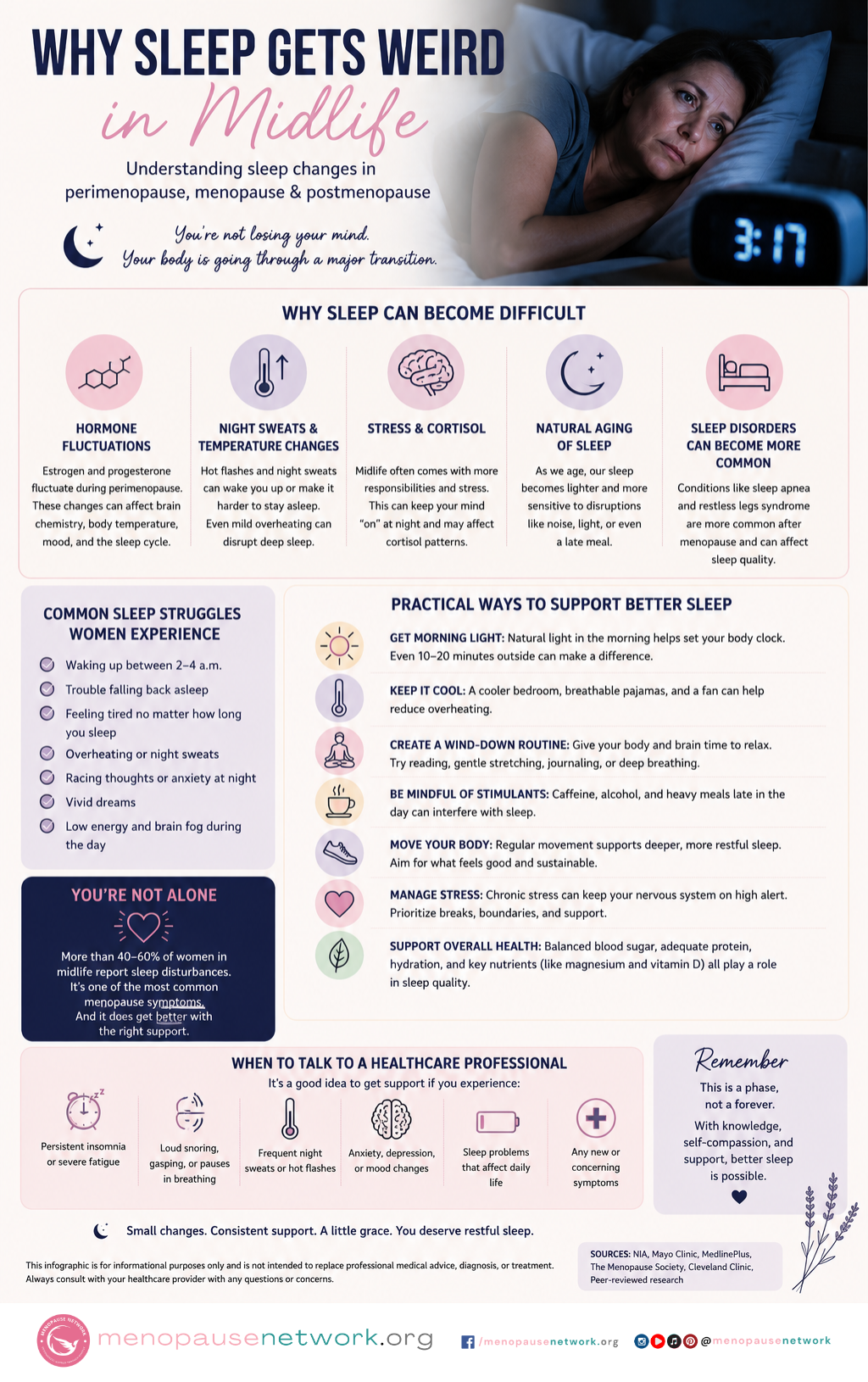
Why Sleep Gets Weird in Midlife Infographic by MenopauseNetwork.org

The Bottom Line

If sleep has become strange in midlife, you are not broken.

You are not “bad at sleeping.”

And you are not the only woman lying awake at 3 a.m. wondering why her body has suddenly become so dramatic.

Midlife sleep can change for many reasons: hormones, night sweats, stress, aging, mood shifts, and sleep disorders can all overlap.

The goal is not to panic or chase perfect sleep. The goal is to understand what may be happening, notice your patterns, support your body where you can, and ask for help when something feels persistent or disruptive.

Sometimes the most comforting sentence is also the simplest:

You’re not alone. This is a real thing. And it’s worth paying attention to.


Disclaimer

This article is for informational purposes only and is not intended to replace professional medical advice, diagnosis, or treatment. If sleep problems are persistent, severe, or affecting your quality of life, speak with a qualified healthcare professional.


References

Cleveland Clinic. (2024). Menopause and insomnia: Why sleep problems happen. https://health.clevelandclinic.org/menopause-and-insomnia

Mayo Clinic. (2024). Menopause – Symptoms and causes. https://www.mayoclinic.org/diseases-conditions/menopause/symptoms-causes/syc-20353397

National Institute on Aging. (2023). Sleep problems and menopause: What can I do? U.S. Department of Health and Human Services, National Institutes of Health. https://www.nia.nih.gov/health/menopause/sleep-problems-and-menopause-what-can-i-do

National Library of Medicine. (2024). Menopause. MedlinePlus. https://medlineplus.gov/menopause.html

Shaver, J. L., & Woods, N. F. (2015). Sleep and menopause: A narrative review. Menopause, 22(8), 899–915. https://doi.org/10.1097/GME.0000000000000499

The Menopause Society. (2024). Sleep and menopause. https://menopause.org/patient-education/menopause-topics/sleep-disorders-and-menopause

Vgontzas, A. N., & Fernandez-Mendoza, J. (2023). Sleep, menopause, and cortisol dynamics: Emerging perspectives. The Journal of Clinical Endocrinology & Metabolism, 108(11), e1347–e1358. https://academic.oup.com/jcem/article/108/11/e1347/7174007

Women’s Health Concern. (2025). Menopause and insomnia [Fact sheet]. British Menopause Society. https://www.womens-health-concern.org/wp-content/uploads/2025/08/17-NEW-WHC-FACTSHEET-Menopause-and-Insomnia-AUGUST2025-A.pdf


When Taking Care of Yourself Starts Feeling Like Another Job

At some point, taking care of yourself started feeling strangely complicated.

Menopause self-care can quickly start feeling overwhelming when every article seems to demand more discipline, more routines, and more energy than you already have.

One article tells you to cut sugar. Another says you should wake up earlier, exercise harder, meditate longer, drink more water, track your hormones, fix your sleep, lower your cortisol, and somehow still stay productive through all of it.

Then social media adds another layer of pressure. Suddenly everyone seems to have a perfect morning routine, a cabinet full of supplements, and a solution for every symptom you’re experiencing.

Meanwhile, many people in midlife are simply trying to get through the day without feeling exhausted, anxious, overstimulated, or unlike themselves.

That’s the part many menopause conversations fail to acknowledge.

Midlife rarely arrives during a calm, quiet season of life. It often unfolds while you’re still balancing work, caregiving, relationships, emotional labor, financial stress, aging parents, growing children, and the invisible pressure of holding everything together for everyone else.

Then, almost without warning, your body begins to feel different.

Sleep becomes lighter and more fragmented. Stress feels heavier. Recovery takes longer. Emotions sit closer to the surface. Things that once felt manageable suddenly feel overwhelming in ways you can’t fully explain.

And when symptoms begin showing up—fatigue, mood changes, hot flashes, anxiety, brain fog, body changes, disrupted sleep—it becomes easy to wonder if something is wrong with you.

But often, what’s happening is something much more complex than that.

Your body is adapting.

And while that adaptation can feel unsettling, frustrating, and emotionally exhausting, it does not mean your body is failing you.

Why Menopause Feels So Much Bigger Than “Just Hormones”

One of the most surprising things about menopause is how deeply it affects everyday life.

Many people expect hot flashes. Fewer expect the emotional exhaustion, the overstimulation, the anxiety, or the strange feeling of no longer recognizing their own energy levels, stress tolerance, or emotional capacity.

That’s because estrogen influences far more than reproductive health. Hormonal changes affect the brain, nervous system, metabolism, sleep regulation, mood, memory, cognition, and stress response. Harvard Health notes that fluctuating estrogen levels during menopause can affect memory, concentration, and cognitive clarity, which helps explain why so many people describe feeling mentally “foggy” or emotionally overwhelmed during this transition.

In other words, menopause is not just a reproductive transition. It’s a full-body transition.

And for many people, it can feel like their entire internal rhythm has shifted without warning.

What makes this even more difficult is that hormonal changes often expose the stress your body has already been carrying for years.

The skipped meals that once seemed manageable suddenly leave you shaky and irritable. The late nights you used to recover from easily now affect you for days. Chronic stress that once felt “normal” suddenly becomes physically overwhelming.

Menopause has a way of revealing just how much your body has been compensating for underneath the surface.

That realization can feel emotional.

But it can also become clarifying.

Because instead of asking, “How do I force myself to keep functioning the way I used to?” many people eventually begin asking a different question:

What actually helps now?

Not perfectly.
Not instantly.
Just realistically.

Why Menopause Self-Care Feels So Exhausting

Modern wellness culture loves intensity.

Optimize everything.
Track everything.
Fix everything.

If you’re tired, there’s a supplement stack for that. If you’re gaining weight, there’s another restrictive eating plan waiting for you. If your sleep is disrupted, someone online is ready to sell you a complicated nighttime routine that requires more energy than you already have.

The problem is that menopause often responds poorly to extremes.

In fact, many people discover the opposite is true: the body during midlife tends to respond better to steadiness than punishment.

That’s difficult to accept in a culture that constantly praises discipline, productivity, and pushing through exhaustion.

Especially for people who have spent decades ignoring their own needs in order to take care of everyone else.

But eventually, many realize something important:

The body becomes less tolerant of depletion during menopause.

Less tolerant of chronic stress.
Less tolerant of inconsistent sleep.
Less tolerant of emotional overload.
Less tolerant of constant self-neglect.

And while that can feel frustrating at first, it may also be your body asking for a different kind of care.

Not louder care.
Not trendier care.
Just more supportive care.

The Small Daily Habits That Often Help the Most

One of the biggest misconceptions about menopause is that support needs to be dramatic to be effective.

But some of the habits that genuinely help people feel steadier during midlife are surprisingly simple.

Things like:

  • eating regular meals instead of skipping them
  • drinking enough water consistently
  • getting outside for movement and sunlight
  • protecting sleep routines
  • reducing overstimulation when possible
  • taking breaks before complete burnout hits
  • moving your body in sustainable ways instead of punishing ones

Simple does not mean insignificant.

In fact, these small daily habits can have a profound effect on the nervous system, stress response, blood sugar regulation, mood stability, and overall wellbeing over time.

And perhaps that’s because menopause is not only hormonal.

It’s neurological and emotional, too.

Research highlighted by The Menopause Society explains that menopause can actually affect the brain itself, influencing cognition, emotional processing, and neurological functioning in ways many people never expect. That growing body of research is helping experts better understand why menopause can feel emotionally and mentally overwhelming—not just physically uncomfortable.

Why Your Nervous System Feels So Overloaded Right Now

Many people notice something surprising during perimenopause and menopause:

Their tolerance for chaos drops dramatically.

Loud environments feel overwhelming. Packed schedules feel exhausting. Constant notifications suddenly feel unbearable. Emotionally draining conversations linger in the body longer than they used to.

This isn’t imagined.

Hormonal fluctuations can affect the nervous system’s stress response, making the body more reactive to stimulation and emotional overload.

That’s why symptoms often feel worse after emotionally exhausting days—not just physically busy ones.

Stress can intensify:

  • hot flashes
  • anxiety
  • irritability
  • sleep disruption
  • fatigue
  • emotional sensitivity

And not all stress is physical.

Mental overload counts too.

The emotional labor of caregiving.
The pressure of always being available.
The constant multitasking.
The invisible exhaustion of carrying too much for too long.

Many people describe themselves as becoming “too sensitive” during menopause. But often, what’s really happening is that the nervous system is simply overloaded.

Understanding that distinction matters.

Because it shifts the conversation away from self-criticism and toward support.

Why Rest Stops Feeling Optional in Midlife

For years, many people were taught to treat exhaustion like an achievement.

Push through.
Stay productive.
Keep going.
Rest later.

But menopause has a way of interrupting those survival patterns.

Suddenly, poor sleep affects everything. Emotional resilience drops faster. Burnout becomes harder to recover from. Stress lingers in the body longer than it used to.

The National Institute on Aging notes that sleep problems become increasingly common during menopause, often affecting mood, energy levels, memory, and overall quality of life. Johns Hopkins Medicine also explains that hormonal changes during menopause can significantly disrupt sleep patterns, which helps explain why many people feel physically and emotionally depleted during this stage of life.

And eventually, many people realize something they were never really taught before:

Rest is not laziness.

Rest is regulation.

This is why supportive routines during midlife often focus less on optimization and more on recovery.

That might mean:

  • going to bed earlier
  • creating quieter evenings
  • reducing unnecessary stressors
  • allowing space between obligations
  • saying no more often
  • protecting moments of calm

Not because you’re weak.

Because your body is adapting to enormous internal changes while still trying to carry the responsibilities of everyday life.

The Midlife Shift Away From Punishment

Many people enter menopause carrying years of pressure to control their bodies.

To shrink them.
Discipline them.
Fix them.
Override them.

But eventually, constantly fighting yourself becomes exhausting.

Especially when your body no longer responds well to force.

This is one reason extreme wellness routines often backfire during menopause. Intense restriction, overexercising, rigid schedules, and all-or-nothing habits can place additional stress on a body that is already working hard to adapt.

Support tends to work better than punishment.

That doesn’t mean health stops mattering. Movement, nutrition, hydration, sleep, and emotional wellbeing remain deeply important during midlife. However, the way these habits are approached often needs to evolve.

For example, many people discover that movement feels different now.

Some notice they recover more slowly from intense workouts. Others realize that exhausting themselves physically only increases stress and fatigue.

That doesn’t mean movement is no longer beneficial. Strength training can support muscle and bone health. Walking can improve cardiovascular health and emotional wellbeing. Gentle mobility work can help with stiffness and stress regulation.

But increasingly, many people find that the most supportive movement is the kind they can sustain consistently without burning themselves out.

Consistency often matters more than intensity now.

And honestly, that realization can feel freeing.

The Emotional Grief Hidden Inside Menopause

There’s another part of menopause that often goes unspoken.

Grief.

Not necessarily dramatic grief. But subtle grief.

Grief for the body that once felt predictable.
Grief for energy levels that changed.
Grief for the version of yourself who could push through everything without consequences.
Grief for feeling unfamiliar inside your own skin.

These emotions are incredibly common, even though many people rarely say them out loud.

Because menopause is not only physical.

It can affect identity, confidence, relationships, sexuality, emotional resilience, and the way people experience themselves in the world.

That’s a lot for one nervous system to carry.

Which is why compassion matters here.

Not performative self-care marketed as another productivity tool. Real compassion.

The kind that allows you to stop treating your body like a problem that constantly needs fixing.

Maybe Menopause Isn’t Asking You to Push Harder

At some point, many people stop asking:

“What’s the perfect routine?”

And start asking:

“What actually helps me feel more like myself again?”

That shift changes everything.

Because menopause often teaches something many people were never encouraged to learn earlier in life:

Health is not punishment.
It’s relationship.

A relationship with your body.
Your energy.
Your emotional capacity.
Your limits.
Your needs.

And relationships built on criticism rarely thrive.

Maybe this stage of life is not asking you to become stricter with yourself.

Maybe it’s asking you to become more supportive of yourself than you’ve ever been before.

Less punishment.
Less pressure.
Less fighting your body for changing.

More listening.
More steadiness.
More nourishment.
More care that actually feels like care.

Because often, what truly helps during menopause is not dramatic at all.

It’s the quiet daily choices that help your body feel safe again.

Eating before you’re starving.
Resting before complete burnout.
Protecting your sleep.
Reducing overstimulation.
Moving your body because it feels supportive—not punishing.
Allowing yourself to need care without guilt.

Small things.

But small things practiced consistently can change how your body feels over time.

And perhaps that’s the real shift midlife asks of people:

Not to become harder on themselves.

But to finally stop abandoning themselves in the process of trying to hold everything else together.

Finding Your Way Back to Yourself

No routine will make every symptom disappear overnight. No supplement, workout, or wellness trend can completely remove the complexity of hormonal transition.

But the right kind of support can help you feel steadier, calmer, more resilient, and more connected to yourself again.

Not the version of yourself from twenty years ago.

The version of yourself who exists now.

The one navigating change while still showing up for life every day.

That version deserves care too.

If you’re looking for more grounded, compassionate conversations about menopause, hormonal health, emotional wellbeing, sleep, stress, and the realities of navigating midlife, explore more from Menopause Network.

Because people deserve menopause conversations that feel informed, inclusive, supportive, and deeply human.


References

National Institute on Aging. “Sleep Problems and Menopause: What Can I Do?”
https://www.nia.nih.gov/health/menopause/sleep-problems-and-menopause-what-can-i-do

Harvard Health Publishing. “Menopause and Brain Fog: What’s the Link?”
https://www.health.harvard.edu/womens-health/menopause-and-brain-fog-whats-the-link

Johns Hopkins Medicine. “How Does Menopause Affect My Sleep?”
https://www.hopkinsmedicine.org/health/wellness-and-prevention/how-does-menopause-affect-my-sleep

The Menopause Society. “How Menopause Restructures a Woman’s Brain.”
https://menopause.org/press-releases/how-menopause-restructures-a-womans-brain

The Hair, Skin, and Nail Changes That Catch You Off Guard

At first, it’s easy to dismiss.

Your skin suddenly feels tighter after a shower. Your favorite moisturizer no longer seems to “sink in” the way it used to. Your ponytail feels thinner in your hand. Your nails chip while doing the most ordinary things—opening a package, typing on your laptop, washing dishes.

Nothing dramatic. Nothing alarming.

And then one day, usually during some completely ordinary moment, you catch your reflection in the mirror and pause a little longer than usual.

Not because something is wrong.

But because something feels unfamiliar.

For many women and people navigating perimenopause or menopause, that realization can feel surprisingly emotional. Because visible changes hit differently. Hot flashes happen internally. Sleep disruption can remain private. Mood changes are often easier to hide.

But changes in your skin, hair, and nails show up in the face and body you’ve recognized your entire life.

And somehow, nobody really prepares you for that part.

Why Menopause Changes More Than You Expect

When menopause is discussed publicly, the conversation usually revolves around hot flashes, missed periods, mood swings, or sleep disruption. However, many women first notice hormonal changes through something far quieter: their appearance.

The skin that suddenly feels dry no matter how much moisturizer you use. The hair that no longer behaves the same way. The nails that become brittle for reasons you can’t quite explain.

These changes often feel personal because they affect the routines and rituals woven into everyday life. The way your makeup sits on your skin before work. The familiar feel of your hair while tying it up. The confidence attached to looking rested, healthy, and recognizable to yourself.

What makes it even more disorienting is that hormonal shifts tend to happen gradually. Most people don’t wake up one morning looking entirely different. Instead, the changes unfold slowly until eventually, something clicks.

Maybe it happens under harsh department store lighting while trying on foundation. Maybe it’s while pulling your hair into a ponytail before heading out the door and realizing it feels thinner than it used to.

And somewhere in the middle of an ordinary day, a thought quietly appears:

“When did this start happening?”

The Science Behind Menopause Skin Changes

Menopause is far more than the end of menstrual cycles. It’s a major hormonal transition that affects nearly every system in the body—including the skin, scalp, hair follicles, and nails.

One of the biggest shifts involves declining estrogen levels. And estrogen does far more than most people realize.

Researchers published in Dermato-Endocrinology explain that estrogen plays a significant role in collagen production, skin thickness, elasticity, hydration, and wound healing. As estrogen levels decline during menopause, those systems naturally begin changing too.

As a result, many women notice:

  • dryness
  • reduced firmness
  • increased sensitivity
  • dullness
  • crepey texture
  • thinner-looking skin
  • slower healing

And unlike the polished language often used in beauty advertising, these changes don’t always feel glamorous or empowering in the moment. Sometimes your skin simply feels unfamiliar.

A moisturizer that once worked perfectly suddenly isn’t enough. Makeup settles differently. Your face may appear more tired even when you’ve rested.

That experience can feel frustrating—not because women expect perfection, but because people naturally notice when something familiar changes.

Why Skin Can Suddenly Feel Older “Overnight”

One of the most confusing parts of menopause is how quickly visible changes can seem to appear.

But in reality, these shifts are usually happening slowly beneath the surface long before they become noticeable in the mirror.

A landmark study published in Obstetrics & Gynecology found that skin collagen decreases significantly after menopause due to estrogen decline. Collagen is part of what gives skin structure, elasticity, and resilience, which helps explain why many women suddenly notice sagging, deeper lines, or thinner-looking skin during midlife.

That’s often why women describe feeling as though they “aged overnight,” even though the hormonal transition itself has been unfolding gradually for years.

At the same time, menopause can make the skin barrier more vulnerable to dryness and irritation. Products that once felt gentle may suddenly feel harsh. Over-exfoliation becomes easier. Skin may react more strongly to weather, stress, or lack of sleep.

This is why many dermatologists recommend shifting away from aggressive “anti-aging” routines during menopause and focusing more on hydration, barrier repair, and consistency instead.

And honestly, there can be something emotionally exhausting about relearning your own skin after decades of familiarity.

Why Hair Changes Can Feel So Emotional

Hair changes during menopause can feel surprisingly personal because hair is deeply connected to identity and self-expression for many women.

Some notice increased shedding in the shower. Others realize their ponytail feels thinner or their part looks wider in certain lighting. Some experience dryness or texture changes they never expected.

A recent systematic review examining menopause-related dermatologic conditions found that hormonal shifts during midlife may contribute to female pattern hair loss, scalp changes, and increased thinning during menopause.

Still, the emotional impact often goes beyond the physical symptom itself.

Hair carries memory and familiarity. Many women have worn their hair the same way for years, sometimes decades. So when texture changes or volume decreases, it can create a quiet sense of disconnect that’s difficult to explain to someone who hasn’t experienced it firsthand.

And unlike temporary bad hair days, hormonal hair changes can feel unpredictable. Smooth hair may suddenly become dry or frizzy. Curly hair may flatten. Straight hair may become coarse or brittle.

At the same time, menopause often overlaps with one of the most demanding phases of life:

  • career pressure
  • caregiving responsibilities
  • aging parents
  • financial stress
  • chronic sleep disruption
  • relationship changes

Taken together, those stressors can affect overall wellbeing, including scalp and hair health.

So if your hair feels different lately, you are not imagining it. Your body is responding to a very real hormonal and physiological transition.

The Small Nail Changes That Quietly Add Up

Compared to skin and hair, nail changes tend to receive far less attention during menopause conversations. Still, they’re incredibly common.

You may notice:

  • brittleness
  • peeling
  • splitting
  • ridges
  • slower growth
  • increased breakage

On their own, these symptoms might seem relatively minor. However, they often become part of a much larger emotional picture.

Because menopause rarely changes just one thing at a time.

Instead, many women experience an accumulation of subtle shifts happening simultaneously. The skin feels drier. The hair behaves differently. The nails become weaker. Over time, those small changes can alter how familiar your body feels to you day-to-day.

And that emotional adjustment deserves more compassion than it often receives.

Why These Changes Affect Confidence More Than People Realize

Many women feel guilty admitting that visible changes affect them emotionally. But appearance and identity have always been deeply connected in human psychology.

The issue usually isn’t vanity.

It’s recognition.

There’s something vulnerable about looking in the mirror and feeling slightly disconnected from the face you’ve known your entire adult life.

Unfortunately, society doesn’t make this easier. Women are constantly given conflicting messages:

Age naturally—but somehow don’t look older.
Accept yourself—but maintain youthfulness effortlessly.
Care about your appearance—but don’t care “too much.”

It’s exhausting.

And somewhere along the way, many women learned to associate visible aging with lost value. That message is both harmful and profoundly untrue.

Because menopause is not a personal failure. It’s not evidence that you’ve “let yourself go.” And it certainly doesn’t erase your beauty, relevance, confidence, or femininity.

Still, emotional adjustment takes time. Especially when the world teaches women to fear visible change instead of understanding it.

What Actually Helps Support Skin, Hair, and Nails During Menopause

The good news is that your body often responds better to support than punishment during this phase of life.

And despite what marketing constantly suggests, supporting menopause-related changes doesn’t require chasing perfection. In fact, gentler and more consistent approaches are often far more effective.

Focus on Hydration and Barrier Support

As skin becomes more vulnerable to dryness during menopause, protecting the skin barrier becomes increasingly important.

That often means:

  • gentle cleansers
  • hydrating moisturizers
  • ceramide-rich products
  • reduced over-exfoliation
  • daily SPF use
  • avoiding overly stripping routines

Research on menopause-related skin health consistently shows that hydration and barrier protection become even more important as estrogen declines.

And while no skincare product can stop aging entirely, supportive routines can absolutely improve comfort, resilience, and overall skin health.

Nourishment Matters More Than Many Women Realize

Sometimes women become so focused on fighting midlife weight changes that they unintentionally undernourish the very systems struggling to stay resilient.

Hair, skin, nails, collagen, and muscle health all rely heavily on adequate nutrition. Protein intake becomes especially important during midlife, yet many women unintentionally under-eat protein while trying to manage changing body composition.

Nutrient deficiencies involving iron, zinc, vitamin D, omega-3s, and B vitamins may also contribute to worsening hair or nail symptoms in some cases.

For that reason, if changes feel sudden or severe, it’s worth discussing bloodwork and nutritional health with a healthcare provider instead of assuming everything is “just menopause.”

Stress and Sleep Affect Appearance Too

This part is often underestimated.

Sleep disruption and chronic stress affect inflammation, hydration, collagen health, hair shedding, skin repair, and cortisol levels.

And because menopause commonly disrupts sleep, many women end up stuck in a frustrating cycle where exhaustion affects both emotional wellbeing and physical appearance.

That’s why nervous system support matters too.

Movement. Rest. Therapy. Stress reduction. Social connection. Consistent sleep habits.

These things aren’t superficial wellness trends. They directly affect overall wellbeing during hormonal transition.

The Pressure to “Look the Same” Is Quietly Hurting Women

One of the quietest forms of suffering during menopause is the belief that women should somehow remain unchanged forever.

Same skin. Same hair. Same body. Same energy.

But human beings were never designed to stay static.

Bodies change. Hormones shift. Sometimes your reflection changes faster than your heart can emotionally catch up.

And while grief around those changes is valid, shame doesn’t have to be part of the experience.

You are not failing because your body changed. You are not less beautiful because your collagen declined. You are not invisible because your appearance evolved.

If anything, this stage of life often invites women to build a new relationship with themselves—one rooted less in perfection and more in compassion.

Maybe that’s the part nobody talks about enough.

Not learning how to “fight” your changing body…

but learning how to finally stand beside it.

When It’s Important to Speak With a Healthcare Professional

Although many skin, hair, and nail changes are considered common during menopause, certain symptoms should still be evaluated medically.

You should consider speaking with a healthcare provider if you experience:

  • sudden or patchy hair loss
  • painful scalp inflammation
  • severe skin irritation
  • dramatic nail changes
  • symptoms affecting emotional wellbeing or quality of life

Underlying conditions such as thyroid disorders, iron deficiency, autoimmune disease, or nutritional deficiencies can sometimes worsen or mimic menopause-related symptoms.

You deserve support—not dismissal.

And you should never feel pressured to simply “accept” symptoms that are significantly affecting your wellbeing.

You Are Still Yourself <3

The visible changes that come with menopause are often dismissed as cosmetic concerns. Yet for many women, they feel far more personal than that.

Because these changes affect more than appearance. They touch confidence, familiarity, routine, and self-recognition in deeply human ways.

And while adjusting to those changes can feel emotional at times, it does not mean your body is betraying you.

Your body is evolving.

Learning how to support yourself through that evolution—with more compassion, less pressure, and better understanding—can make this phase feel far steadier and far less lonely.

You are still yourself.

Even as your body learns a new language.


References

Thornton, M. J. (2013). Estrogens and aging skin. Dermato-Endocrinology, 5(2), 264–270. https://www.tandfonline.com/doi/full/10.4161/derm.23872

Brincat, M., Versi, E., Moniz, C. F., Magos, A., de Trafford, J., & Studd, J. W. (1987). Skin collagen changes in postmenopausal women receiving different regimens of estrogen therapy. Obstetrics & Gynecology, 70(1), 123–127. https://pubmed.ncbi.nlm.nih.gov/3601260/

Flament, F., Jiang, R., Delaunay, C., Kerob, D., Leclerc-Mercier, S., Kosmadaki, M., et al. (2023). Evaluation of adapted dermocosmetic regimens for perimenopausal and menopausal women using an artificial intelligence-based algorithm and quality of life questionnaires: An open observational study. Skin Research and Technology, 29(7). https://onlinelibrary.wiley.com/doi/10.1111/srt.13349

Aldhaheri, S., et al. (2025). Menopause and common dermatoses: A systematic review. https://pmc.ncbi.nlm.nih.gov/articles/PMC12860752/

Hot Flashes in Real Life: The Meetings, The Nights, The Moments No One Sees

Hot flashes have a way of arriving at the worst possible moment.

Not when you’re relaxing quietly at home with nobody around. Not during peaceful evenings when you can comfortably peel off layers and laugh it off privately. Instead, they tend to appear in the middle of real life—during conversations, meetings, grocery runs, long drives, dinner reservations, or moments when you’re already trying hard to hold everything together.

One minute, everything feels completely normal.

Then suddenly, a wave of heat rises through your chest and neck so quickly it almost feels surreal. Your face warms instantly. Sweat gathers near your hairline. Your heartbeat shifts. And while everyone around you continues talking as if nothing has changed, your entire body suddenly feels impossible to ignore.

So you smile through it.

You keep nodding.

You try to stay focused while internally wondering one thing:

Can other people tell?

That’s the part of menopause hot flashes many people don’t talk about enough. Conversations often focus on the symptom itself, but rarely on the emotional experience of living through it in everyday life. Because hot flashes aren’t just physical. They can affect confidence, concentration, sleep, emotional wellbeing, and the quiet relationship many women have with their own bodies.

And for many people navigating perimenopause and menopause, that emotional disruption is often the part that lingers the longest.

Hot Flashes Are Common—But They’re Often Misunderstood

Hot flashes are one of the most recognized menopause symptoms, yet they remain surprisingly misunderstood by those who haven’t experienced them personally.

From the outside, they can sound simple. A person suddenly feels warm for a few minutes, maybe sweats a little, and then the moment passes.

However, anyone living through frequent hot flashes knows the experience rarely feels that small.

In fact, research on vasomotor symptoms—the medical term used for hot flashes and night sweats—shows that these symptoms affect up to 80% of women during the menopause transition. The same research also highlights how significantly they can affect sleep, concentration, emotional wellbeing, and overall quality of life. That’s a major reason why hot flashes often feel far more disruptive than people expect. According to a clinical review published through the National Library of Medicine, many women continue experiencing vasomotor symptoms for years, sometimes even longer than a decade.

For many women in their 40s and beyond, hot flashes become one of the earliest signs that hormonal changes are beginning. During perimenopause, fluctuating estrogen levels affect the body’s temperature regulation system, causing the brain to react more intensely to even subtle shifts in body temperature.

As a result, the body responds with sudden heat, flushing, sweating, chills afterward, and sometimes even a racing heartbeat. Cleveland Clinic specifically notes that hot flashes may also include clammy skin, anxiety-like sensations, and rapid increases in body heat that can feel physically overwhelming in the moment.

Still, medical explanations only tell part of the story.

What often gets overlooked is that hot flashes don’t happen in calm, controlled environments. They happen in the middle of ordinary life while people are still expected to work, parent, socialize, focus, care for others, and continue functioning as though nothing unusual is happening.

That’s why hot flashes can feel so emotionally disruptive.

You may be trying to finish a presentation. Help your family. Sit through a meeting. Drive through traffic. Get through dinner with friends. Or simply make it through the day without feeling overwhelmed.

Then suddenly, your body feels like it’s operating on an entirely different schedule.

The Moment It Happens (And You’re Not Prepared)

One of the most difficult parts about hot flashes is their unpredictability.

Some begin gradually, starting as a faint warmth before building into full-body heat. Others arrive almost instantly, catching people completely off guard in public spaces where there’s no easy escape or privacy.

Many women describe experiencing hot flashes:

  • during meetings
  • standing in long lines
  • while driving
  • at restaurants
  • during social gatherings
  • halfway through conversations
  • in crowded rooms with little airflow

At the same time, the physical sensation itself can become incredibly distracting.

Many people report temporarily losing focus during a hot flash—not because they suddenly forget what they were doing, but because the body demands immediate attention. It becomes difficult to think clearly when your skin feels overheated, your heartbeat speeds up unexpectedly, and discomfort begins spreading through your chest, face, and neck all at once.

Then comes the internal monitoring.

Am I visibly sweating?

Is my face turning red?

Do I look nervous?

Can anyone notice this happening?

As those thoughts build, the emotional discomfort can intensify the experience even further. Research on vasomotor symptoms has found that menopause-related hot flashes are closely associated with anxiety, mood disruption, fatigue, and reduced quality of life—especially when symptoms interfere with sleep and daily functioning.

In professional environments especially, many women feel pressure to remain composed while silently managing symptoms that other people may not fully understand.

Over time, that pressure can feel exhausting.

What a Hot Flash Actually Feels Like

People often describe hot flashes as simply “feeling warm,” but that explanation barely captures the reality.

For some women, it feels like heat radiating upward from deep inside the chest. Others describe it as a sudden internal furnace turning on without warning. Some notice tingling across the skin before the heat begins, while others become aware of a pounding heartbeat first.

According to Cleveland Clinic, common symptoms of hot flashes may include:

  • sudden intense heat
  • facial flushing
  • sweating
  • damp clothing or hair
  • chills afterward
  • rapid heartbeat
  • lightheadedness
  • physical discomfort that feels difficult to ignore

Then there are menopause night sweats—the nighttime version of hot flashes that can quietly dismantle sleep quality over time.

Some people wake up mildly overheated. Others wake drenched in sweat, needing to change clothes, bedding, or even move to another room temporarily before falling asleep again.

At first, it may seem manageable.

But gradually, interrupted sleep starts affecting everything else.

Energy becomes harder to maintain. Concentration weakens. Emotional resilience drops. Small stressors suddenly feel bigger than they used to.

And because menopause symptoms are still not discussed openly enough, many women blame themselves before recognizing the physical connection.

Maybe I’m just stressed.

Maybe I’m overworked.

Maybe I’m simply getting older.

However, research published through the National Library of Medicine shows that vasomotor symptoms are strongly associated with sleep disruption, daytime fatigue, mood changes, and cognitive difficulties. In other words, the exhaustion many women feel is not “just in their head.” It’s often deeply connected to the body repeatedly losing restorative sleep.

Why Certain Situations Feel More Intense

Not every hot flash feels equally overwhelming.

The environment matters.

A hot flash at home alone may feel manageable. Meanwhile, the exact same symptom during an important meeting, crowded event, or social gathering can feel deeply uncomfortable.

Stress also plays a role.

When the body is already emotionally overwhelmed or physically tense, hot flashes often feel more intense both physically and mentally. Cleveland Clinic notes that stress, overheated environments, caffeine, alcohol, spicy foods, and smoking are among the common triggers that may worsen symptoms for some women.

At the same time, visibility changes the experience entirely.

A large part of the emotional discomfort comes from wondering whether other people can see what’s happening physically. Women often become hyperaware of sweating, flushed skin, fanning themselves, removing layers, or suddenly needing cooler air.

Eventually, that self-consciousness can begin affecting confidence.

Some people start dressing differently. Others avoid overheated environments, outdoor activities, or crowded spaces whenever possible. Many instinctively choose seats near windows, fans, or air vents without consciously thinking about it anymore.

Individually, these adjustments may seem minor.

Together, however, they reveal how much mental energy symptom management can quietly require.

The Night Version: When Sleep Slowly Starts Falling Apart

Night sweats deserve their own conversation because they affect far more than nighttime comfort.

Sleep disruption changes everything.

Initially, it may seem manageable. You wake up overheated once or twice, cool down, and eventually fall back asleep. However, over time, interrupted sleep accumulates quietly in the background of everyday life.

Fatigue slowly becomes part of the daily routine.

You wake feeling unrested even after technically spending enough hours in bed. Your patience shortens. Your concentration weakens. Motivation becomes harder to maintain. Even minor stressors suddenly feel heavier.

Because menopause symptoms are still minimized in many conversations, women often assume they simply need to “push through” the exhaustion.

But the body keeps score.

And when sleep quality declines consistently, the effects eventually show up everywhere—in mood, focus, productivity, relationships, emotional resilience, and overall health.

Research on vasomotor symptoms consistently shows that night sweats and repeated nighttime awakenings can significantly reduce quality of life over time. That’s part of why chronic exhaustion during menopause can feel so emotionally draining. The fatigue builds slowly, quietly, and repeatedly.

Many women spend months trying to function through chronic exhaustion before realizing how deeply night sweats have been affecting their wellbeing.

Why Hot Flashes Feel So Personal

There’s another layer to hot flashes that many people rarely discuss openly: they can change how women feel inside their own bodies.

Suddenly, comfort becomes strategic.

You think about room temperature constantly. You choose fabrics differently. You carry water everywhere. You avoid standing in direct sunlight too long. You scan unfamiliar spaces for windows, fans, or cooler seating areas automatically.

Little by little, the body starts feeling less predictable.

And that loss of predictability can feel emotional in ways many women don’t expect.

Especially for people who previously felt confident navigating their physical wellbeing, hot flashes can create a new sense of vulnerability and body awareness that feels unfamiliar.

Still, adapting to your body’s needs is not weakness.

It’s awareness.

In fact, many women navigating perimenopause and menopause become remarkably skilled at recognizing physical cues, identifying triggers, and adjusting routines to support themselves more compassionately.

That awareness deserves understanding—not embarrassment.

What Actually Helps in Real Life

There’s no universal solution for hot flashes, and women deserve honesty about that.

Some strategies work incredibly well for one person and make little difference for another. Still, many people do find meaningful relief through practical adjustments that support both physical comfort and emotional wellbeing.

Helpful approaches may include:

  • dressing in breathable layers
  • keeping bedrooms cooler at night
  • using lightweight bedding
  • staying hydrated
  • identifying possible triggers gently
  • reducing overheating whenever possible
  • practicing calming breathing techniques during episodes
  • improving sleep habits
  • creating lower-stress recovery routines

Cleveland Clinic also recommends paying attention to personal triggers, since symptoms may worsen in warm environments or during periods of increased stress. For some women, small environmental adjustments can make everyday life feel significantly more manageable.

Most importantly, many women experience emotional relief once they stop treating every hot flash like an emergency.

Understanding what’s happening physiologically can reduce panic during symptoms. Instead of spiraling into embarrassment or fear, many people feel more grounded once they recognize that these episodes—while disruptive—are temporary and manageable.

That emotional shift matters more than people realize.

Because sometimes, the fear surrounding symptoms becomes more exhausting than the symptoms themselves.

When Hot Flashes Deserve More Attention

Hot flashes are common during perimenopause and menopause, but common does not mean insignificant.

If symptoms are severely disrupting sleep, interfering with work, affecting emotional wellbeing, or making daily life difficult to manage, professional support matters.

Women deserve healthcare conversations that take their symptoms seriously.

Research published through the National Library of Medicine notes that although vasomotor symptoms affect a large percentage of menopausal women, many people remain untreated despite the significant impact symptoms can have on daily life and emotional wellbeing.

Support may include lifestyle adjustments, hormonal treatment options, non-hormonal therapies, sleep support, stress management strategies, or further medical evaluation depending on individual health history and symptom severity.

Most importantly, no one should feel pressured to simply “suffer through” menopause symptoms silently.

Menopause is a major biological transition.

Support, education, and compassionate care can make an enormous difference.

You’re Not Alone in This

One of the most isolating parts of hot flashes is how invisible they can feel to everyone else.

A woman may sit through an entire meeting smiling professionally while internally fighting discomfort, anxiety, overheating, and exhaustion all at once. Someone else may wake up repeatedly every night without ever telling anyone how depleted they feel the next morning.

From the outside, life may appear completely normal.

Internally, everything feels different.

But millions of women are navigating these same moments every single day.

The woman carrying a portable fan in her purse.
The friend sleeping with the thermostat unusually low.
The coworker quietly stepping outside for fresh air.
The person choosing layered clothing even in mild weather.

So many people are adapting silently while trying to maintain the rhythm of everyday life.

That’s exactly why conversations like this matter.

Because understanding reduces fear.
Recognition reduces isolation.
And support changes the experience entirely.

Keep Reading, Keep Understanding Your Body

Menopause has a way of making women feel like they’re navigating unfamiliar territory alone. However, the more openly we talk about symptoms like hot flashes, the less isolating they become.

If this article felt familiar, you’ll find more real conversations, practical support, and evidence-based guidance throughout Menopause Network. Because understanding what’s happening in your body should never feel confusing—or lonely.

Explore more menopause stories, symptom guides, and supportive resources here on Menopause Network.


References

Cleveland Clinic. (2024). Hot flashes: Symptoms, causes & treatment. Cleveland Clinic. https://my.clevelandclinic.org/health/symptoms/15223-hot-flashes

Shifren, J. L., Gass, M. L. S., & The NAMS Recommendations for Clinical Care of Midlife Women Working Group. (2023). Vasomotor symptoms during menopause: A practical guide on current treatments and future perspectives. National Library of Medicine. https://pmc.ncbi.nlm.nih.gov/articles/PMC9938702/

Maybe It’s Not Just Stress: The Moment Many People First Realize Something Is Changing

There’s a very specific kind of exhaustion many people experience before they ever realize hormones may be involved.

At first, it feels manageable. Life simply feels busy. Work may feel heavier than usual. Family responsibilities may be piling up. Emotional bandwidth feels stretched thin after years of constantly caring for others while also trying to hold everything together personally and professionally.

Then, gradually, something begins to feel different.

Not dramatic enough to immediately raise concern. Just… heavier.

Small inconveniences suddenly feel overwhelming. Emotional resilience feels lower than it once was. Sleep no longer restores the body the same way. Recovery takes longer. Patience feels thinner. Even ordinary days begin leaving behind an unfamiliar level of exhaustion.

Naturally, many people assume the same thing:

“I’m probably just stressed.”

And sometimes stress is part of the picture. However, for many adults in their late 30s and 40s, stress may not be the entire story.

In some cases, the body may be quietly entering perimenopause — the hormonal transition leading up to menopause — years before many people expect it to happen.

What makes this transition especially confusing is that the earliest symptoms often appear emotionally before they appear physically. As a result, many people spend years believing they are simply burned out, emotionally overwhelmed, or “not coping as well” before realizing hormones may also be influencing the way the nervous system responds to stress itself.

According to Johns Hopkins Medicine, fluctuating hormone levels during perimenopause can contribute to anxiety, emotional instability, sleep disruption, and difficulty concentrating — symptoms that are often mistaken for ordinary stress or burnout.

Consequently, many people continue functioning outwardly while silently feeling unlike themselves internally. They continue working, caregiving, managing responsibilities, and supporting others while privately wondering why everything suddenly feels harder than it used to.

That disconnect can feel deeply isolating.

This article explores:

  • why stress and perimenopause symptoms overlap so heavily
  • how hormonal changes affect emotional wellbeing
  • why anxiety and overwhelm often increase during midlife
  • the symptoms many people dismiss too quickly
  • and why understanding what’s happening can feel profoundly validating

Because sometimes the first breakthrough is not treatment.

Sometimes it is simply realizing:

You are not imagining this.

The Quiet Realization That Something Feels Different

Most people do not suddenly wake up one day convinced they are entering perimenopause. In fact, many never consider hormones at all in the beginning.

Instead, there is usually a slow accumulation of subtle emotional and physical shifts that gradually become harder to ignore.

For example, you may notice:

  • feeling emotionally overstimulated more easily
  • struggling to recover after normal days
  • becoming mentally exhausted faster
  • feeling unusually anxious
  • crying more unexpectedly
  • needing more quiet or recovery time
  • feeling emotionally “thin” in situations that once felt manageable

Often, these changes are difficult to explain clearly because they do not always appear as one dramatic symptom. Instead, they appear as a quiet loss of familiarity with yourself.

You still recognize your life. However, your internal experience of it feels noticeably different.

One of the most common phrases people use during early hormonal transition is:

“I just don’t feel like myself anymore.”

Importantly, this feeling is rarely about dramatic dysfunction. More often, it reflects smaller but meaningful shifts — lower emotional resilience, increased fatigue, reduced stress tolerance, emotional overstimulation, and difficulty “bouncing back” after stressful days.

Unfortunately, because these symptoms often develop gradually, they are easy to rationalize away.

Many people tell themselves:

  • “I’m just tired.”
  • “Life has been stressful lately.”
  • “I probably need more sleep.”
  • “I’m just getting older.”
  • “Everyone feels overwhelmed sometimes.”

While those explanations may be partly true, they can also delay recognition of the hormonal changes happening underneath the surface.

Why So Many People Explain Away the Early Signs

There is a reason early perimenopause symptoms are so commonly dismissed.

Modern culture has normalized exhaustion. People are often expected to remain productive, emotionally available, mentally sharp, and endlessly resilient regardless of how depleted they may actually feel internally.

As a result, when symptoms begin appearing during midlife, the most socially acceptable explanation becomes:

“I’m just stressed.”

And yes — stress is absolutely real. At the same time, hormonal fluctuations can significantly intensify how stress feels inside the body.

According to the American College of Obstetricians and Gynecologists (ACOG), the hormone changes affecting menstrual cycles during perimenopause can also affect emotions. Additionally, the pressures many people face during midlife — including careers, caregiving, parenting, and chronic stress — can further intensify emotional symptoms.  

In other words, stress and hormonal changes often overlap rather than exist separately.

That overlap is one reason early perimenopause symptoms are so frequently misunderstood. People may blame demanding careers, caregiving responsibilities, lack of sleep, emotional burnout, aging, or chronic stress without recognizing that hormonal shifts may be amplifying every one of those experiences.

Furthermore, many people minimize their symptoms because stress feels easier to explain than hormonal change. Stress feels familiar. Hormonal transition often feels uncertain, vulnerable, and difficult to talk about openly.

Consequently, many individuals continue pushing themselves harder while quietly wondering why everything suddenly feels more difficult than it used to.

When Stress Starts Feeling Different Than It Used To

One of the clearest signs that something deeper may be happening is when stress no longer resolves the way it once did.

Previously, rest may have restored the nervous system relatively quickly. A quiet weekend, a good night’s sleep, or time away from responsibilities may have helped the body recover.

During perimenopause, however, many people notice something unsettling:

The exhaustion lingers.

You may notice:

  • waking up tired even after sleeping
  • feeling physically exhausted but mentally restless
  • becoming emotionally overwhelmed faster
  • struggling to tolerate noise or multitasking
  • needing significantly more recovery time
  • feeling “wired but tired”

Importantly, this experience is not imagined.

Research increasingly shows that estrogen plays a significant role in mood regulation, sleep quality, emotional resilience, and stress-response systems.

ACOG also notes that anxiety symptoms during perimenopause may include constant worrying, muscle tension, nausea, concentration difficulties, and sleep disruption — symptoms many people initially mistake for ordinary stress or burnout.  

As a result, many individuals begin questioning themselves. They wonder why everything suddenly feels harder, why small problems suddenly feel overwhelming, or why they no longer seem able to “bounce back” the same way.

However, this is not necessarily about weakness. In many cases, it may reflect a nervous system responding differently during hormonal transition.

The Symptoms That Often Get Misunderstood in Midlife

One of the biggest misconceptions about menopause is that it begins primarily with hot flashes.

While hot flashes are certainly common, many people experience emotional and cognitive symptoms years before obvious physical changes appear. In fact, some individuals never initially connect their symptoms to hormones at all.

Brain Fog

Many people describe:

  • forgetting words
  • struggling to focus
  • mental fatigue
  • difficulty retaining information
  • feeling cognitively slower than usual

Harvard Health notes that memory and concentration difficulties are common during perimenopause and can feel both frustrating and alarming when they appear unexpectedly.

If this sounds familiar, you may also relate to:
“Brain Fog or Burnout?”

Mood Changes

According to ACOG, about 4 in 10 women experience mood-related symptoms during perimenopause similar to PMS, including irritability, low energy, tearfulness, mood swings, and difficulty concentrating. Unlike PMS, however, these symptoms may occur unpredictably and without clear monthly patterns.  

That unpredictability is one reason these emotional changes often feel confusing and difficult to explain.

Anxiety

Johns Hopkins Medicine explains that anxiety may increase during perimenopause due to fluctuating hormone levels affecting brain chemistry and stress-response systems.

Many people report:

  • racing thoughts
  • nervous system sensitivity
  • emotional overstimulation
  • heightened worry
  • panic-like symptoms

—even if they have never previously considered themselves anxious.

Sleep Disruption

Sleep changes are among the earliest and most disruptive symptoms of hormonal transition.

For example, people may experience:

  • difficulty falling asleep
  • waking during the night
  • restless sleep
  • waking up unrefreshed
  • night sweats

Harvard Health also emphasizes that disrupted sleep can intensify fatigue, mood instability, emotional sensitivity, and cognitive symptoms — creating a cycle that becomes increasingly difficult to break.

Body Temperature Changes

Some individuals may also notice:

  • sudden warmth
  • heat sensitivity
  • flushing
  • night sweats
  • temperature regulation changes

These symptoms often appear gradually long before menopause officially occurs.

Why Hormonal Shifts Often Feel Emotional Before They Feel Physical

One of the least discussed realities of perimenopause is how deeply hormones affect emotional wellbeing.

Hormones influence far more than reproduction. Estrogen, in particular, plays an important role in mood regulation, stress response, emotional resilience, sleep quality, and cognitive function.

Consequently, fluctuating hormone levels can create emotional symptoms before obvious physical symptoms ever appear.

This is why many people experience irritability, emotional sensitivity, anxiety, overwhelm, emotional exhaustion, and lower stress tolerance before they ever experience noticeable hot flashes or significant cycle changes.

Johns Hopkins Medicine specifically highlights the connection between fluctuating hormones and increased vulnerability to anxiety during perimenopause, particularly in individuals already sensitive to stress.

Importantly, this does not mean someone is “overreacting,” nor does it mean they are emotionally weak. Rather, it often reflects legitimate physiological changes occurring within the nervous system.

Unfortunately, many individuals silently interpret these experiences as personal failure instead of recognizing them as possible hormonal symptoms.

They think:

  • “I’m becoming too emotional.”
  • “I’m not coping well anymore.”
  • “Something is wrong with me.”
  • “Why can’t I handle life like I used to?”

In reality, the body may simply be responding differently than before.

The Loneliness of Feeling “Off” Without Understanding Why

One of the hardest parts of early perimenopause is how invisible it can feel.

From the outside, many people appear completely functional. They continue meeting deadlines, caring for others, maintaining routines, managing households, and showing up every day.

Internally, however, they may feel profoundly exhausted in ways they cannot fully articulate.

That disconnect can become deeply isolating.

Because when symptoms are invisible, people often stop trusting themselves. They wonder whether they are simply bad at coping or somehow failing at life.

Perhaps most painful of all, many people feel guilty for struggling — especially those who have spent most of their lives being dependable, capable, productive, and emotionally strong.

This is why recognition matters so deeply.

Because understanding what may be happening internally can replace shame with context.

What Recognition Changes — Even Before You Have Answers

For many people, learning about perimenopause creates immediate emotional relief.

Not because symptoms disappear overnight. But because confusion finally begins making sense.

Recognition helps people:

  • stop blaming themselves
  • identify symptom patterns
  • feel emotionally validated
  • seek support earlier
  • approach themselves with more compassion

That emotional shift can feel transformative.

Instead of asking:
“What’s wrong with me?”

People often begin asking:
“What support does my body need right now?”

And that shift changes everything.

Small Ways to Start Supporting Yourself Earlier

Perimenopause does not require perfection. Nor does anyone need to completely overhaul their life overnight in order to feel more supported.

Often, the most meaningful changes begin gently.

Protect Sleep More Intentionally

ACOG emphasizes that poor sleep can affect emotional regulation, stress resilience, decision-making, and coping ability.  

Helpful strategies may include:

  • maintaining consistent sleep schedules
  • reducing screen exposure before bed
  • creating calming nighttime routines
  • limiting overstimulation in the evening

Reduce Nervous System Overload

Many people notice increased sensitivity to noise, multitasking, crowded schedules, and emotional stimulation.

Therefore, building more space between obligations may help reduce overwhelm.

Pay Attention to Patterns

Tracking symptoms gently — without becoming obsessive — may help identify patterns involving:

  • sleep
  • anxiety
  • energy levels
  • emotional sensitivity
  • hormonal cycles

Practice Self-Compassion

Most importantly, needing more rest or support is not weakness.

Bodies change. And adapting to those changes deserves compassion, not criticism.

When It’s Worth Looking Beyond Stress Alone

Stress is real. However, persistent symptoms deserve attention too.

It may be worth speaking with a healthcare professional if you experience:

  • worsening anxiety
  • ongoing fatigue
  • persistent sleep disruption
  • severe mood changes
  • irregular menstrual cycles
  • significant brain fog
  • symptoms interfering with daily life

Support options may include:

  • lifestyle adjustments
  • mental health support
  • hormone therapy discussions
  • sleep support
  • nutritional guidance
  • stress-management strategies

Importantly, people do not need to wait until symptoms become unbearable before seeking help.

Conclusion

If stress suddenly feels heavier than it used to…
if rest no longer restores you the same way…
if you’ve quietly been feeling unlike yourself lately…

please know this:

You are not weak.

You are not failing.

And this may not be “just stress.”

For many people, the earliest signs of perimenopause arrive quietly — disguised as burnout, anxiety, emotional sensitivity, exhaustion, or the unsettling feeling that something internally has shifted.

However, understanding those changes can be deeply empowering.

Because once people stop viewing themselves through the lens of failure, they can begin responding with curiosity, compassion, and informed support instead.

Your body may not be betraying you.

It may simply be asking for a different kind of care now.

And listening to that is not weakness.

It is wisdom.

Keep Exploring

If this article resonated with you, know that you are not alone in what you’re experiencing.

Hormonal changes during midlife can feel confusing, emotional, and difficult to explain — especially when the symptoms are often mistaken for everyday stress. The more we talk openly about perimenopause and menopause, the easier it becomes to recognize the signs, seek support, and approach this stage of life with greater understanding and self-compassion.

Explore more articles from The Menopause Network for evidence-based insights, supportive guidance, and honest conversations about menopause, hormonal health, emotional wellbeing, sleep, brain fog, and the many changes that can happen during midlife.


References

American College of Obstetricians and Gynecologists. (2025). Mood changes during perimenopause are real. Here’s what to know.  

Harvard Health Publishing. (2023). Menopause symptoms that may surprise you: What to watch for during perimenopause. Harvard Medical School. https://www.health.harvard.edu/womens-health/menopause-symptoms-that-may-surprise-you-what-to-watch-for-during-perimenopause

Johns Hopkins Medicine. (2024). Perimenopause and anxiety. Johns Hopkins Medicine. https://www.hopkinsmedicine.org/health/wellness-and-prevention/perimenopause-and-anxiety

The Weight That Won’t Budge: Why Your Body Changes During Menopause

You haven’t changed much—but your body has. Here’s why weight suddenly feels harder to manage during menopause, and what actually helps without punishing yourself in the process.

There’s a moment many women remember with startling clarity.

You’re standing in front of the mirror one morning, tugging at jeans that fit perfectly six months ago. Or maybe it happens in a dressing room under cruel fluorescent lighting. Maybe after a workout you used to swear by. Maybe after stepping on the scale and seeing a number that makes absolutely no sense.

Because nothing changed.

You still eat mostly the same.
You still try to move your body.
You’re still being “good.”

And yet your body suddenly feels unfamiliar.

Softer around the middle.
More tired.
More resistant.
Almost like it stopped listening to you.

For many women in perimenopause and menopause, this isn’t just about weight gain. It’s about betrayal. Confusion. Grief. The unsettling realization that the rules your body followed for decades no longer seem to apply.

And here’s the part no one says loudly enough:

This is not a failure of discipline.

Your body is going through one of the most significant hormonal recalibrations of your entire life. That shift affects far more than periods and hot flashes. It changes metabolism, fat distribution, insulin sensitivity, muscle mass, stress response, sleep quality, and even the way your brain regulates hunger and fullness.

In other words? The game changed.

But most women are still trying to play by the old rules.

Let’s talk about what’s actually happening inside your body during menopause weight gain—and why supporting yourself through this phase requires far more compassion than punishment.

When Your Body Stops Responding the Way It Used To

For years, your body probably felt relatively predictable.

Maybe you could tighten up your eating for a couple weeks and lose a few pounds. Maybe adding extra cardio worked after the holidays. Maybe your metabolism felt forgiving enough that you didn’t have to think too hard about it.

Then sometime in your 40s or early 50s… everything shifted.

Suddenly:

  • Weight appears faster
  • It settles around the abdomen
  • Muscle tone changes
  • Energy drops
  • Recovery slows
  • Sleep gets worse
  • Stress hits harder

And the strategies that once worked? They barely move the needle.

This is often the moment women blame themselves.

They assume they’ve become lazy.
Undisciplined.
Weak.

But menopause researchers say something very different.

Researchers from Mayo Clinic explain that midlife weight gain is usually driven by a combination of aging, hormonal changes, lower muscle mass, sleep disruption, and lifestyle stressors—not simply a lack of discipline.

That distinction matters.

Because women have spent decades believing body size is purely a moral issue.

It isn’t.

Your biology matters, too.

Why Menopause Weight Gain Often Shows Up Around the Belly

One of the most frustrating parts of menopause weight gain is that it often feels different from previous weight fluctuations.

It’s not just the number on the scale.

It’s the location.

Women who once carried weight in their hips or thighs may suddenly notice:

  • increased abdominal fat
  • thickening around the waist
  • bloating that feels persistent
  • a loss of body definition

And emotionally? This shift can feel deeply personal.

Because the stomach area is culturally loaded. Women are taught—constantly—that a flat midsection equals health, attractiveness, self-control, desirability.

So when the body begins storing more fat around the abdomen, it can trigger panic far beyond aesthetics.

But here’s what’s fascinating:

The Menopause Society notes that while aging plays a major role in midlife weight gain, menopause itself contributes to a shift in where fat is stored—often moving it toward the abdominal area.

This is sometimes called the transition from a “pear-shaped” body pattern to a more “apple-shaped” distribution.

And it’s incredibly common.

That means some women aren’t necessarily gaining massive amounts of weight.

Their body composition is changing.

And that distinction explains why clothes may fit differently even if the scale barely moves.

It also explains why many women feel like they “woke up in someone else’s body.”

Because in some ways… they did.

Why Your Metabolism Feels Slower—Even If Nothing Has Changed

Here’s where things get especially maddening.

Many women in midlife genuinely aren’t eating more than they used to. Some are eating less.

Yet weight still creeps upward.

Part of this comes down to muscle mass.

Starting around our 30s—and accelerating during menopause—the body naturally begins losing lean muscle tissue. Muscle is metabolically active, meaning it burns more energy even at rest. So when muscle mass decreases, the body requires fewer calories overall.

In practical terms?

Your body becomes more energy-efficient.
But modern life hasn’t adjusted for that reality.

This is why the same eating habits that maintained your weight at 35 may lead to gradual gain at 50.

And there’s another layer many women overlook: sleep.

Menopause and perimenopause commonly disrupt sleep through:

  • night sweats
  • insomnia
  • anxiety
  • frequent waking

Poor sleep affects hormones involved in hunger and fullness regulation. It also increases cravings for high-sugar, high-fat foods because the brain becomes desperate for quick energy.

In their review on menopause and weight, Davis and colleagues found that the menopause transition is linked not just with weight changes, but also with shifts in body composition—especially increases in abdominal fat.

So if you’ve found yourself craving carbs late at night or emotionally eating after exhausting days, your body isn’t “broken.”

It’s trying to compensate for depletion.

And stress? That matters too.

Chronically elevated stress can influence appetite, energy regulation, and fat storage—especially around the abdomen. Midlife women are often simultaneously managing careers, aging parents, teenagers, relationships, financial pressure, and invisible emotional labor while hormones fluctuate underneath the surface.

No wonder the body feels overwhelmed.

Sometimes menopause weight gain isn’t about eating too much.

Sometimes it’s about surviving too much.

Why “Trying Harder” Doesn’t Always Work Anymore

This is usually the point where women double down.

More restriction.
More cardio.
Fewer carbs.
Skipping meals.
Punishing workouts.

But menopause changes the equation.

Extreme dieting during midlife can actually backfire by:

  • increasing stress hormones
  • worsening muscle loss
  • intensifying fatigue
  • triggering cycles of restriction and overeating

And emotionally? Constant restriction can create a painful relationship with food and body image.

The truth is, many women entering menopause are carrying decades of diet culture trauma already. They’ve spent years shrinking themselves. Controlling themselves. Apologizing for taking up space.

Then menopause arrives and demands something radical:

Adaptation instead of punishment.

That can feel terrifying.

Because control is seductive.

Especially when your body suddenly feels unpredictable.

But Mayo Clinic researchers emphasize that realistic, sustainable strategies—including balanced nutrition, movement, and preserving lean muscle mass—are far more supportive long-term than extreme restriction.

That’s a completely different mindset.

Instead of asking:
“How do I force my body to be smaller?”

The better question becomes:
“How do I support my body through massive hormonal change?”

That shift changes everything.

The Emotional Layer of Weight Changes No One Talks About

Weight changes during menopause are rarely just physical.

They touch identity.
Confidence.
Sexuality.
Visibility.
Aging.
Self-worth.

And many women grieve those changes quietly.

There’s grief in realizing your old body no longer responds the same way.
Grief in feeling invisible in a culture obsessed with youth.
Grief in outgrowing clothes that once made you feel powerful.
Grief in not recognizing yourself in photos.

Sometimes women feel ashamed for caring so much.

But of course they care.

Women are taught from girlhood that their bodies are social currency. That thinness equals discipline. That aging should be hidden. That softness is failure.

Then menopause arrives—a phase that naturally changes body composition—and women are expected to navigate it silently while pretending none of it hurts.

But it does hurt.

And pretending otherwise only deepens the isolation.

One of the most healing things women can hear is this:

You are allowed to mourn changes in your body while still respecting it.

Those two things can exist together.

You can miss your younger body and still appreciate the body carrying you through midlife.
You can feel frustrated and compassionate.
You can want health improvements without hating yourself.

This emotional complexity deserves far more conversation than it gets.

Because the mental burden of menopause weight gain is often heavier than the physical changes themselves.

What Actually Supports Your Body Now (Without Extremes)

Here’s the encouraging news:

While menopause changes the body, it does not mean you are powerless.

But support during midlife often looks different than it did before.

And honestly? Different can be better.

Prioritize Protein Like Your Future Depends On It

Because in many ways, it does.

Protein becomes critically important during menopause because it helps preserve muscle mass, stabilize blood sugar, support satiety, and maintain strength as estrogen declines.

Many women unintentionally under-eat protein—especially at breakfast.

Instead of chasing restrictive diets, focus on building meals around:

  • eggs
  • Greek yogurt
  • fish
  • chicken
  • tofu
  • lentils
  • cottage cheese
  • protein-rich snacks

Not for punishment.
For nourishment.

Strength Training Is More Important Than Endless Cardio

For years, women were told cardio was the answer to weight management. But during menopause, preserving muscle becomes one of the most protective things you can do for metabolism, bone density, balance, and long-term health.

The Menopause Society recommends regular movement and muscle-supporting activity as part of healthy weight management during midlife.

That doesn’t mean becoming obsessed with the gym.

It can mean:

  • resistance bands
  • bodyweight exercises
  • Pilates
  • weight lifting
  • strength-focused yoga

The goal isn’t shrinking yourself.

It’s building resilience.

Stabilize Blood Sugar Instead of Constantly Restricting Food

Many women notice they become more sensitive to energy crashes during perimenopause.

Skipping meals may suddenly lead to:

  • shakiness
  • irritability
  • intense cravings
  • anxiety
  • exhaustion

Balanced meals with protein, fiber, healthy fats, and complex carbohydrates can help stabilize energy and reduce the cycle of deprivation and overeating.

This is where many women experience a huge “aha” moment.

Their body wasn’t demanding punishment.

It was demanding consistency.

Sleep Is Metabolic Healthcare

Poor sleep affects:

  • appetite regulation
  • stress response
  • inflammation
  • cravings
  • emotional eating
  • energy levels

Yet women are often told to “just try harder” while functioning on fragmented sleep night after night.

Protecting sleep during menopause may involve:

  • cooling the bedroom
  • reducing alcohol
  • managing stress
  • limiting late caffeine
  • discussing symptoms with a healthcare provider
  • creating calming nighttime routines

Because exhaustion changes everything.

Including how the body manages weight.

Stress Reduction Isn’t Optional Anymore

Midlife stress hits differently.

Your nervous system becomes less tolerant of chronic overload. Recovery takes longer. Burnout becomes more physical.

And many women have spent decades ignoring stress signals because caretaking demanded it.

But menopause often forces a reckoning.

The body begins saying:
“I can’t keep operating like this.”

Sometimes support looks like therapy.
Sometimes boundaries.
Sometimes saying no more often.
Sometimes walking outside without your phone.
Sometimes finally admitting you’re tired.

Not lazy.
Tired.

There’s a difference.

When Weight Changes Are Worth a Closer Look

While some weight changes are common during menopause, it’s important not to dismiss every symptom as “just hormones.”

Rapid or significant weight changes deserve medical attention—especially if accompanied by:

  • severe fatigue
  • hair loss
  • digestive changes
  • depression
  • heart palpitations
  • swelling
  • unexplained pain

Conditions like:

  • thyroid disorders
  • insulin resistance
  • sleep apnea
  • depression
  • medication side effects

can overlap with menopause symptoms.

This is why self-advocacy matters so deeply during midlife.

Too many women are dismissed.
Told it’s normal.
Told to eat less and move more.
Told their symptoms are simply aging.

You deserve comprehensive care—not assumptions.

And if a provider minimizes your concerns? It’s okay to seek another opinion.

Your body is speaking.
You deserve someone willing to listen.

Maybe Your Body Isn’t Failing You After All

What if menopause weight gain isn’t proof that your body betrayed you?

What if it’s evidence that your body is adapting to an entirely new hormonal reality?

That perspective changes the emotional landscape completely.

Because suddenly the goal isn’t punishment.
It’s partnership.

Not shrinking at war with yourself.
But learning your body’s new language.

And yes, that takes time.

There may still be hard days.
Dressing-room meltdowns.
Moments of comparison.
Fear about aging.
Frustration when nothing fits right.

But there can also be something else:

Relief.

Relief in understanding this transition isn’t about laziness.
Relief in releasing impossible standards.
Relief in realizing your worth was never tied to your waistline in the first place.

Your body is changing.
But that doesn’t mean it’s broken.

It means it’s asking for a different kind of care now.

Millions of women are navigating the exact same confusing, emotional, frustrating shift—and many are quietly wondering if they’re somehow failing.

They aren’t.
And neither are you.

Sometimes the most powerful thing we can do during midlife is stop fighting our bodies long enough to actually listen to them.

What changes have you noticed most during perimenopause or menopause? What’s helped—and what hasn’t? Share your experience with other women navigating this season of life. Someone else may need to hear they’re not the only one feeling this way.


References

Kapoor, E., Collazo-Clavell, M. L., & Faubion, S. S. (2017). Weight gain in women at midlife: A concise review of the pathophysiology and strategies for management. Mayo Clinic Proceedings, 92(10), 1552–1558. https://doi.org/10.1016/j.mayocp.2017.08.004

Davis, S. R., Castelo-Branco, C., Chedraui, P., Lumsden, M. A., Nappi, R. E., Shah, D., & Villaseca, P. (2012). Understanding weight gain at menopause. Climacteric, 15(5), 419–429. https://doi.org/10.3109/13697137.2012.707385

The Menopause Society. (2024). Midlife weight gain. https://menopause.org/wp-content/uploads/for-women/MenoNote-Weight-Gain.pdf

Why Small Things Suddenly Feel Big?

There’s a moment many women in perimenopause quietly recognize—but rarely talk about.

You’re standing in the kitchen trying to finish dinner. The television is humming in the background. Your phone lights up again. Someone asks you a question while the dog barks at the door and suddenly…

Your chest tightens.

You feel irritated. Overwhelmed. Almost trapped inside the noise of ordinary life.

And what’s confusing is that nothing catastrophic happened.

It was just… too much.

The sound.
The pressure.
The interruptions.
One more thing needing your attention when your brain already feels full.

For many women in midlife, this experience arrives unexpectedly. Things that once felt manageable suddenly feel emotionally enormous.

And with that shift often comes a deeply unsettling thought:

“Why can’t I handle things the way I used to?”

Here’s the truth most women are never told:

Perimenopause doesn’t only affect your hormones. It affects your nervous system too.

The emotional overwhelm, heightened stress sensitivity, irritability, and feeling constantly “on edge” that many women experience during this stage of life are not imagined. They’re often deeply connected to the way hormonal fluctuations influence the brain, stress response, sleep quality, and emotional regulation.

And once you understand that connection, everything starts making a little more sense.

When Everyday Life Starts Feeling Overwhelming

One of the first things many women notice during perimenopause isn’t necessarily hot flashes or missed periods.

It’s overstimulation.

The grocery store suddenly feels exhausting.
Background noise feels unbearable.
Multitasking becomes mentally draining.
Even small inconveniences trigger outsized emotional reactions.

You may find yourself becoming irritated faster than before—or emotionally exhausted by situations you once handled easily.

And perhaps the strangest part?

You still look “fine” from the outside.

But internally, your nervous system feels overloaded.

The Menopause Charity notes that hormonal changes during menopause can make women more vulnerable to stress and emotional overwhelm, particularly when combined with the mental load many women already carry in midlife.

That’s an important distinction because many women assume they’re simply becoming less patient, less resilient, or less capable.

But often, the issue isn’t weakness.

It’s nervous system strain.

Your Hormones and Nervous System Are Deeply Connected

Most people think of estrogen as a reproductive hormone.

But estrogen affects far more than fertility.

It also plays an important role in brain function, emotional regulation, sleep, cognition, and the body’s stress response system. Researchers have found that fluctuating estrogen levels during the menopause transition may affect neurotransmitters connected to mood and emotional stability—including serotonin and dopamine.

Which helps explain why your emotional reactions may suddenly feel more intense than they used to.

Your hormones and nervous system are constantly communicating with one another.

So when hormone levels begin fluctuating unpredictably during perimenopause, the nervous system can become more reactive to:

  • stress
  • overstimulation
  • emotional pressure
  • lack of sleep
  • unpredictability
  • multitasking
  • sensory overload

In practical terms, this means ordinary stress can suddenly feel extraordinary.

The crowded store feels unbearable.
The constant notifications feel intrusive.
The noise feels sharper.
Recovery takes longer.

And many women begin feeling emotionally flooded much faster than before.

Why You Feel “On Edge” Without a Clear Reason

This may be one of the most confusing symptoms of all.

Because sometimes there isn’t an obvious problem.

Life may be busy—but not disastrous.

Yet your body still feels tense.

Your jaw tightens.
Your shoulders stay clenched.
Your thoughts race at night.
You struggle to fully relax, even when you finally sit down.

Some women describe it as feeling:

  • emotionally raw
  • overstimulated
  • hyperaware
  • wired but exhausted
  • unusually reactive
  • unable to fully settle

The Menopause Society has acknowledged that anxiety and emotional sensitivity are common experiences during the menopause transition, with many women reporting increased feelings of tension, irritability, and nervousness during perimenopause.

And this matters because many women blame themselves first.

They assume they’re:

  • overreacting
  • becoming “too sensitive”
  • failing to cope properly

But your reactions may not be irrational at all.

Your nervous system may simply be responding differently than it once did.

The Stress Response Changes During Perimenopause

Stress in midlife doesn’t just feel emotional.

It often feels physical.

A frustrating conversation can linger in your body for hours.
One bad night of sleep can derail your entire day emotionally.
Small stressors suddenly feel harder to recover from.

Emerging research published through the National Institutes of Health suggests that hormonal fluctuations during menopause may influence brain systems involved in emotional regulation, stress sensitivity, and mood stability.

In other words:

Your stress response system may become more reactive during this phase of life.

And then there’s the reality many women are living inside every single day.

Midlife often comes with:

  • caregiving responsibilities
  • aging parents
  • demanding careers
  • relationship stress
  • financial pressure
  • chronic multitasking
  • invisible emotional labor
  • sleep disruption

So your nervous system isn’t reacting to one isolated stressor.

It’s reacting to accumulated overload.

Over time, the body begins losing some of its buffering capacity—and even relatively minor stress can start feeling emotionally enormous.

The Nervous System Symptoms Nobody Warns Women About

Perimenopause symptoms don’t always look hormonal.

Sometimes they look neurological.

Or emotional.

Or sensory.

You may notice:

Increased Sensitivity to Noise

Sounds that never used to bother you suddenly feel irritating or overwhelming.

The television feels too loud.
Crowded environments drain you faster.
Even repetitive noises can trigger tension or agitation.

Emotional Flooding

Small frustrations trigger unexpectedly large emotional reactions.

You cry more easily.
Snap faster.
Feel emotionally overloaded by normal daily interactions.

Difficulty Switching Between Tasks

Transitions become mentally exhausting.

You walk into rooms and forget why.
Interruptions derail your focus.
Multitasking suddenly feels impossible.

Physical Signs of Stress Activation

The nervous system often speaks through the body.

You may notice:

  • jaw clenching
  • headaches
  • muscle tension
  • shallow breathing
  • racing heart sensations
  • digestive discomfort

And because these symptoms don’t always look “hormonal,” many women never realize they may still be connected to perimenopause.

Sleep Changes Make Everything Feel Harder

Now let’s talk about the accelerant behind so many nervous system symptoms:

Sleep disruption.

Because when sleep suffers, emotional resilience suffers too.

And unfortunately, sleep disturbances become incredibly common during perimenopause due to hormonal fluctuations, nighttime anxiety, hot flashes, and cortisol dysregulation.

Research consistently shows that poor sleep increases emotional reactivity and lowers stress tolerance. Which means the nervous system becomes even more sensitive to stimulation and emotional pressure.

That’s why:

  • noise feels louder
  • patience disappears faster
  • emotional recovery takes longer
  • overwhelm arrives more quickly

You may still technically be functioning…

But internally, your nervous system feels exhausted.

The Menopause Charity notes that stress and menopause symptoms often feed one another in a cycle: stress worsens symptoms, and worsening symptoms increase stress even further.

And honestly?

Many women are trying to navigate perimenopause while profoundly under-rested.

That changes everything.

Why Women Often Think They’re “Failing”

This part runs deeper than hormones.

Many women entering midlife have spent decades being:

  • dependable
  • productive
  • emotionally available
  • accommodating
  • resilient under pressure

So when their nervous system suddenly becomes more sensitive, it can feel profoundly unsettling.

You start wondering:
“Why can’t I cope like I used to?”

But maybe the better question is:

How long has your body been surviving on stress alone?

Perimenopause has a way of exposing the cost of chronic overfunctioning.

The coping mechanisms that worked at 30 often stop working at 45.

Pushing through stops working.
Ignoring exhaustion stops working.
Running entirely on adrenaline stops working.

And while that can feel frightening at first, it can also become a turning point.

Because sometimes the body raises the alarm when it can no longer tolerate being ignored.

The Science Behind Emotional Overload

Researchers are continuing to explore how hormonal fluctuations affect the brain during menopause—and the findings are significant.

Studies published through the National Institutes of Health suggest that estrogen changes may influence regions of the brain involved in:

  • mood regulation
  • emotional processing
  • stress response
  • cognitive function

This helps explain why many women experience:

  • increased anxiety
  • irritability
  • emotional sensitivity
  • brain fog
  • difficulty concentrating
  • heightened stress reactions

It’s not “all in your head.”

There is a genuine physiological component to these emotional experiences.

And understanding that can be incredibly freeing.

Because once women realize there’s a biological reason behind what they’re feeling, shame often begins to loosen its grip.

Simple Ways to Support Your Nervous System

The goal during perimenopause isn’t eliminating stress completely.

That’s impossible.

The goal is helping your nervous system feel safer, steadier, and less overloaded.

And often, small supportive changes matter more than extreme wellness routines.

Reduce Constant Stimulation

Your nervous system may need less input than it used to.

That might mean:

  • lowering background noise
  • stepping away from constant notifications
  • limiting multitasking
  • taking breaks from overstimulating environments
  • protecting quiet time without guilt

This isn’t laziness.

It’s regulation.

Stop Waiting Until You’re Completely Overwhelmed

Many women only rest after hitting emotional exhaustion.

But nervous system support works best proactively—not reactively.

Small pauses throughout the day matter.

A few minutes of silence.
A slower transition between tasks.
Stepping outside for air before your stress peaks.

These tiny moments help interrupt chronic stress activation before it snowballs.

Prioritize Sleep Like It’s Healthcare

Because honestly, it is.

Sleep affects:

  • mood regulation
  • cortisol balance
  • emotional resilience
  • cognitive function
  • nervous system recovery

And during perimenopause, quality sleep becomes even more biologically important.

Protecting sleep isn’t indulgent.

It’s foundational.

Move Your Body in Ways That Feel Supportive

Exercise during midlife should support the nervous system—not punish it.

Walking, stretching, yoga, strength training, and mobility work can all help regulate stress hormones and improve emotional resilience.

The key isn’t intensity.

It’s consistency and recovery.

When Overwhelm Becomes Something More Serious

While stress sensitivity and emotional overwhelm can be common during perimenopause, persistent symptoms deserve professional support.

Talk with a healthcare provider if you experience:

  • severe anxiety
  • panic attacks
  • depression symptoms
  • chronic insomnia
  • inability to function normally
  • ongoing emotional distress
  • thoughts of self-harm

Women’s emotional symptoms during menopause are often minimized or dismissed.

But struggling does not mean you’re weak.

And you deserve support that takes your symptoms seriously.

You Are Not Imagining This

If small things suddenly feel bigger than they used to…

If noise exhausts you…
If multitasking overwhelms you…
If your patience feels thinner…
If your nervous system feels constantly “on”…

You are not imagining it.

Your body may simply be responding differently during this stage of life.

And while that can feel disorienting, it also means your body is communicating something important.

Not weakness.
Not failure.
Not inadequacy.

A need for support.

A need for regulation.

A need for care.

And perhaps the most powerful shift of all happens when women stop asking:

“What’s wrong with me?”

And start asking:

“What does my body need from me now?”

You’re Not Alone In This

Sometimes the most healing realization during perimenopause is this:

Your body isn’t betraying you.
It’s adapting.

And understanding those changes can transform the way you move through this season of life—with more compassion, clarity, and support.

Explore more expert-backed menopause resources at Menopause Network.


Disclaimer: This content is for informational purposes only and is not a substitute for professional medical advice, diagnosis, or treatment. Always consult your healthcare provider before making any decisions about your health, especially related to medication, hormones, or sexual wellbeing. Every woman’s body is different, and what works for one may not work for another.


References

The Menopause Charity. Menopause and stress.
https://themenopausecharity.org/information-and-support/symptoms/menopause-and-stress/

The Menopause Society. Feeling anxious during menopause? Hormone therapy may or may not help.
https://menopause.org/press-releases/feeling-anxious-during-menopause-hormone-therapy-may-or-may-not-help

National Institutes of Health.
https://pmc.ncbi.nlm.nih.gov/articles/PMC9934205/

National Institutes of Health.
https://pmc.ncbi.nlm.nih.gov/articles/PMC6092036/

WebMD. Estrogen and women’s emotions.
https://www.webmd.com/women/estrogen-and-womens-emotions

Brain Fog or Burnout? How to Tell What’s Really Going On

You walk into a room—and forget why.

Mid-sentence, the word you need disappears. Not a complicated word. A normal one. A word you’ve used your entire life.

You reread the same email three times before it finally clicks.

And suddenly, quietly, the fear creeps in:

“What is happening to my brain?”

Menopause brain fog can feel deeply unsettling because it affects something personal: your ability to think clearly, remember easily, and feel mentally sharp.

For many women, this moment doesn’t feel like “just stress.” It feels deeply personal. Because when your memory, focus, and mental sharpness start shifting, it can shake your confidence in ways people rarely talk about.

You start second-guessing yourself at work. You forget appointments you normally wouldn’t. You lose track of conversations halfway through. And perhaps most frightening of all—you wonder if this is permanent.

Here’s the thing nobody explains clearly enough: brain fog during perimenopause is incredibly common. And no, it does not mean you’re becoming unintelligent, lazy, incapable, or “losing your mind.”

But brain fog also exists alongside another modern epidemic many women are carrying silently: burnout. And sometimes the two feel almost identical.

So how do you know whether your exhausted brain is reacting to hormonal changes, chronic stress, emotional overload—or all three at once?

That’s where this conversation gets important.

Because understanding what’s really happening inside your brain can change how you respond to yourself. Instead of panic. Instead of shame. Instead of pushing harder until your nervous system waves a white flag.

This is about learning what your brain actually needs now—and why compassion, not self-criticism, may be the smartest strategy of all.

The Moment You Forget Something You Shouldn’t

It’s not just occasional forgetfulness.

It’s the strange feeling of suddenly struggling with things that once felt automatic.

The missed word. The forgotten password. The blank moment during a meeting. The realization that you opened your phone five times and still can’t remember what you needed.

At first, you brush it off. You laugh nervously. You blame stress. You tell yourself you just need more sleep.

But then it keeps happening.

And because society has conditioned women to tie competence to performance, these moments can trigger something much bigger than frustration. They can spark fear about aging, identity, capability, and worth.

Especially for women who have always been “the organized one.” The multitasker. The reliable one. The woman who remembers everything for everyone.

When cognitive shifts start interrupting that identity, it can feel deeply destabilizing.

Many women describe perimenopausal brain fog not as dramatic memory loss—but as a subtle disconnect between their thoughts and their ability to access them. Like your brain is buffering.

You know the information is there… but suddenly retrieving it feels harder.

Researchers increasingly believe many menopause-related cognitive complaints are linked less to actual memory storage problems and more to attention, processing speed, and working memory strain. According to Harvard Health, many women notice temporary changes in focus, concentration, and verbal recall during the menopause transition.

That distinction matters. Because fear can quickly turn normal hormonal cognitive shifts into catastrophic thinking. And catastrophic thinking only increases stress hormones—which can make brain fog feel even worse.

What Menopause Brain Fog Really Looks Like Day to Day

Brain fog isn’t usually dramatic.

It rarely looks like the exaggerated memory problems women fear most. Instead, it often shows up in quiet, frustrating ways that slowly wear down confidence over time.

You may notice:

  • Difficulty concentrating during conversations
  • Slower mental processing
  • Forgetting why you entered a room
  • Trouble recalling familiar words
  • Mental fatigue after simple tasks
  • Losing your train of thought mid-sentence
  • Reduced multitasking ability
  • Feeling mentally “crowded”
  • Difficulty absorbing new information
  • Rereading things repeatedly

For many women, the most exhausting part isn’t even the cognitive symptom itself. It’s the emotional labor of compensating for it.

You start writing more lists. Double-checking everything. Overpreparing. Apologizing constantly. Pretending you’re fine while internally scrambling.

And because women in midlife are often simultaneously managing careers, aging parents, finances, relationships, and children, cognitive overload becomes almost inevitable.

Your brain isn’t malfunctioning in isolation. It’s operating inside a body navigating hormonal fluctuations while carrying enormous emotional and mental demands.

The Menopause Society notes that cognitive complaints—including forgetfulness, difficulty concentrating, and mental fatigue—are common during the menopause transition.

Normal doesn’t mean easy, of course. But understanding that distinction can relieve some of the shame women quietly carry.

Because too many women interpret brain fog as personal failure instead of biological transition.

Why Your Brain Feels Slower—Even When You’re Trying Harder

Here’s the paradox many women experience during perimenopause:

The harder you push yourself mentally, the worse your brain sometimes performs.

So naturally, you respond the way high-functioning women often do: you make more lists, drink more coffee, work longer hours, multitask harder, and push through exhaustion.

But instead of feeling sharper, you feel mentally fried.

That’s because hormonal changes can influence several systems involved in cognitive function—including attention regulation, sleep quality, mood stability, and neural communication.

Estrogen, in particular, plays a major role in brain health.

Researchers from the National Institute on Aging explain that estrogen affects regions of the brain involved in verbal memory, learning, and mood regulation. As estrogen fluctuates during perimenopause, many women notice temporary shifts in focus and mental clarity.

And this is where things become especially frustrating:

Brain fog isn’t simply about “forgetfulness.” It’s often about cognitive bandwidth.

Your brain is trying to process information while simultaneously navigating:

  • sleep disruption
  • anxiety
  • hot flashes
  • mood fluctuations
  • increased cortisol
  • emotional stress
  • overstimulation
  • hormonal instability

Imagine trying to stream five videos at once on weak Wi-Fi. Everything slows down—not because the system is broken, but because the system is overloaded.

Now add modern life into the equation: constant notifications, endless multitasking, emotional caregiving, workplace pressure, and mental clutter.

No wonder so many women feel mentally exhausted.

And here’s something many people don’t realize: chronic stress itself can impair attention, memory retrieval, and concentration. Which means burnout and hormonal brain fog often amplify each other.

It’s not either/or for many women.

It’s both.

Brain Fog vs Burnout: How to Tell the Difference

This is where things get complicated.

Because burnout can mimic many symptoms of hormonal brain fog almost perfectly.

Both can make you forgetful. Both can make concentration difficult. Both can leave you mentally exhausted.

But there are differences worth paying attention to.

Brain FogBurnout
Often fluctuates day to dayFeels consistently heavy
Frequently tied to hormonal shifts or sleep disruptionMore tied to chronic stress and emotional depletion
May worsen around menstrual changesUsually connected to workload or life overwhelm
Can improve with rest or reduced stimulationRest alone may not fully restore energy
Feels like mental “slowness”Feels like emotional exhaustion and numbness
Commonly includes word-finding difficultyOften includes cynicism or detachment

Still, the line between the two is rarely perfectly clean.

A woman navigating perimenopause may already be emotionally exhausted before hormonal shifts begin intensifying cognitive strain. And many women entering midlife are doing so during one of the busiest, most emotionally demanding periods of their lives.

They’re caring for children while helping aging parents. Managing careers while navigating changing relationships. Trying to maintain productivity while sleeping terribly.

It’s not surprising their brains are waving distress signals.

The real danger happens when women interpret these signals as weakness instead of information.

Your body is not betraying you. It’s communicating.

And sometimes brain fog is less about dysfunction and more about overload.

What Hormonal Shifts Do to Memory and Focus

Hormones don’t just affect reproduction. They influence the brain constantly.

Estrogen, progesterone, and even testosterone interact with neurotransmitters and neural pathways involved in mood, cognition, sleep, and emotional regulation.

Which explains why hormonal fluctuations can affect:

  • attention span
  • recall speed
  • verbal fluency
  • mental stamina
  • mood regulation
  • focus
  • learning
  • sleep quality

One of the most common complaints women report during perimenopause is word-finding difficulty.

You know the word. You can practically feel it sitting in your brain. But retrieving it suddenly takes longer than it used to.

That experience can feel alarming—but it’s also remarkably common.

The Menopause Society explains that hormonal shifts during menopause can temporarily affect brain communication pathways involved in memory and language processing.

And then there’s sleep.

Sleep disruption alone can significantly impair attention, concentration, and cognitive performance. According to Sleep Foundation, lack of quality sleep affects focus, memory processing, decision-making, and mental clarity.

Night sweats. Insomnia. Frequent waking. Anxiety spikes at 3 a.m.

Even one poor night of sleep can affect mental sharpness. Chronic sleep disruption can make even simple tasks feel overwhelming.

Now add elevated cortisol from stress.

Cortisol—the body’s primary stress hormone—can interfere with attention, working memory, and emotional regulation when chronically elevated. Which means hormonal shifts and stress often become deeply intertwined.

This is why many women describe feeling unlike themselves during perimenopause. Not because they’ve suddenly become incapable, but because their brains are operating under entirely different internal conditions.

And nobody taught them how much hormones influence cognition in the first place.

How to Support Your Thinking Without Pushing Harder

Most women respond to brain fog by demanding more from themselves.

But what many brains actually need during perimenopause is less overload—not more pressure.

This is where support strategies become powerful. Not because they “fix” you, but because they reduce cognitive strain.

Reduce multitasking

Your brain may simply have less tolerance for constant task-switching right now. Try focusing on one task at a time whenever possible.

Not because you’re incapable. Because your nervous system functions better with less fragmentation.

Write things down sooner

Externalizing information reduces mental load.

Use notes apps, voice memos, sticky notes, or calendars.

You are not “failing” by needing reminders. You are adapting intelligently.

Protect your sleep aggressively

Sleep is foundational for cognitive health.

Prioritize:

  • consistent sleep schedules
  • cooler room temperatures
  • reduced evening screen exposure
  • stress reduction before bed

Even modest sleep improvements can significantly affect mental clarity.

Reduce unnecessary stimulation

Constant notifications and digital overload exhaust attention systems.

Create quieter transitions between tasks. Pause before immediately consuming more information.

Your brain needs recovery space.

Nourish your brain

Emerging research suggests physical activity, balanced nutrition, stress management, and social connection may help support cognitive function during midlife.

Movement matters. Hydration matters. Protein matters. Mental rest matters.

And perhaps most importantly…

Stop treating yourself like a machine

You cannot bully your brain into functioning better through shame.

Self-compassion is not weakness.

It’s nervous system support.

When Memory Changes Should Be Checked

While brain fog is common during perimenopause, it’s still important to pay attention to symptoms that feel severe, sudden, or disruptive.

Seek medical evaluation if:

  • memory issues rapidly worsen
  • daily functioning becomes difficult
  • confusion becomes significant
  • symptoms interfere with safety
  • personality or behavior changes occur
  • cognitive symptoms feel extreme or unusual

Some symptoms that appear hormone-related may actually involve:

  • thyroid disorders
  • sleep disorders
  • vitamin deficiencies
  • medication side effects
  • anxiety or depression
  • neurological conditions

This is why proper evaluation matters.

Mayo Clinic notes that persistent or worsening cognitive changes should always be discussed with a healthcare professional to rule out underlying medical causes.

And unfortunately, many women still report feeling dismissed when bringing cognitive concerns to healthcare providers.

If that happens, advocate for yourself.

You deserve thoughtful care. You deserve to be heard. And you deserve providers who understand that menopause affects far more than reproductive health alone.

Conclusion

This doesn’t mean your brain is failing.

It means your brain is adapting to hormonal change.

And while that adaptation can feel frustrating, confusing, and even frightening at times, it’s also something you can learn to support with more understanding and less self-criticism.

This chapter may change how your mind feels some days. But it does not erase who you are.

You are not losing your intelligence.

Your brain is navigating a major hormonal transition—and it deserves support, not shame.

Call to Action

If this article made you feel seen, share it with another woman who’s been quietly wondering what’s happening to her mind lately. Conversations about menopause brain fog deserve sunlight—not silence.

And if you’re navigating perimenopause right now, start paying attention to your body with curiosity instead of criticism. Sometimes the most powerful shift begins the moment we stop fighting ourselves and start listening.


Disclaimer: This content is for informational purposes only and is not a substitute for professional medical advice, diagnosis, or treatment. Always consult your healthcare provider before making any decisions about your health, especially related to medication, hormones, or sexual wellbeing. Every woman’s body is different, and what works for one may not work for another.


References

Harvard Health Publishing. (2023). Menopause and brain fog: What’s the link? Harvard Medical School.
https://www.health.harvard.edu/womens-health/menopause-and-brain-fog-whats-the-link

Mayo Clinic. (2024). Healthy aging: Memory loss and aging.
https://www.mayoclinic.org/healthy-lifestyle/healthy-aging/in-depth/aging/art-20046070

National Institute on Aging. (2023). What is menopause? U.S. Department of Health and Human Services.
https://www.nia.nih.gov/health/menopause/what-menopause

Sleep Foundation. (2025). Lack of sleep and cognitive impairment.
https://www.sleepfoundation.org/sleep-deprivation/lack-of-sleep-and-cognitive-impairment

The Menopause Society. (2024). How menopause restructures a woman’s brain.
https://menopause.org/press-releases/how-menopause-restructures-a-womans-brain

The 3PM Crash That Isn’t About Coffee: Understanding Midday Fatigue

It hits somewhere between 2:30 and 3:30 p.m.

You were functioning fine earlier. Focused, productive, even clear-headed.

And then suddenly—
You’re not.

Your energy drops.
Your concentration fades.
Even simple tasks feel heavier than they should.

You reach for coffee. Or something sweet. Or both.

But it doesn’t quite fix it the way it used to.

And that’s when the question creeps in:
“Why am I so tired… at the exact same time every day?”


Midday fatigue is often dismissed as a normal part of a busy life. And sometimes, it is.

But during perimenopause and menopause, many women notice that this afternoon crash feels different—more intense, less predictable, and harder to recover from.

This isn’t just about sleep or caffeine. It’s often tied to hormonal shifts, particularly in how the body regulates energy, blood sugar, and stress hormones like cortisol.

Understanding what’s behind this daily dip can help you respond with support—not frustration.


The Pattern Many Women Recognize

The Predictable Drop

It happens at nearly the same time every day.

You might even anticipate it:

  • Slower thinking
  • Lower motivation
  • A physical sense of heaviness

Cortisol, your body’s primary “alertness” hormone, follows a natural daily rhythm. During midlife, this rhythm can shift, leading to more noticeable dips in energy (Mayo Clinic, 2023).

Recognition moment:
You check the clock and think, “Of course—it’s that time again.”


The “Wired but Tired” Feeling

This one is confusing.

You feel exhausted—but also slightly restless. Like your body is tired, but your system hasn’t fully powered down.

This can reflect a dysregulated stress response, where cortisol patterns are no longer as smooth or predictable.

Recognition moment:
You’re too tired to focus—but not relaxed enough to reset.


The Crash That Coffee Doesn’t Fix

You try what used to work:

  • Another cup of coffee
  • A quick sugar boost

But instead of feeling energized, you feel… temporarily lifted, then even more drained.

Hormonal shifts can affect how your body processes caffeine and regulates blood sugar, making quick fixes less effective than they once were.

Recognition moment:
You finish your coffee and think, “Why didn’t that help?”


The Mental Fog That Follows

The afternoon crash isn’t just physical—it’s cognitive.

You may notice:

  • Slower thinking
  • Difficulty concentrating
  • Reduced motivation

This is often linked to the same hormonal fluctuations affecting both energy and brain function.

Recognition moment:
Tasks that felt easy in the morning now feel disproportionately difficult.


Why This Happens (In Plain Terms)

Midday fatigue during perimenopause is rarely caused by one single factor. It’s usually a combination of:

Hormonal Fluctuations

Estrogen influences how the body uses energy. As levels fluctuate, energy stability can change (National Institute on Aging, 2021).


Cortisol Rhythm Changes

Cortisol typically peaks in the morning and gradually declines. During midlife, this pattern can become less consistent, leading to sharper dips.


Blood Sugar Sensitivity

The body may become more sensitive to blood sugar fluctuations, making energy crashes more noticeable after meals.


Nervous System Load

If your system is already carrying stress, even small dips can feel amplified.


Practical Lifestyle Support (Without Pressure)

This isn’t about eliminating the crash entirely. It’s about softening it.

Shift From Quick Fixes to Steady Support

Instead of relying on caffeine or sugar spikes, you might experiment with:

  • Balanced meals
  • Consistent hydration
  • Gentle movement

Use the Dip as a Signal, Not a Failure

That drop in energy? It’s information.

Instead of pushing through it, you might:

  • Take a short break
  • Step outside
  • Reset your focus

Rethink Productivity Windows

Not every hour of the day needs to carry the same weight.

You might begin to:

  • Schedule demanding tasks earlier
  • Leave lighter work for the afternoon

Create a Midday Reset Ritual

Even 10–15 minutes can make a difference.

Not as a solution—but as support.


Notice What Makes It Worse (Gently)

You may begin to see patterns:

  • Heavy meals
  • Poor sleep
  • High stress mornings

This isn’t about restriction—it’s about awareness.


When to Talk to a Professional

Consider seeking support if:

  • Fatigue feels extreme or persistent
  • You experience dizziness or weakness
  • Energy levels interfere with daily functioning

A healthcare provider can help explore underlying causes beyond hormonal shifts.


Conclusion

The 3PM crash can feel frustrating—especially when it doesn’t respond to the things that used to help.

But this isn’t a failure of discipline.
It’s not a lack of motivation.

It’s a shift in how your body manages energy.

And when you begin to respond to it differently—not with pressure, but with support—you may find that the crash softens.

Not disappears entirely.
But becomes something you understand—and work with.


Disclaimer Line

Menopause Network does not provide medical advice, diagnosis, or treatment. Always seek the advice of your physician or other qualified health provider with any questions you may have regarding a medical condition.


References

Mayo Clinic. (2023). Menopause symptoms.
https://www.mayoclinic.org/diseases-conditions/menopause/symptoms-causes/syc-20353397

National Institute on Aging. (2021). Menopause.
https://www.nia.nih.gov/health/menopause

“I Used to Sleep Fine… Then Suddenly 3AM Became My New Reality”

It’s 2:47AM.
You’re awake. Not fully alert, but not asleep either.

You roll over. Adjust the blanket. Check the clock (again).
Maybe you try to “convince” yourself back to sleep.

Nothing.

And the strangest part?
You didn’t used to be like this.

You were someone who fell asleep easily. Slept through the night. Woke up… rested.

Now? Sleep feels like something you have to work at.

If this sounds familiar, you’re not imagining it—and you’re definitely not alone.

Sleep changes are one of the most quietly disruptive experiences women face in their 30s, 40s, and beyond. They often arrive gradually—so gradually that it’s hard to pinpoint when things shifted.

But over time, a pattern emerges:

  • Falling asleep feels harder
  • Staying asleep feels unpredictable
  • And nighttime starts to feel… different

This isn’t just about “bad sleep habits.”
It’s about real, physiological changes happening beneath the surface.

In fact, research suggests that about 40% to 60% of women report sleep problems during the menopause transition, often including frequent waking during the night.

Let’s talk about what’s actually going on—and how to support your body without turning sleep into another thing you feel like you’re failing at.

When Falling Asleep Stops Feeling Automatic

There was a time when sleep just… happened.

You’d lie down, maybe scroll for a bit, and drift off without thinking.

Now, it’s different.

You lie in bed, and suddenly:

  • Your body feels slightly wired
  • Your thoughts feel more active
  • Sleep doesn’t arrive—it has to be waited for

Recognition Moment #1

You’re tired all day. But the moment your head hits the pillow, your body feels unexpectedly alert.

This shift can feel confusing. You’re not imagining it.

Hormonal shifts during midlife can influence sleep through several pathways—including mood, temperature regulation, and how easily your body transitions into deeper sleep stages.

The Night Wake-Up Pattern So Many Women Recognize

If falling asleep is one challenge, staying asleep is another.

Recognition Moment #2

You wake up between 2AM and 4AM… wide awake.
Not panicked. Not fully energized. Just… awake.

And then:

  • You check the time
  • Try to go back to sleep
  • Feel your frustration slowly build

This pattern is incredibly common in midlife.

Clinical guidance notes that many women experience sleep continuity problems during this stage—meaning waking during the night and having difficulty falling back asleep.

Why Your Body Feels More Alert at the Wrong Time

It feels almost unfair.

You’re exhausted all day…
Then suddenly more alert at night.

This isn’t a personality flaw. It’s biology.

Sleep regulation becomes more complex in midlife. Hormonal changes may affect sleep indirectly—while age-related circadian rhythm shifts can also play a role, sometimes making sleep feel lighter or earlier than it used to.

Recognition Moment #3

You feel a strange second wind at night—like your body picked the wrong time to wake up.

This mismatch can make bedtime feel like a negotiation instead of a natural transition.

The Hidden Role of Temperature and Hormones in Sleep Disruption

Sometimes, it’s not your thoughts waking you up.

It’s your body.

Recognition Moment #4

You wake up slightly too warm. Not drenched, not dramatic—just uncomfortable enough to fully wake you.

Hormonal shifts can affect your body’s ability to regulate temperature. Even subtle changes can disrupt sleep cycles.

Even mild nighttime temperature changes can interrupt sleep quality and make it harder to stay asleep.

Why Your Mind Feels Louder at Night

Nighttime has a way of amplifying things.

During the day, you’re busy. Distracted. Moving.

At night?

Everything gets quiet.

And suddenly:

  • Thoughts feel louder
  • Worries feel closer
  • Small things feel bigger

Recognition Moment #5

You’re not anxious all day—but at night, your mind replays conversations, plans, or concerns you hadn’t thought about earlier.

Hormonal changes, combined with a quieter environment and reduced distractions, can make nighttime feel more mentally active—even when your body is tired.

How to Support Rest Without Forcing Sleep

Struggling with sleep during menopause? Discover 5 gentle, science-backed ways to support rest and ease nighttime waking—without forcing sleep.

This is where many women get stuck.

They try to fix sleep.

But the more you try to control it, the more pressure builds.

Instead, think of this as supporting rest, not forcing sleep.

1. Soften the Goal

Instead of “I need to sleep,” try noticing:
“I’m giving my body a chance to rest.”

2. Create a Gentle Wind-Down Cue

Your body benefits from signals—not strict routines, just cues.

3. Reduce the “Clock Pressure”

Watching the clock increases stress—and stress makes sleep harder.

4. Support Your Sleep Environment

A slightly cooler room and breathable bedding can help your body stay settled.

5. Have a Gentle Plan for Wake-Ups

If you wake, try something calming instead of staying in frustration.


When Sleep Changes Deserve More Attention

While many sleep changes are common, some deserve a closer look.

Consider talking to a healthcare professional if:

  • Sleep disruption is persistent and affecting daily functioning
  • You experience frequent night sweats or severe discomfort
  • You feel ongoing fatigue, low mood, or brain fog
  • You suspect conditions like sleep apnea or chronic insomnia

Sleep is foundational.
You don’t have to simply “push through” if it’s consistently affecting your quality of life.


Takeaway

You didn’t forget how to sleep.

Your body changed.

And while that can feel frustrating—especially when sleep used to come so easily—it doesn’t mean you’re stuck like this forever.

This phase is about learning your body again.
Adjusting, gently.
Supporting instead of forcing.

Some nights will still feel restless.

But others?
They’ll surprise you.

And over time, sleep can start to feel like something that returns—not perfectly, but steadily.

You’re not alone in this.
And there is a way through.


Disclaimer

Menopause Network does not provide medical advice, diagnosis, or treatment. Always seek the advice of your physician or other qualified health provider with any questions you may have regarding a medical condition.

References

British Menopause Society. (2025). Managing sleep disturbance during the menopause transition. https://thebms.org.uk/wp-content/uploads/2025/08/25-NEW-BMS-ToolsforClinicians-Managing-sleep-disturbance-AUGUST2025-A.pdf

Cleveland Clinic. (2024, February 20). Does menopause cause insomnia and sleeplessness? https://health.clevelandclinic.org/menopause-insomnia

Mayo Clinic. (2023). Menopause and insomnia: What you can do. https://www.mayoclinic.org/diseases-conditions/menopause/in-depth/menopause-and-sleep/art-20044620

National Health Service (NHS). (2022). Insomnia. https://www.nhs.uk/conditions/insomnia/