The 3PM Crash That Isn’t About Coffee: Understanding Midday Fatigue


It hits somewhere between 2:30 and 3:30 p.m.
You were functioning fine earlier. Focused, productive, even clear-headed.
And then suddenly—
You’re not.
Your energy drops.
Your concentration fades.
Even simple tasks feel heavier than they should.
You reach for coffee. Or something sweet. Or both.
But it doesn’t quite fix it the way it used to.
And that’s when the question creeps in:
“Why am I so tired… at the exact same time every day?”
Midday fatigue is often dismissed as a normal part of a busy life. And sometimes, it is.
But during perimenopause and menopause, many women notice that this afternoon crash feels different—more intense, less predictable, and harder to recover from.
This isn’t just about sleep or caffeine. It’s often tied to hormonal shifts, particularly in how the body regulates energy, blood sugar, and stress hormones like cortisol.
Understanding what’s behind this daily dip can help you respond with support—not frustration.
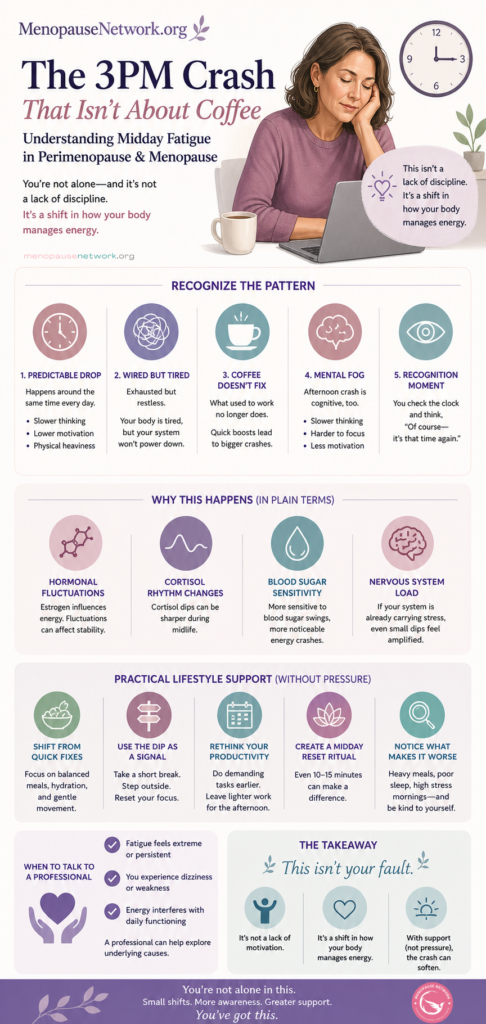
The Pattern Many Women Recognize
The Predictable Drop
It happens at nearly the same time every day.
You might even anticipate it:
- Slower thinking
- Lower motivation
- A physical sense of heaviness
Cortisol, your body’s primary “alertness” hormone, follows a natural daily rhythm. During midlife, this rhythm can shift, leading to more noticeable dips in energy (Mayo Clinic, 2023).
Recognition moment:
You check the clock and think, “Of course—it’s that time again.”
The “Wired but Tired” Feeling
This one is confusing.
You feel exhausted—but also slightly restless. Like your body is tired, but your system hasn’t fully powered down.
This can reflect a dysregulated stress response, where cortisol patterns are no longer as smooth or predictable.
Recognition moment:
You’re too tired to focus—but not relaxed enough to reset.
The Crash That Coffee Doesn’t Fix
You try what used to work:
- Another cup of coffee
- A quick sugar boost
But instead of feeling energized, you feel… temporarily lifted, then even more drained.
Hormonal shifts can affect how your body processes caffeine and regulates blood sugar, making quick fixes less effective than they once were.
Recognition moment:
You finish your coffee and think, “Why didn’t that help?”
The Mental Fog That Follows
The afternoon crash isn’t just physical—it’s cognitive.
You may notice:
- Slower thinking
- Difficulty concentrating
- Reduced motivation
This is often linked to the same hormonal fluctuations affecting both energy and brain function.
Recognition moment:
Tasks that felt easy in the morning now feel disproportionately difficult.
Why This Happens (In Plain Terms)
Midday fatigue during perimenopause is rarely caused by one single factor. It’s usually a combination of:
Hormonal Fluctuations
Estrogen influences how the body uses energy. As levels fluctuate, energy stability can change (National Institute on Aging, 2021).
Cortisol Rhythm Changes
Cortisol typically peaks in the morning and gradually declines. During midlife, this pattern can become less consistent, leading to sharper dips.
Blood Sugar Sensitivity
The body may become more sensitive to blood sugar fluctuations, making energy crashes more noticeable after meals.
Nervous System Load
If your system is already carrying stress, even small dips can feel amplified.
Practical Lifestyle Support (Without Pressure)
This isn’t about eliminating the crash entirely. It’s about softening it.
Shift From Quick Fixes to Steady Support
Instead of relying on caffeine or sugar spikes, you might experiment with:
- Balanced meals
- Consistent hydration
- Gentle movement
Use the Dip as a Signal, Not a Failure
That drop in energy? It’s information.
Instead of pushing through it, you might:
- Take a short break
- Step outside
- Reset your focus
Rethink Productivity Windows
Not every hour of the day needs to carry the same weight.
You might begin to:
- Schedule demanding tasks earlier
- Leave lighter work for the afternoon
Create a Midday Reset Ritual
Even 10–15 minutes can make a difference.
Not as a solution—but as support.
Notice What Makes It Worse (Gently)
You may begin to see patterns:
- Heavy meals
- Poor sleep
- High stress mornings
This isn’t about restriction—it’s about awareness.
When to Talk to a Professional
Consider seeking support if:
- Fatigue feels extreme or persistent
- You experience dizziness or weakness
- Energy levels interfere with daily functioning
A healthcare provider can help explore underlying causes beyond hormonal shifts.
Conclusion
The 3PM crash can feel frustrating—especially when it doesn’t respond to the things that used to help.
But this isn’t a failure of discipline.
It’s not a lack of motivation.
It’s a shift in how your body manages energy.
And when you begin to respond to it differently—not with pressure, but with support—you may find that the crash softens.
Not disappears entirely.
But becomes something you understand—and work with.
Disclaimer Line
Menopause Network does not provide medical advice, diagnosis, or treatment. Always seek the advice of your physician or other qualified health provider with any questions you may have regarding a medical condition.
References
Mayo Clinic. (2023). Menopause symptoms.
https://www.mayoclinic.org/diseases-conditions/menopause/symptoms-causes/syc-20353397
National Institute on Aging. (2021). Menopause.
https://www.nia.nih.gov/health/menopause