Why Women in Midlife Suddenly Can’t Sleep — Even When They’re Exhausted

There’s a very specific kind of betrayal that happens in midlife.

You spend the whole day exhausted. You’re counting the minutes until bedtime. You climb into bed thinking, Finally. Sleep.

And then your brain says, “Actually, let’s review every decision you’ve made since 2006.”

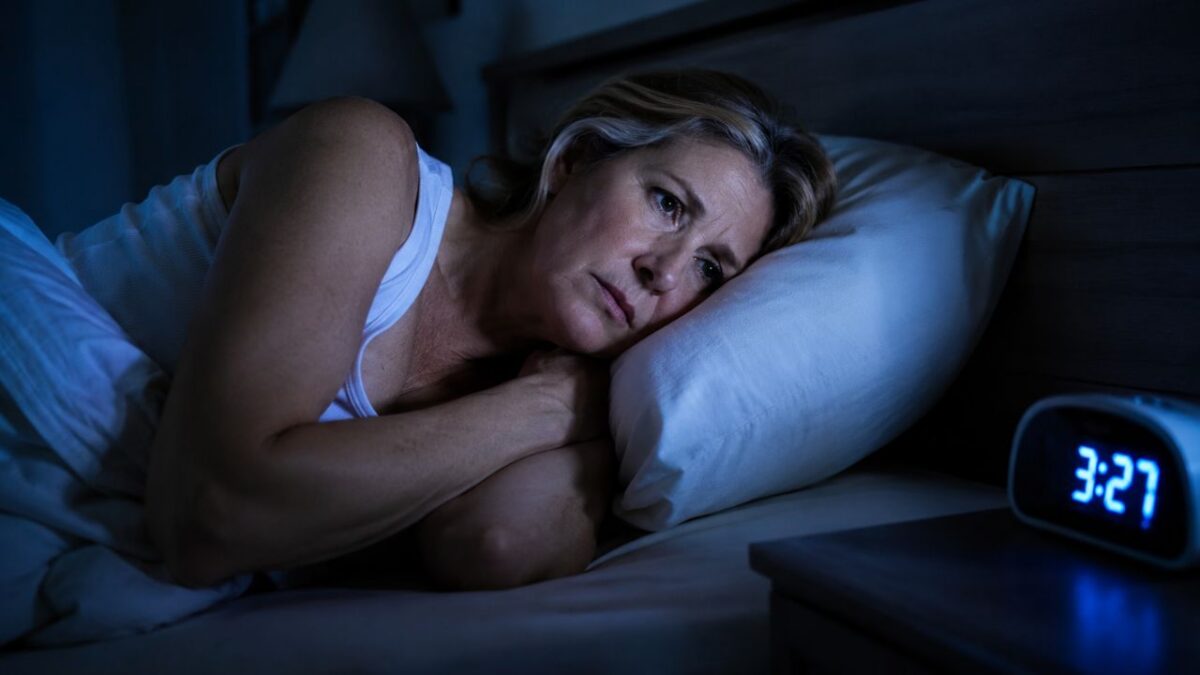
Or maybe you fall asleep just fine, but then — ping — you’re awake at 3:17 a.m. Hot. Annoyed. Slightly anxious. Staring at the ceiling while your partner sleeps like a golden retriever with no responsibilities.

If this is happening to you, you are not weird. You are not failing at sleep. And you are definitely not the only woman wondering, What on earth is going on with my body?

Sleep problems are common during perimenopause, menopause, and postmenopause. They can be linked to night sweats, mood changes, stress, aging, sleep disorders, and the very real hormonal shifts happening during this stage of life. The National Institute on Aging notes that hot flashes, night sweats, and mood changes can all contribute to poor sleep during menopause.

First, Let’s Clear Something Up: It’s Not “Just Stress”

Is stress involved? Often, yes.

But saying midlife sleep problems are “just stress” is like saying a kitchen fire is “just a little warm.”

During perimenopause, hormones can fluctuate in a way that affects body temperature, mood, and sleep quality. Mayo Clinic lists sleep problems, night sweats, hot flashes, mood changes, and brain fog among common menopause-transition symptoms, while also noting that symptoms vary from person to person.

So no, you’re not imagining it.

Your body may simply be operating under a new rulebook — one nobody handed you.

The 3 A.M. Wake-Up Club Is Very Real

There should be a group chat for women who wake up between 2 and 4 a.m.

Because somehow, at that hour, your brain becomes both a therapist and a disaster planner.

At 3 a.m., everything feels urgent:
Did I send that email?
Why did I say that thing in 2018?
Are the kids okay?
Should I change my entire career?
Why is my neck sweating?

Middle-of-the-night waking is commonly reported during the menopause transition. Research commentary in The Journal of Clinical Endocrinology & Metabolism notes that sleep disturbances are reported by more than half of midlife women, with middle-of-the-night awakenings especially common as women move through the menopause transition.

That does not mean every 3 a.m. wake-up is caused by hormones. Sleep is more complicated than that. But hormones, stress, temperature changes, and nervous system arousal can all be part of the picture.

Night Sweats Don’t Always Look Like Drenched Sheets

When people talk about night sweats, they often describe the dramatic version: soaked pajamas, soaked sheets, full bedding crisis.

But for many women, it’s subtler.

You might just feel:
too warm, restless, uncomfortable, suddenly awake, or like you need to throw the covers off and then pull them back on five minutes later.

Hot flashes and night sweats can interrupt sleep, and the National Institute on Aging specifically names night sweats as one menopause-related symptom that can make sleep harder.

And once you’re awake, your brain may decide to join the party.

Very unhelpful.

Why Your Usual Habits Suddenly Stop Working

This is the part that feels rude.

The coffee you drank at 4 p.m. for years? Suddenly suspicious.

The glass of wine that used to make you sleepy? Now it helps you fall asleep, then wakes you up at 2:43 a.m. like a tiny chaos goblin.

The late dinner, the scrolling, the stressful email before bed — all the things your younger body used to tolerate may start hitting differently.

That doesn’t mean you have to live like a monk. It just means your body may be more sensitive now.

And honestly, that information can be useful.

Not in a “fix your whole life immediately” way. More like: Hmm, maybe my body is giving me clues.

Let’s Talk About Cortisol Without Turning It Into a Wellness Buzzword

Cortisol gets blamed for everything online, so let’s be careful.

Cortisol is a normal hormone that helps regulate alertness, stress response, and your daily rhythm. It naturally rises in the morning to help you wake up.

The relationship between menopause, sleep, and cortisol is still being studied. One experimental study found that menopause-related sleep disruption, rather than estradiol decline alone, disrupted cortisol dynamics.

So the responsible takeaway is this: stress biology and sleep are connected, but it’s too simplistic to say, “You wake up at 3 a.m. because cortisol is high.” Sometimes that may be part of the story. Sometimes it’s not.

Either way, helping your nervous system wind down in the evening is still a reasonable, low-pressure place to start.

Also, Midlife Women Are Carrying a Lot

Let’s not pretend this is only about hormones.

Many women in midlife are juggling:
work, kids, aging parents, relationships, money stress, body changes, household logistics, health worries, and the invisible job of remembering everything for everyone.

That is not “just life.”

That is a lot.

And when your nervous system spends the whole day in problem-solving mode, it may not magically relax the second your head hits the pillow.

Sometimes the body is basically saying: I have not had one quiet minute all day. We are processing now.

Annoying? Yes.

Understandable? Also yes.

The Sleep Apnea Piece Women Should Know About

Here’s something that deserves more attention: sleep apnea can become more common after menopause, and it may not always look the way people expect.

Many of us think sleep apnea means loud snoring, usually in men. But postmenopausal women can be affected too. A 2025 review in The Lancet Regional Health describes obstructive sleep apnea as common and potentially under-recognized in postmenopausal women, with prevalence rising sharply after menopause.

That doesn’t mean every tired woman has sleep apnea. But if you snore loudly, wake up gasping, have morning headaches, feel extremely sleepy during the day, or your sleep feels unrefreshing no matter what you do, it’s worth bringing up with a healthcare professional.

Practical Things That May Help Without Turning Bedtime Into a Full-Time Job

Nobody needs a 17-step nighttime routine.

You have a life.

Start with small, realistic shifts.

Keep the Room Cooler

A cooler bedroom, lighter bedding, breathable pajamas, or a fan can help if heat is waking you up.

Give Your Brain a Landing Strip

Try 20 minutes of “quiet runway” before bed. Not perfect. Not aesthetic. Just calmer.

Think: reading, stretching, gentle music, journaling, or sitting in dim light without asking your brain to solve your entire life.

Watch Your Personal Triggers

For a week or two, casually notice whether sleep is worse after late caffeine, alcohol, heavy meals, intense evening work, or doomscrolling.

No shame. Just data.

Get Morning Light

Morning light helps your body understand when it’s daytime, which can support your internal sleep-wake rhythm later. It’s simple, free, and doesn’t require buying anything.

Stop Blaming Yourself

This one matters.

Sleep disruption can make you feel emotional, foggy, irritable, and unlike yourself. That does not mean you’re weak. It means you’re tired.

When to Talk to a Healthcare Professional

It’s a good idea to check in with a qualified healthcare professional if sleep problems are persistent, getting worse, or affecting your daily life.

Especially if you have:
loud snoring, gasping during sleep, severe daytime fatigue, ongoing insomnia, intense night sweats, mood changes, morning headaches, or symptoms that feel new or concerning.

Sleep issues can be related to menopause, but they can also involve thyroid changes, mood disorders, sleep apnea, restless legs, medications, pain, or other health factors.
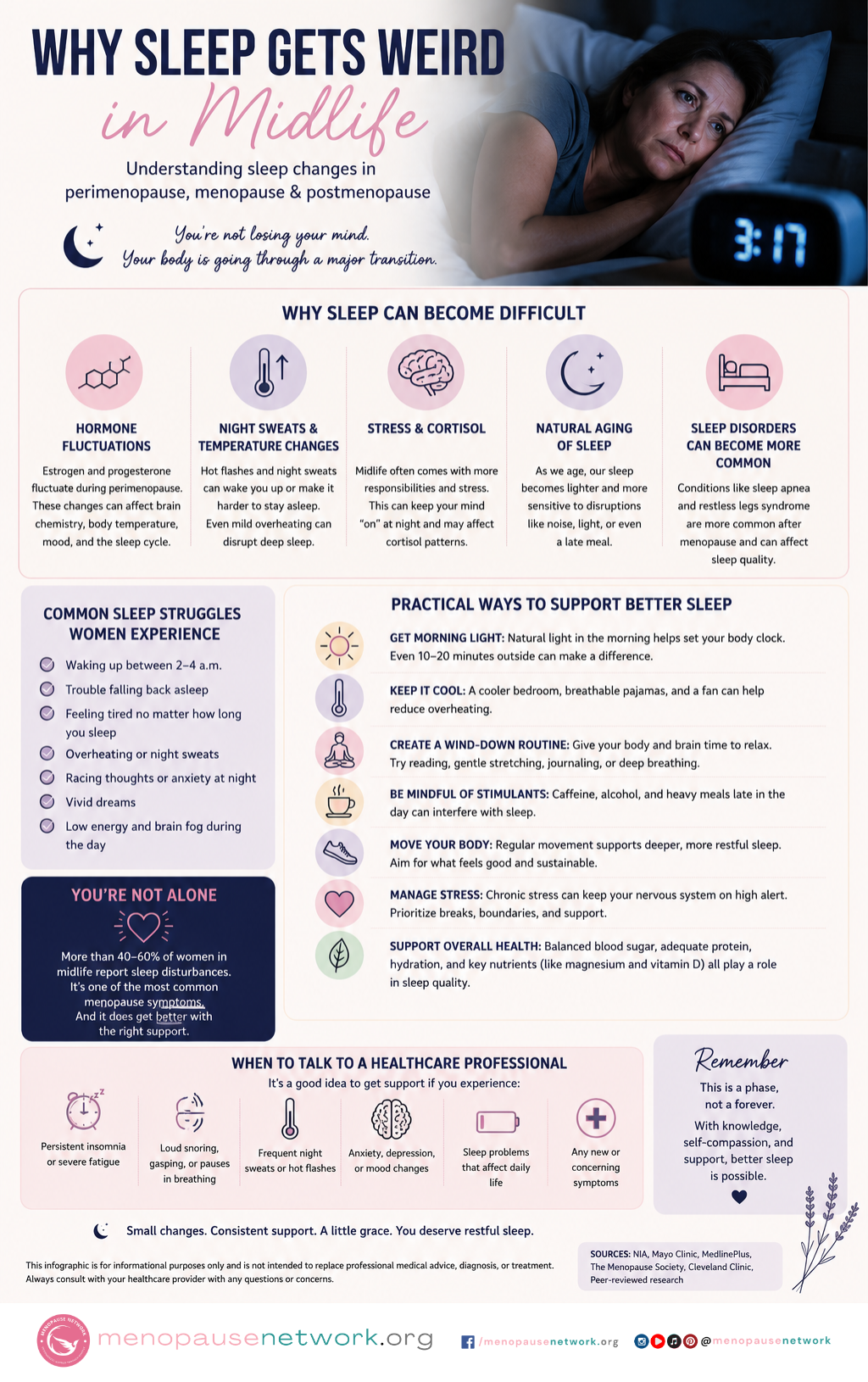
Why Sleep Gets Weird in Midlife Infographic by MenopauseNetwork.org

The Bottom Line

If sleep has become strange in midlife, you are not broken.

You are not “bad at sleeping.”

And you are not the only woman lying awake at 3 a.m. wondering why her body has suddenly become so dramatic.

Midlife sleep can change for many reasons: hormones, night sweats, stress, aging, mood shifts, and sleep disorders can all overlap.

The goal is not to panic or chase perfect sleep. The goal is to understand what may be happening, notice your patterns, support your body where you can, and ask for help when something feels persistent or disruptive.

Sometimes the most comforting sentence is also the simplest:

You’re not alone. This is a real thing. And it’s worth paying attention to.


Disclaimer

This article is for informational purposes only and is not intended to replace professional medical advice, diagnosis, or treatment. If sleep problems are persistent, severe, or affecting your quality of life, speak with a qualified healthcare professional.


References

Cleveland Clinic. (2024). Menopause and insomnia: Why sleep problems happen. https://health.clevelandclinic.org/menopause-and-insomnia

Mayo Clinic. (2024). Menopause – Symptoms and causes. https://www.mayoclinic.org/diseases-conditions/menopause/symptoms-causes/syc-20353397

National Institute on Aging. (2023). Sleep problems and menopause: What can I do? U.S. Department of Health and Human Services, National Institutes of Health. https://www.nia.nih.gov/health/menopause/sleep-problems-and-menopause-what-can-i-do

National Library of Medicine. (2024). Menopause. MedlinePlus. https://medlineplus.gov/menopause.html

Shaver, J. L., & Woods, N. F. (2015). Sleep and menopause: A narrative review. Menopause, 22(8), 899–915. https://doi.org/10.1097/GME.0000000000000499

The Menopause Society. (2024). Sleep and menopause. https://menopause.org/patient-education/menopause-topics/sleep-disorders-and-menopause

Vgontzas, A. N., & Fernandez-Mendoza, J. (2023). Sleep, menopause, and cortisol dynamics: Emerging perspectives. The Journal of Clinical Endocrinology & Metabolism, 108(11), e1347–e1358. https://academic.oup.com/jcem/article/108/11/e1347/7174007

Women’s Health Concern. (2025). Menopause and insomnia [Fact sheet]. British Menopause Society. https://www.womens-health-concern.org/wp-content/uploads/2025/08/17-NEW-WHC-FACTSHEET-Menopause-and-Insomnia-AUGUST2025-A.pdf

Sleep Well During the Festivities: 7 Practical Tips to Overcome Insomnia

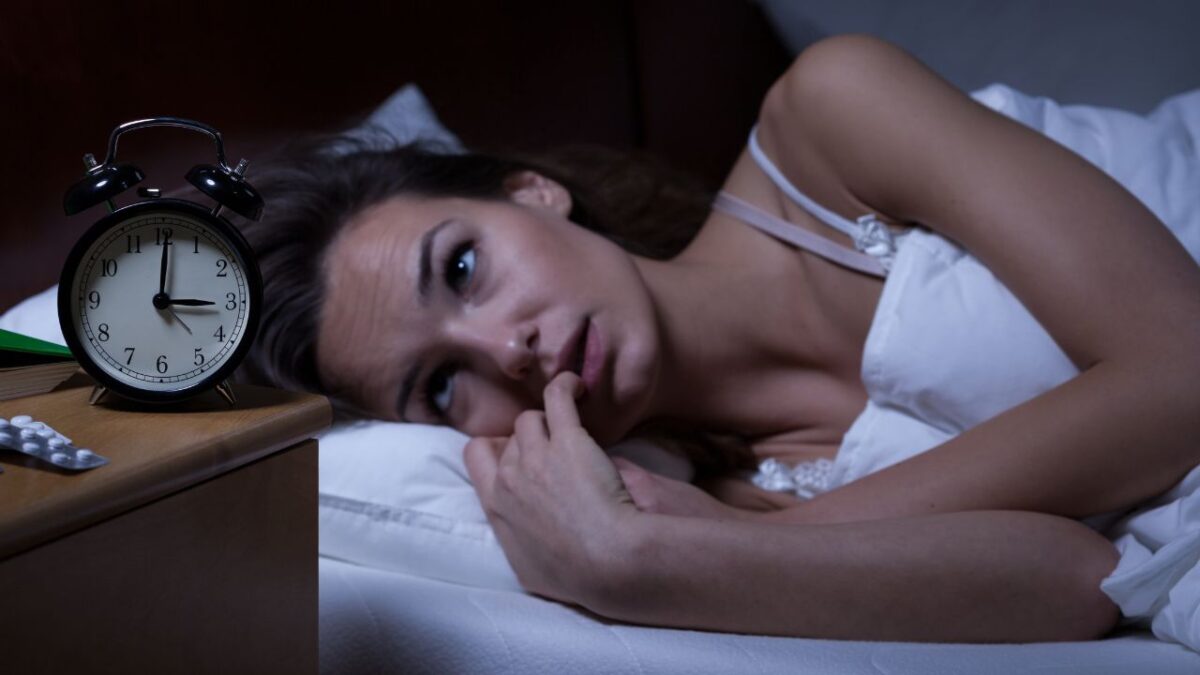
Struggling to get restful sleep during the holidays? You’re not alone! Between festive chaos and the challenges of perimenopause, insomnia can feel like a regular guest this time of year. But don’t worry — with small, practical changes like cutting back on caffeine, creating calming bedtime rituals, and managing stress with mindfulness, you can enjoy the holidays and wake up refreshed. Let’s tackle those sleepless nights together!

How to Conquer Sleep Challenges and Wake Up Refreshed

As menopause approaches, it’s not uncommon to find yourself struggling to get a good night’s sleep. Whether it’s waking up drenched in sweat, tossing and turning with restless legs, or just not feeling rested when the alarm goes off, sleep disturbances can become a frustrating part of this transition. But here’s the good news: while menopause might shake things up, it doesn’t mean your sleep has to suffer endlessly. With a little know-how and some smart strategies, you can tackle these sleep issues head-on. From understanding what’s causing the disturbances to discovering practical solutions that fit your lifestyle, you can reclaim your nights and start waking up refreshed and ready to take on the day. So, let’s dive into how to manage those pesky menopause-related sleep problems and get back to enjoying the restful sleep you deserve.

The Sleep Struggle is Real: Why Menopause Messes with Your Sleep

Hormonal Rollercoaster

As menopause approaches, your body starts to undergo significant hormonal shifts. The levels of estrogen and progesterone—the hormones that have been your body’s balancing act for years—start to drop, while the follicle-stimulating hormone (FSH) levels rise. This hormonal upheaval can wreak havoc on your sleep quality, making it harder to fall asleep, stay asleep, or even feel rested.

The Melatonin Mystery

You might not realize it, but melatonin—the hormone that regulates your sleep-wake cycle—also gets in on the action. As menopause nears, your body produces less melatonin, making sleep disturbances more common. If you’ve been wondering why your once-peaceful nights have turned into restless ones, this is a big part of the reason.

Common Sleep Woes

With all these changes going on, it’s no wonder that sleep issues become more frequent during menopause. Night sweats, restless leg syndrome, mood swings, and even parasomnias (those pesky sleep disorders) are all common complaints. Menopause can also increase the risk of obstructive sleep apnea (OSA), a condition where your breathing repeatedly stops and starts during sleep, often leading to poor sleep quality and daytime fatigue.

Solutions for Night Sweats: Cool Down and Rest Easy

High-Tech Cooling

If night sweats are soaking through your sheets and keeping you awake, it’s time to bring in some cooling technology. Cooling pads that fit under your bed sheets are a game-changer. These pads circulate cool water throughout the night, keeping your body temperature down and helping you sleep more comfortably. Many women swear by them as a must-have for managing those nightly heat waves.

DIY Chill

Prefer a more budget-friendly approach? Try freezing water bottles and placing them in a tube sock. Pop them into bed with you to cool your body down as you sleep. It’s a simple, effective way to beat the heat without breaking the bank.

Sleep Environment Essentials

Don’t underestimate the power of your sleep environment. Opt for thin, breathable sheets that wick away moisture, and keep a set of spare clothes nearby for a quick change if you wake up drenched. A cool, comfortable bedroom can make a world of difference in how well you sleep.

Tackling Obstructive Sleep Apnea (OSA): Breathe Easier, Sleep Better

Know the Signs

Obstructive Sleep Apnea (OSA) is more common during menopause than you might think. If you’ve noticed symptoms like snoring, gasping, or choking during sleep, it’s worth talking to your doctor. They may recommend a sleep study, either at home or in a lab, to get to the bottom of your symptoms.

Treatment Options

If OSA is diagnosed, one of the most common treatments is a CPAP machine, which provides a steady stream of air to keep your airways open during sleep. For some women, hormone replacement therapy (HRT) can also help by addressing the underlying hormonal changes contributing to sleep disturbances, including OSA.

Explore Alternative Therapies: Find What Works for You

Beyond the Traditional

Sometimes, the best approach is a combination of traditional and alternative therapies. Hypnotherapy, acupuncture, cognitive behavioral therapy (CBT), and meditation have all shown promise in helping women manage menopause symptoms and improve sleep quality. These methods can help you relax, reduce stress, and get into a sleep-friendly state of mind.

Sleep Hygiene Matters

Good sleep hygiene is essential, especially when your body is going through so many changes. Keep a consistent sleep schedule, develop a relaxing pre-sleep routine, and avoid late-day caffeine, alcohol, or heavy meals. These small habits can make a big difference in how easily you fall asleep and how well you stay asleep.

Lifestyle Tweaks: Small Changes, Big Impact

Exercise Smart

Regular physical activity is a fantastic way to improve sleep quality and overall well-being. Just make sure to time your workouts wisely—exercise too close to bedtime can actually make it harder to wind down.

Doctor’s Orders

Finally, don’t hesitate to seek medical advice if sleep problems persist. Your doctor can help tailor lifestyle changes and treatments to your specific needs, making restful sleep during menopause more achievable than ever.

Sleep Soundly Through Menopause

Menopause may come with its fair share of challenges, but with the right strategies, you can reclaim your nights and wake up feeling refreshed and ready to take on the day. By understanding the changes happening in your body and adopting a few simple habits, you can navigate this transition with grace—and a good night’s sleep.


Say Goodbye to Sleepless Nights: Perimenopause Edition!

Perimenopause ushers in a period of significant hormonal turbulence that can drastically affect your sleep quality. The fluctuations in estrogen and progesterone are mainly to blame for the sleep disturbances experienced during this time. Let’s dive into the specifics of how these hormonal changes cause sleep problems and outline practical steps to mitigate them.

Causes of Sleep Disturbances

  1. Hormonal Fluctuations: The most direct link between perimenopause and sleep disturbances is the fluctuation in estrogen and progesterone levels. Estrogen helps regulate the sleep cycle and maintain body temperature, while progesterone has natural sedative properties. As these hormone levels dip and surge, they can lead to trouble falling asleep, staying asleep, or achieving deep sleep.
  2. Hot Flashes and Night Sweats: A drop in estrogen levels can trigger the hypothalamus, your body’s thermostat, into thinking you’re overheated. This leads to hot flashes and night sweats, which can wake you up several times a night, making it hard to get continuous, restful sleep.
  3. Mood Disorders: Hormonal changes during perimenopause can also increase susceptibility to stress, anxiety, and depression, which are all linked to sleep disturbances like insomnia.
  4. Sleep Apnea: Weight gain is common during perimenopause, which can increase the risk of sleep apnea—a condition that interrupts breathing during sleep, leading to poor sleep quality.

Practical Advice for Quality Sleep

  1. Cool Down Your Bedroom: Keep your bedroom cool and well-ventilated. Use fans or air conditioning to lower the room temperature and consider moisture-wicking bed linens to help manage night sweats.
  2. Establish a Relaxing Bedtime Routine: Create a calming pre-sleep routine. This could include activities like reading, taking a warm bath, or practicing relaxation techniques such as deep breathing or meditation to signal your body it’s time to wind down.
  3. Limit Stimulants and Heavy Meals Before Bed: Avoid caffeine and alcohol in the evening, as they can exacerbate sleep problems. Also, steer clear of large, heavy meals close to bedtime, which can cause discomfort and indigestion, making it harder to fall asleep.
  4. Exercise Regularly, But Not Right Before Bed: Regular physical activity can help you fall asleep faster and enjoy deeper sleep. However, exercising too close to bedtime can energize you, making it harder to fall asleep. Aim to finish any vigorous activity at least three hours before you plan to go to sleep.
  5. Consider Sleep Aids Wisely: Over-the-counter sleep aids or natural supplements like melatonin might help, but they should be used cautiously and preferably under the guidance of a healthcare provider to avoid dependency or interference with other medications.
  6. Practice Mindfulness or Cognitive Behavioral Therapy (CBT): Mindfulness exercises and CBT can help manage the stress, anxiety, and mood swings that interfere with sleep. These techniques teach you to change negative thought patterns and behaviors that disrupt sleep.
  7. Consult a Healthcare Professional: If sleep disturbances persist, it may be worth discussing with a healthcare provider. They can offer advice on hormone replacement therapy (HRT) or other treatments that can alleviate severe symptoms of perimenopause, including sleep disruptions.

Implementing these strategies can significantly improve sleep quality during perimenopause. It’s about finding the right combination of lifestyle adjustments and, when necessary, seeking professional guidance to manage this transitional period more comfortably.

Breathe Your Way to Peaceful Sleep Amidst Menopause!

One of the most common challenges faced during menopause is sleep disturbance. Hormonal fluctuations can disrupt the sleep cycle, leading to insomnia and reduced sleep quality. However, there’s a natural and effective way to combat these sleep issues: deep breathing and relaxation exercises.

In this blog, we’ll explore how these techniques can be a game-changer for women navigating the complexities of menopause.

The Impact of Menopause on Sleep

If you’re in your mid-30s or beyond, you might have started noticing some changes in your sleep patterns. It’s not just you; it’s a common thread among many women as they approach or go through menopause. Let’s take a moment to really understand what’s happening here.

Menopause isn’t just about the end of menstruation; it’s a whole shift in your body’s hormonal balance, and this can play havoc with your sleep. You might find yourself tossing and turning, struggling to drift off, or waking up in the middle of the night and not being able to get back to sleep. It’s frustrating, isn’t it?

But why does this happen?

During menopause, levels of estrogen and progesterone – hormones that help regulate sleep – fluctuate and eventually decrease. This can lead to a range of sleep disturbances. You might be familiar with some of them: difficulty falling asleep, staying asleep, or not feeling rested even after a full night’s sleep.

Then there are the hot flashes and night sweats. If you’ve ever woken up feeling like you’re in a sauna, you know what I’m talking about. These sudden waves of heat can be intense and uncomfortable, disrupting your sleep and making it hard to get back to that peaceful slumber.

And let’s not forget the emotional rollercoaster. Stress, anxiety, and mood swings aren’t just daytime issues; they can creep into your nights as well, making it harder to relax and fall asleep.

The impact of poor sleep goes beyond just feeling tired the next day. It can affect your mood, energy levels, and even your long-term health. Chronic sleep deprivation has been linked to a higher risk of conditions like heart disease and diabetes.

So, what can you do about it? That’s where we start exploring some natural and effective strategies to help you get the restful sleep you deserve. Spoiler alert: it involves some simple yet powerful breathing and relaxation exercises. Stay tuned, and let’s dive into how you can reclaim your nights and enjoy peaceful, restorative sleep.

The Power of Deep Breathing

Now, let’s talk about a superpower you already possess but might not be using to its full potential – deep breathing. It’s easy to overlook something as simple as breathing, but when it comes to improving sleep during menopause, this natural tool is a game-changer.

Deep breathing goes beyond the automatic inhale-exhale we do every moment. It’s a conscious, deliberate process that taps into your body’s natural ability to relax. When you breathe deeply, you’re doing more than just filling your lungs with air; you’re sending a message to your brain to calm down and relax. This is crucial, especially when your mind is racing with thoughts at night.

Here’s the science bit: deep breathing activates what’s known as the body’s “relaxation response.” This response is essentially the opposite of the stress response – that fight-or-flight sensation that can keep you awake and anxious. When you breathe deeply, you’re telling your body it’s okay to relax and unwind. This can be incredibly beneficial if you’re dealing with night sweats or anxiety that disrupts your sleep.

How Does It Help with Sleep?

When you engage in deep breathing exercises, you’re doing a few things that are beneficial for sleep:

  1. Reducing Stress: By lowering stress levels, deep breathing helps create a more conducive state for sleep.
  2. Regulating the Heart Rate: Deep breathing can help slow down your heart rate, making it easier to drift into sleep.
  3. Oxygen Flow: More oxygen means better blood flow and a calmer nervous system, setting the stage for a good night’s rest.
  4. Mindfulness: This practice also encourages mindfulness, which can be a powerful tool in quieting the mind and easing into sleep.

A Simple Practice with Profound Effects

The beauty of deep breathing is its simplicity. You don’t need any special equipment or a lot of time. It’s about taking a few minutes before bed to focus on your breath, allowing the inhales and exhales to become deeper and more rhythmic. This simple act can make a significant difference in the quality of your sleep.

In the next section, we’ll explore some specific deep breathing techniques that you can easily incorporate into your nightly routine. These aren’t just theoretical ideas; they’re practical tools that countless women have found helpful in navigating the sleep challenges of menopause. Stay tuned, and let’s unlock the power of your breath together.

The 4-7-8 Breathing Technique

One effective method is the 4-7-8 breathing technique, developed by Dr. Andrew Weil. It’s simple:

  1. Exhale completely through your mouth, making a whoosh sound.
  2. Close your mouth and inhale quietly through your nose to a mental count of four.
  3. Hold your breath for a count of seven.
  4. Exhale completely through your mouth, making a whoosh sound to a count of eight.

This cycle is repeated three more times. This technique helps reduce anxiety and prepares the body for sleep.

Relaxation Exercises for Better Sleep

Relaxation exercises are another key strategy. They can range from guided imagery to progressive muscle relaxation, which involves tensing and then relaxing different muscle groups in the body.

Gentle Stretching

Incorporating gentle stretching exercises before bed can also be beneficial. Yoga poses like Child’s Pose, Legs-Up-The-Wall, or gentle spinal twists can release physical tension and promote relaxation.

Creating a Bedtime Ritual

Consistency is key. Incorporating deep breathing and relaxation exercises into a nightly routine signals to your body that it’s time to wind down. Dimming the lights, turning off electronic devices, and perhaps adding some calming music or aromatherapy can enhance this ritual, creating an ideal environment for restful sleep.


Recap: Menopause is a natural part of aging, but it doesn’t have to mean the end of restful nights. By incorporating deep breathing and relaxation exercises into your nightly routine, you can significantly improve your sleep quality. These techniques are simple, non-invasive, and can be a comforting self-care practice during a time of change. Remember, if sleep disturbances continue to be a significant issue, it’s important to consult with a healthcare provider for further guidance and support.

Embrace these practices and rediscover the restful sleep that supports your overall well-being during menopause and beyond.