Why Your Tolerance for Stress Changes in Your 40s (Even If Your Life Hasn’t)

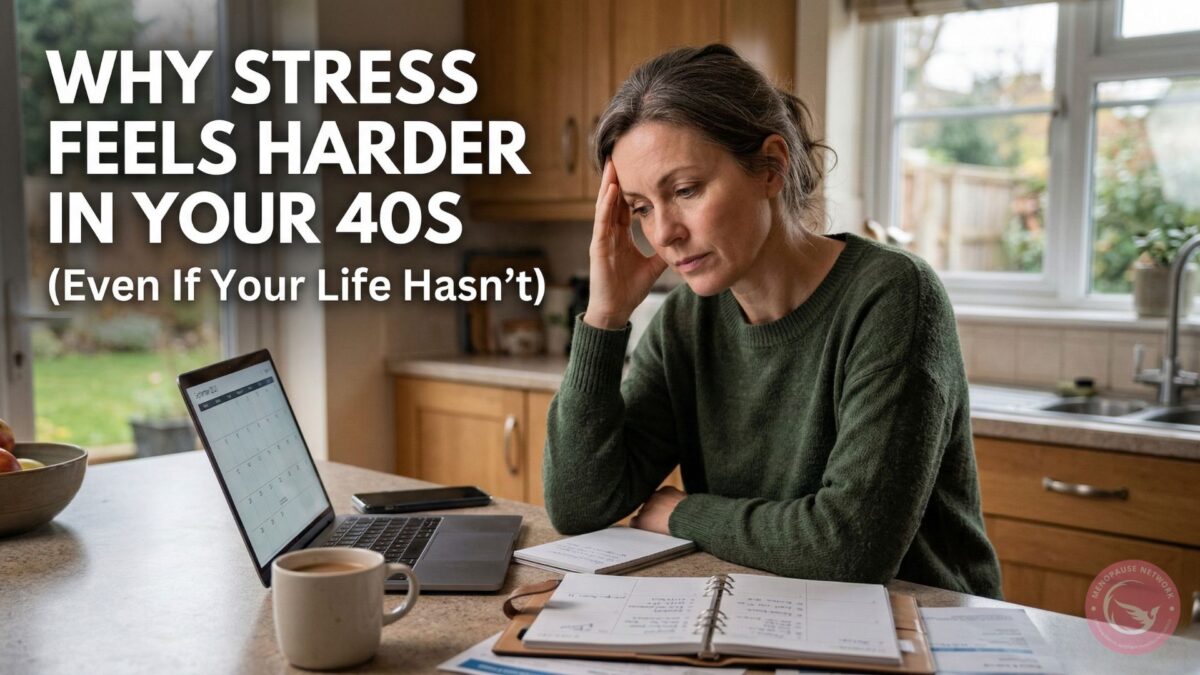
You used to handle a lot without thinking twice.
Busy workdays. Family logistics. The endless mental list running in the background of your life.
But lately something feels different.
Small things seem to hit harder than they used to. A stressful meeting sticks with you all evening. A packed day leaves you feeling emotionally drained instead of just tired.
And you might find yourself wondering a question many women quietly ask in midlife.
Why does stress suddenly feel harder to handle?
For many women, the answer begins with a transition that rarely gets explained clearly enough. Perimenopause.
This stage, which often begins in the early to mid 40s, brings hormonal shifts that affect far more than menstrual cycles. They can also influence how the brain processes stress, emotions, and recovery after a demanding day.
Once you understand what is happening biologically, many midlife experiences start to make much more sense.
Stress Is Not Just Mental. It Is Biological.

Most of us think of stress as something that happens in our minds.
Deadlines. Responsibilities. Family pressures. The constant mental load of keeping everything running.
But stress is also deeply physical.
Inside the body, a system involving the brain and adrenal glands manages the stress response. Hormones like cortisol and adrenaline help us react quickly when something demands attention.
For many years this system works smoothly. The body responds to pressure and eventually returns to balance.
During perimenopause another hormone becomes part of the picture.
Estrogen.
Estrogen does far more than regulate the reproductive system. It also interacts with areas of the brain that help regulate mood, emotional reactions, and the body’s stress response. Research shows estrogen can influence neurotransmitters such as serotonin and dopamine, which play important roles in emotional regulation and resilience.
https://www.frontiersin.org/articles/10.3389/fnins.2024.1348551/full
As estrogen levels begin to fluctuate during perimenopause, the systems that help regulate mood and stress may feel less steady. That shift can make everyday pressures feel more intense than they once did.
The Brain’s Emotional Filters Shift in Midlife
Hormones influence the brain in subtle but meaningful ways.
Estrogen interacts with brain chemicals that help stabilize mood, support motivation, and regulate emotional responses.
When hormone levels rise and fall unpredictably during perimenopause, many women notice changes such as:
- reacting more strongly to stressful situations
- feeling emotionally drained more quickly
- irritability that feels unfamiliar
- needing more time to recover after a demanding day
This does not happen to everyone, and the experience varies widely from woman to woman.
But for many women, the feeling that their emotional buffer has become thinner is a real and common part of the menopause transition.
Understanding this can be reassuring. What feels like a personal weakness is often a biological shift.
Sleep Changes Can Make Stress Feel Even Bigger
Sleep often changes during the perimenopause years.
Even women who have slept well for decades sometimes begin waking in the middle of the night or experiencing lighter, less restorative sleep.
Sleep matters more than most of us realize when it comes to emotional balance.
Research shows that sleep disruption can increase emotional reactivity and make it harder for the brain to regulate stress responses.
https://pmc.ncbi.nlm.nih.gov/articles/PMC6122651
When sleep is fragmented, the brain becomes more sensitive to everyday pressures. Small frustrations can feel bigger. Patience becomes shorter. Emotional recovery takes longer.
For many women, improving sleep quality becomes one of the most powerful ways to support stress resilience during midlife.
Midlife Often Brings a Unique Layer of Stress
Hormones are only part of the picture.
The 40s and early 50s are often one of the busiest and most demanding stages of adult life.
Many women are managing:
- growing career responsibilities
- parenting or supporting teenagers
- caring for aging parents
- financial and household pressures
- shifting relationships and life transitions
Researchers sometimes call this the “sandwich generation,” referring to adults who are supporting both children and aging parents at the same time.
Studies show that this dual caregiving role can create significant emotional and logistical stress for many women in midlife.
When these real world responsibilities combine with hormonal changes, stress can feel heavier even if your coping skills have not changed at all.
Signs Your Stress Tolerance May Be Shifting
Many women notice subtle signals that their nervous system needs more support during midlife.
These may include:
- feeling overwhelmed by tasks that once felt manageable
- increased irritability or emotional sensitivity
- needing more quiet time after busy days
- feeling mentally exhausted even when life seems normal
- anxiety that appears without a clear trigger
These experiences can be confusing, especially for women who have always felt capable and resilient.
But they are also very common during the perimenopause years.
Practical Ways to Support Your Nervous System
You cannot eliminate stress completely. Life simply does not work that way.
But small, supportive habits can help your nervous system handle pressure more smoothly during midlife.
Protect Your Sleep
Sleep is one of the most powerful regulators of stress and mood.
Helpful habits may include:
- keeping a consistent sleep and wake schedule
- dimming lights and screens before bedtime
- creating a calming wind down routine
- limiting caffeine later in the day
Even modest improvements in sleep can help emotional resilience recover.
Reduce Background Stress
Many women realize they have been living with constant low level stress for years.
Notifications, multitasking, and packed schedules keep the nervous system in a near constant state of alertness.
Midlife is often when the body begins asking for more breathing room.
Simple adjustments may include:
- setting clearer boundaries around work hours
- reducing unnecessary commitments
- limiting constant news or social media exposure
- protecting quiet time during the day
Move Your Body Regularly
Movement helps regulate stress hormones and supports mood.
You do not need intense workouts to see benefits. Many women find relief through consistent activities such as:
- walking outdoors
- yoga or stretching
- strength training
- cycling
- dancing or other enjoyable movement
The goal is regular movement, not perfection.
Talk About What You Are Experiencing
One of the most difficult parts of midlife can be the feeling that no one prepared you for these changes.
Conversations with trusted friends, partners, or supportive communities can help normalize the experience.
Sometimes the most powerful realization is simply this.
You are not the only one feeling this way.
When It May Help to Talk With a Healthcare Professional
Changes in mood, sleep, or stress tolerance can have many possible causes, including hormonal shifts, lifestyle factors, and other health conditions.
It may be helpful to speak with a qualified healthcare professional if you notice:
- anxiety or mood changes that interfere with daily life
- persistent sleep problems
- stress that feels overwhelming or difficult to manage
- sudden emotional changes that concern you
- questions about possible perimenopause symptoms
A clinician can help evaluate what may be contributing and discuss options that fit your personal health history.
A Gentle Reminder for Midlife
If stress feels heavier in your 40s than it once did, it is easy to assume something is wrong with you.
You might wonder whether you have become less patient, less capable, or less resilient than you used to be.
But the truth is often much simpler.
Your body is navigating a major biological transition while you continue managing a full adult life.
Understanding what is happening can make space for something many women rarely offer themselves.
More patience.
More support.
And a little more compassion for the season of life you are in.
References
National Institute on Aging https://www.nia.nih.gov/health/menopause
Cleveland Clinic https://my.clevelandclinic.org/health/diseases/21608-perimenopause
Mayo Clinic https://www.mayoclinic.org/diseases-conditions/menopause
Frontiers in Neuroscience https://www.frontiersin.org/articles/10.3389/fnins.2024.1348551/full
National Library of Medicine https://pmc.ncbi.nlm.nih.gov/articles/PMC6122651/
Pew Research Center https://www.pewresearch.org/social-trends/2013/01/30/the-sandwich-generation/
Disclaimer
This article is for informational purposes only and does not replace professional medical advice. Always consult a qualified healthcare professional about personal health concerns or symptoms.